The Easel

9th June 2026

Marilyn Monroe at the National Portrait Gallery – the woman who became a masterpiece

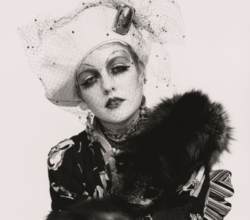
This “riveting” show of Monroe portraits begs the question – is there any more to learn from yet another show?  The answer, it seems, is that we want to know the “real Marilyn”, not just the skilled actress and dazzling photographic creature. One writer says that she “anticipated the postmodern world and the age of Instagram, in which the self could be redefined [into multiple] identities”. The huge effort to create those identities required “dignified resilience … whoever she was, Marilyn lives.”
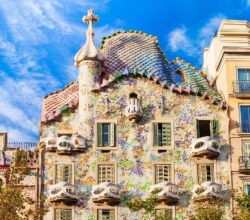
Gaudí Centenary celebrates the legacy of an architect like no other

A papal visit to La Sagrada Família tomorrow marks the centenary of Gaudi’s death. His early designs combined Catalan and Islamic influences in a style dubbed “Catalan art nouveau”. After a “neo-gothic” period he produced his final “naturalist” style with works such as Park Güell. Only 17 of his buildings were completed so the seemingly forever incomplete Sagrada Família defines his legacy. Gaudi incorporated nature’s irregular lines into his designs, an idea was eclipsed just three years after his death.

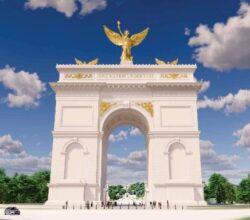
How Trump’s arch gets classical wrong

The US proposes building an arch to commemorate its 250th anniversary. A classical design seems appropriate, conveying “dignity” and humanity. However, when compared to its inspiration, Paris’ Arc de Triomphe, it is “oversized and visually top-heavy”. A bigger challenge, though, may be civic, not aesthetic. Monuments “are meant to transcend the moment of their creation [but] its scale, its aesthetic choices are inextricably associated with a particular Trumpian vision”.

Brought to light

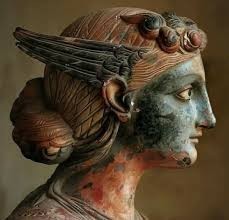
The Etruscans shaped the Mediterranean world and were “principal contributors” to pre-Roman culture. Based near today’s Tuscany, they were sophisticated, highly religious and unlike the Greeks respectful of women. Togas, urban planning, hydraulic engineering, winemaking, “Roman” numerals, all came from them. Their art included fine jewellery and elegant painted pottery. Says a curator, “in art, religion, engineering, architecture, Rome really stood on the shoulders of the Etruscans.” A video is here.

Saint-Porchaire Ceramics: Rediscovered Treasures of the French Renaissance

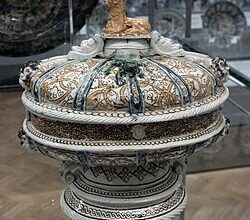
With barely 70 examples, Saint-Porchaire ceramics are among the rarest – and most mysterious – treasures of the French Renaissance. Supposedly made in a tiny French village, they are decoratively ambitious and highly complex. They are thought to be the work of a single artisan or a very small group. But who were they and how were they aware of design fashions of the day? Says a scholar “[ceramics] that are without precedent …whether or not you think them beautiful, they are completely wonderful”.

2nd June 2026

The chaos and passion of Peter Hujar and Paul Thek

Hujar is becoming a mainstream figure in photography. His images portrayed New York’s downtown demi-monde in the decades before AIDS as well as his relationship with artist Paul Thek. Thek cared little for posterity while Hujar was the opposite and is thus more revealed in a new joint biography. Besides his technical prowess, the magic in Hujar’s images came from an “intense, soulful connection” with his subjects, in contrast to the “chilliness” of Diane Arbus. Says one writer, a “beautiful biography”.

I lived near a serial killer’: Steven Shearer on turning teen angst and death metal into high art

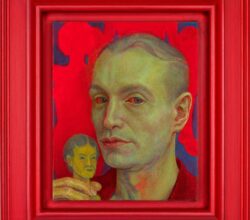
Living in Vancouver and predisposed not to talk to the press, Shearer has built a reputation without attracting much notice. He is now “a star”, due particularly to his colourful, intense “lonesome” portraits of long-haired youths. He draws on media images that are then mashed up with allusions to German Romanticism. Are they “part-autobiographical” asks the writer. Says Shearer, “I guess you’d call them a kind of imagined portraiture”.

Book reveals how Chintz—India’s precious textile pattern—became a precolonial global export

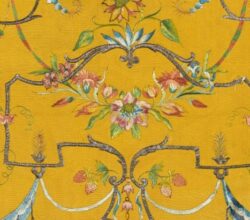
Distained for being fuddy duddy, chintz is having an “intellectual” revival. It was traded in Asia for centuries before appearing in Europe around 1600 where it proved wildly popular. Rather than heavy woollen and stiff linen garments, consumers could now get lightweight, colourful, washable cotton. Trade and colonialism led to a sophisticated amalgam of Western symmetry and sinuous Persian and Indian designs. Although its back story is little understood, chintz has had an impact “on global art and design history”.

Everything you need to know about the Bayeux Tapestry

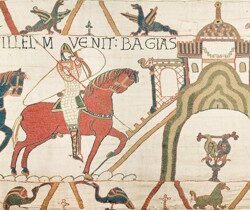
The Bayeaux Tapestry’s arrival in London will be a big deal. This piece is a useful primer. The Tapestry covers the lead-up to the Battle of Hastings in 1066, where the French prevailed. Experts think it was made in England, by English women. Most of the action appears in the central frieze while the borders are decorative. For a few especially dramatic events, such as the arrival of the French fleet, the imagery spreads across the whole tapestry. Opening date in London is September 10.

My visit to the Russian show that plunged a dagger into the Venice Biennale’s heart

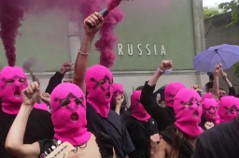
An eyewitness account of the turmoil at the Venice Biennale following the unexpected return of Russia. Its exhibit celebrates how “eternity prevails over momentary concerns”, a line many took as referring to the Ukraine conflict. Once the “sulky green” pavilion opened, it was besieged with protests, leading Biennale organisers to close it to the public. Behind the locked doors, the “horrendously loud dance music” played on.

Digital artists were right all along, says Trevor Paglen

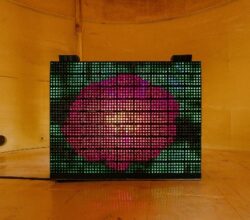
Paglen, a notable digital artist, observes that “artists make art out of the stuff around them”. Currently that means digital stuff! Forget the NFT craze, digital art deserves “serious attention”. Digital art has the challenge of communicating the meaning of images that are made by machines. Further, does it matter that such images cannot really be “owned”. So far, such questions are unanswered. Perhaps this explains why the response of art writers to this type of work seems a bit ho-hum.

As Full-Time Art Critics All But Disappear, What Can We Learn From the Retiring Generation?

The dismal state of art criticism. There were about 30 full time art criticism jobs in the US two decades ago. Soon there might be none. The three most influential art critics have all departed in the last few years. Their writing varied from the factual to the emotional and all had their blind spots but their departure has meant a loss of “consistent, careful looking”. No-one mentions the gloomiest scenario, that quickening social change may be loosening the community cohesion from which art often springs.