The Easel

23rd June 2026

Anish Kapoor disorientates, delights and disturbs at the Hayward Gallery

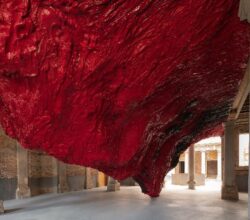
Kapoor likes his art big – think Chicago’s highly reflective “Bean” sculpture – and his new London show follows suit. One installation appears alarmingly like guts and there’s a monumental, “mysterious” upside-down mountain. Some objects are coated with non-reflective black that creates “a space full of what doesn’t exist”. This is vintage Kapoor, messing around with our perceptions. Says he, “Apollinaire’s notion was to take the viewers to the edge and push them over – and that remains fundamental.”
JR’s inflatable cave across the pont neuf is now open in Paris

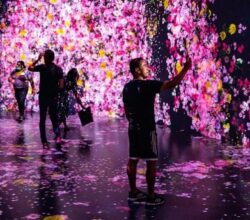
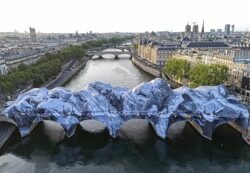
The artist JR has created an installation artwork covering Paris’s Pont Neuf. This is not a duplicate of the Christo and Jeanne-Claude wrapping but rather a printed fabric mountain range within which is a 120m inflated fabric tunnel. A soundscape, scented air and mobile-based “experiences” give the tunnel a cave-like environment meant to evoke both fears of darkness and feelings of shelter. Says JR “I designed [it] as an experience where fullness and emptiness exist in balance”. An interview is here.

Did we all get Orientalism wrong?

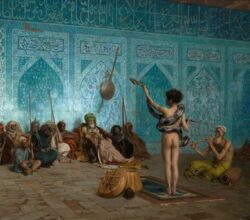
Orientalist art, painted by Europeans, has been scorned as colonialist fantasy. That’s true, but this type of art was just part of a complex two-way exchange between cultures. An acclaimed portrait by the French artist Gérôme portrays an Ottoman soldier with great respect. And Hamdi, the Ottoman artist, borrowed his theatrical stagings and architectural renderings straight from Paris. There was “a much richer and more human concoction than postcolonial polemics would suggest.“

The art of the unfinished masterpiece

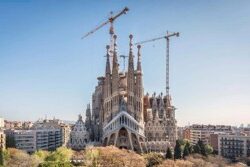
During the recent papal visit to the forever-incomplete Sagrada Família, much attention was paid to the likely completion date (2034, maybe). Don’t rush, suggests this writer; the church is an example of the “unfinished masterpiece”. Some Michelangelo paintings, Coleridge’s poem Kubla Khan, Mozart’s Requiem all belong in this category. The Pope himself seemed to perceive a spiritual quality in incompleteness, saying “it bears witness to a desire; it does not signify a shortcoming”.

What’s the Matter With Museums?

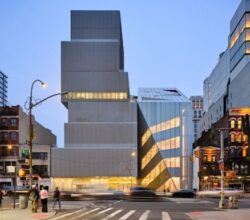
Can more art become too much art? It might if it requires a new museum. The US has about 35,000 museums, a number that has doubled since 1990. Local communities are now opposing new projects – especially so-called “vanity projects” – citing an absence of any public facilities, loss of public space or absorption of scarce public funds. Says one consultant “I’ve never known a community that was asking for a bigger museum. But many donors and collectors do,”

16th June 2026

David Hockney, whose art celebrated sun-drenched Los Angeles, dead at 88

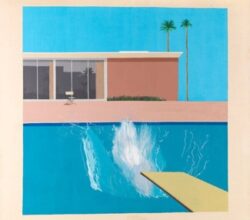
Hockney pursued an “unapologetic striving for the rejoicing of the eye“. Avoiding “barren” abstraction, he focused on portraits and landscapes, notably scenes of sunny Los Angeleno hedonism. His preoccupation with life’s “vividness” led Robert Hughes to describe him as “the Cole Porter of modern art”. It brought immense popularity – a 2017 retrospective at Tate was that gallery’s most popular solo show ever. Simon Schama’s poetic take on Hockney’s life is here.

Why Duane Michals’s beautiful fictions matter more than facts.

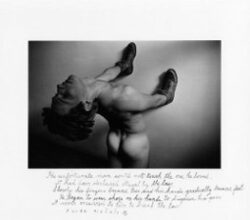
Michals entered photography when it was dominated by the documentary approach of Arbus and others. His “wildly inventive” approach, such as multi-image sequences and writing on his images, caused a stir. Conceptual or surrealist theme evidents in his work owed much to Atget’s famous images of empty Parisian streets “In his hands, the camera stopped acting as an instrument of empirical verification and became a vehicle for the interior life”.  Says one writer, “an artist of serious consequence”.

‘I am very serious about being silly’: children’s illustrators on the art of storytelling

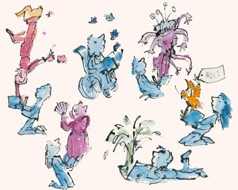
Illustrators feel overlooked and it’s hard to disagree. We usually place them as part of a dual act (with storytellers) and their audience is “just” children. One might dispute that – illustrated books must appeal to adults who mostly choose them. There is also a broad field that includes political cartoons, animation, fashion, advertising and digital culture. Says one illustrator, “we do know they were making comics [40,000 years ago] about people chasing cows, because they’re all over cave walls.”

Sorry, but Pace’s cutbacks aren’t the death of mega-galleries

Does the Pace Gallery downsizing signal the end of “mega-galleries”? One writer ignores that question and goes for the jugular: “Pace … is built around a fantasy of endless growth and hype and the assumption that bigger automatically means better.” Just as unsettling for market watchers are comments from an art market observer that NextGen collectors may have different tastes to current norms. They have a “distrust of institutions” and their passions little known … perhaps custom skateboards?

In London, Hauser & Wirth offers a rare glimpse into Francis Picabia’s experimental world

Picabia ceaselessly reinvented himself, from early landscapes, through his “machine”/ Dada paintings to “radical” nudes and his final abstract paintings. Being wealthy allowed him to pursue such varied interests, where ideas from one period led on to other areas. Such diversity explains why he was never pigeonholed but is considered, ambiguously, as a “painter’s painter”. Perhaps he was closest in spirit to Dada – criticise the status quo but abandon new ideas as they become generally accepted.

A Curator’s View

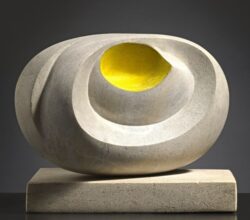
Hepworth felt that her use of colour was “accepted but not understood”. It first appeared in her pre-war painted wood and plaster sculptures. After meeting Mondrian, she brought it into drawings as well as some bronze sculptures. Using colour so extensively underlines her view that colour and form together “achieve a new power & experience”. Not all critics feel this was as novel as she claimed, but does it matter? Hepworth remains “British art’s nature goddess”.