The Easel

25th July 2023

Erwin Wurm: Trap of the Truth

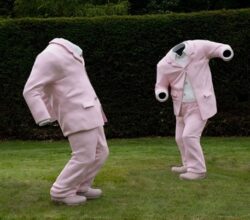
Wurm’s sculptures depict consumer items in funny ways – overweight cars, bendy trucks, couture bags on long spindly legs. It’s OK to laugh, but that just shows how skillfully Wurm uses his favourite “tools” – paradox, and the idea of the absurd. Does the price tag on a Hermes Birkin bag justify its prestige – it is, after all, just a bag. Yet we conform. “Advertisements give us this illusion of freedom, and we believe it, which is more than ridiculous.”
Video art cuts through the noise. But the noise is getting louder

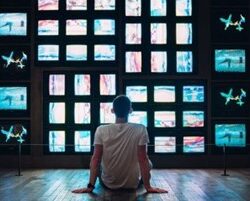
Is the vitality of video art fading away? A large survey show in New York has critics calling it “elegiac”, “I’m anything but enthusiastic”, or even “it’s a post-mortem”. One critic admits he still had “no idea” if he liked it. Video emerged in a world dominated by network television but now it’s all about smart phones and social media. Can video art be a “cultural signal” when we are learning that images can’t be trusted? “Reality itself begins to feel fugitive. We [want to dispel] the mental torpor of “screen time.””

Private view: Albrecht Dürer

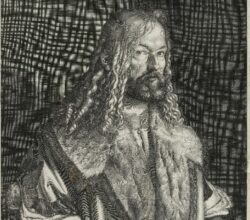
Dürer’s prints were the “blockbusters” of that age. His representation of mythical and religious stories was an obvious attraction but also conspicuous were items of technology – books, textiles, scientific instruments, clocks. These placed the images in contemporary Nuremberg, gaving his images a “hidden power” – an ingenious way to “bring together the visual codes of religion and myth with the vernacular objects of contemporary life.” Images are here.

How Architects Fell Into Bed With the Artworld

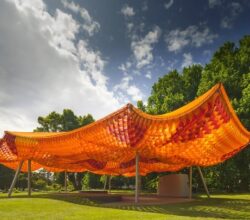
Art and architecture are growing closer. Art prizes regularly go to architects. The Venice Biennale of Architecture is full of “art and artists”. Are architects “detaching the public face of architecture from its practice”? Cynics smirk that architects are using art to draw attention away from “unsavory” clients. A more charitable view is that some architects draw inspiration from art, enriching the profession’s discourse. Says one, “Architecture is not a prison … architects are free to sail out in search of new ideas”.

Lui Shou-Kwan’s Zen Painting and American Abstraction

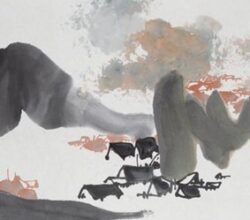
Chinese ink painting, like calligraphy, balances disciplined form and personal expression. Lui trained in that tradition but, seeing contemporary 1950’s American art, decided to apply a modernist sensibility. His “zen” paintings have a spontaneous “splashing” brushwork that he said drew on Chinese traditions of abstraction. Besides pioneering the New Ink painting movement, his work attracted international interest already whetted by the wave of abstraction coming out of New York.

Hardwick Hall tapestries: 440-year-old artefacts restored and displayed after two decades of work

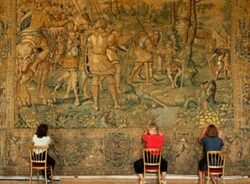
A 24 year renovation … OMG! The 13 Gideon tapestries were made in Flanders in 1578 and purchased by an Elizabethan aristocrat in 1592. They have hung in the same country house ever since. Because they are so old, so dirty and so big, the painstaking conservation (described here) has taken decades. A conservator estimates that the tapestries, now back on the same walls they have decorated for centuries, are good to go for “at least another 100 years”.

18th July 2023

Measuring Infinity, at the Guggenheim, presents drawings, collages, and sculptures from architect-turned-artist Gertrud Goldschmidt

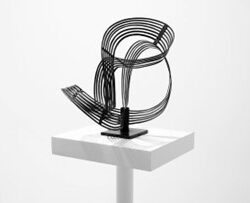
Gego was long in transition – from pre-war Germany to Venezuela, from architecture to art, from painting to her métier, delicate, abstract wire sculptures. It was worth the wait. These works articulate “the tensions and irregularities of organic form”. Some are small and, hung from a wall, resemble “drawings in space”. This is “magical, slippery engineering”, distinctive and infinitely varied. Says one critic “some of the most radically beautiful sculpture of the second half of the 20th century”.

Watercolors at Harvard and MoMA

Does watercolour painting need a PR pep-up? Because its materials are relatively cheap and portable, the medium is often associated with “amateurism”. In fact, many great artists were exponents, using it to quickly capture an image or for experimentation. Its great quality though, is unpredictability, the way paint can “flow and bloom into darker and lighter areas”. That process gives a work a spontaneity and energy that offers the viewer “emotional experiences”. Images are here.

Mary Jackson has turned sweetgrass basketry into a fine-art form

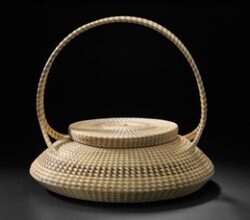
Growing up, Jackson regarded basketry as a summer “chore”. Returning to the craft in adulthood, she combined traditional materials – coastal sweetgrass – and basketry techniques with a contemporary aesthetic. Her baskets, distinguished by bold shapes and exquisite, demanding weaving skill – abandon utility and become an artform. Says one collector, “like great sculpture, Mary Jackson baskets beg to be touched.” A backgrounder is here.

Appreciating Critic Peter Schjeldahl’s Vivid, Unforgettable Prose

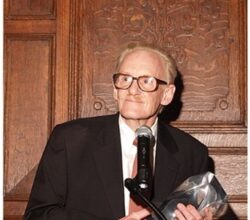
Writing well about art is difficult, something quite obvious when one reads the very bad or very good. Schjeldahl was in the latter camp as this appreciative essay makes clear. He had a gift for vivid expression – Diane Arbus’s photographs “resemble the gaping barrels of loaded guns.” His writing was focused, always “in command of what it omits”. Perhaps most importantly, he didn’t take art criticism too seriously, viewing it with “a gruff, good humored affection at least as deep as love at first sight”.

The strange poses of modern man

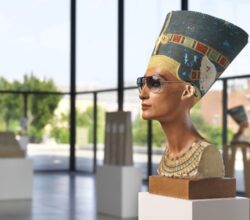
Genzken is a star German artist, with a CV full of prestigious exhibitions. But how to characterise her work? Starting as a Bauhaus-influenced minimalist, she has moved toward “punk conceptualism” – trash, concrete windows, “deranged mannequins” and, of course, plaster casts of Nefertiti. Genzken says, cryptically, she is “concerned with fluidity and opposed to rigidity”. Says a Berlin collector “Isa is a tsunami”. A video (22 min) is here. (Google translate)

Ansel Adams: Eight of the most iconic photos of the American West

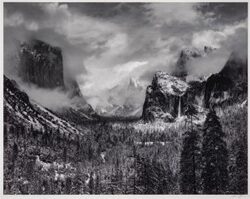
Adams “stirring” black and white images remain hugely popular. His aesthetic was shaped by the romantic idea of manifest destiny – an America, expanding ever westward to find prosperity and fulfillment. An immediate motivation, though, was to make images that promoted the new idea of national parks. With Yosemite in his image finder, Adams hoped to capture the spirituality of the wilderness, thus tapping into nostalgia for a “pure” frontier America that no longer existed.

Spotlight on Reynolds at Kenwood House: celebrating the artist who dominated English cultural life in his age

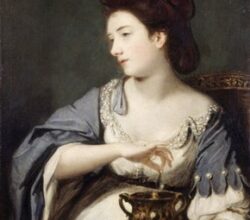
A London show celebrates the 300th anniversary of Reynolds birth. Coverage is mostly deferential – founder of the Royal Academy of Arts, his renowned portraiture and so on. This fawning is all too much for one critic who can’t resist speaking plainly. “Reynolds has no imagination as a painter. [He] doesn’t have enough empathy with his sitters to expose their souls, His portraits are cynical hackwork. A minor talent [who] like the aristocracy, just won’t go away.”