The Easel

8th August 2023

Lisa Yuskavage’s bodies of work

Yuskavage’s latest solo show re-ignites the debate over her “icky” paintings. Some critics and curators are troubled by her “vulgar” nudes. She knows that but embraces vulgarity nonetheless, her idea being to “give the culture the nude that reflects its preoccupations”. Anyway, with her lolly pop colours and Old Master painterliness, there is much more to her work than breasts. Laughs Yuskavage ““I’m Little Miss Underestimated. They think I just do the tits.”

Why would the rich showcase the poor: the art of Giacomo Ceruti

Although just a “skilled journeyman” Ceruti stands out. That’s because of what he painted –portraits of the poor. Portraits in eighteenth century Italy were expensive and Ceruti’s works, empathetic, focused and full of detail, certainly would have been that. The poor were a large part of society, yet these works are devoid of any moralizing tone. So, the question remains, “who would want these “insolent and gigantic reportages in their home?” And why? Nobody knows.

Will Vogt, These Americans

A notable photobook appeared a few years ago featuring partying young English aristocrats. Cross-Atlantic fairness requires coverage of the American equivalent. Vogt is a member of the wealthy East Coast elite, which explains how he could get images of such candour. They offer a profile of a social class accustomed to “privileged hedonism”. Given today’s political correctness, the reviewer expects this book will “plop like a lead brick”. Images are here.

Burma to Myanmar: 1500 years of connection and isolation

Myanmar’s isolation is such that its art is almost never seen internationally. This piece, basically a primer on history and culture, helps explain why. Myanmar’s many kingdoms and tribes historically had separate identities until awkwardly aggregated at the end of colonialism. Never properly recognized as part of the nation’s identity, this multiculturalism yields both cultural richness and constant conflict. There isn’t even agreement on whether it is Burma or Myanmar!

Who is Herzog & de Meuron’s Royal Academy show for?

Herzog & de Meuron are ‘starchitects’. A high profile London show offers a peek into their back office Yes, it reveals the “remarkable trajectory” from austere houses to mega-projects. It also acknowledges H&M’s imaginative use of materials. But architecture is a collaborative endeavour. What is the aesthetic or design philosophy that unites such a remarkable team? This show has an impenetrable quality – “made by architects, just for architects”. Images are here.

The New Renaissance of Old Masters

Old Masters paintings have long suffered declining demand. Amidst nervous talk of a broad market correction, some brave souls think that trend is reversing. Explanations include a fillip from the Vermeer show, the popularity of newly uncovered female artists and the low cost of old works. Whether tastes have shifted is unclear. At least one collector is confident though – “we are on the cusp of a re-evaluation [which] could happen very quickly”.

1st August 2023

From the ruins of the future

An elegant speech about Kiefer, just awarded the German National Prize. At a public event in 1970, Kiefer raised his arm in a Nazi salute in an attempt to break through “the silence and the self-justification” about the Nazi era. The ensuing controversy revealed Germany as a “community of shame”. Kiefer’s paintings, with their unconventional materials and “confrontational” scale, “not only reveal the scars of history, but also look into the open wounds of the future.” An interview with Kiefer is here.

A Must-See Matthew Wong Retrospective Reveals New Sides of an Artist Whose Story Is Still Emerging

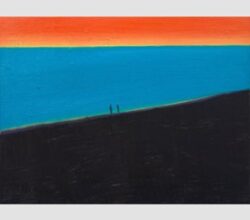
Art history loves the story of the young artist suddenly struck by greatness. Such stories are prone to exaggeration and in Wong’s case become “too grandiose for work that’s so humble”. A Boston show includes among his earliest works a few of his duds. It took him a little time to find his footing as a Canadian of the Asian diaspora. Once he did, though, his unique, lush landscapes with their small insignificant figures included a bounty of masterpieces. Images are here.

Pueblo Pottery Comes To Manhattan At The Met And Vilcek Foundation

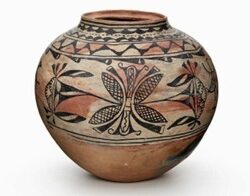
Pueblo pottery, a quintessential Native American art form, is regularly evaluated by museum curators in terms of Western aesthetics. Puebloans think that is a misunderstanding. To them, pottery is all about a “group narrative”, about people and place. A pottery show, currently in New York, takes a community approach to curation, with over 60 individuals involved. Said one, about a favourite piece, “[it] sings loudly to me through its design and its lived experience.” Interactive images are here and a video here.

The Raphael of Flowers: Pierre-Joseph Redouté

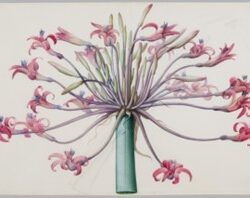
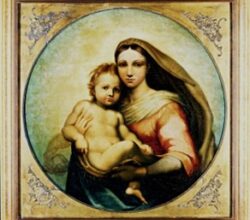
To be described as the “Raphael” of anything is high praise. Born into an artist family, Redouté found his way to Paris at a time when botanical illustration was fashionable. He was soon a fixture at the Versailles court, survived the Revolution and won Empress Josephine as a patron. His rendition of her collection of roses is still acclaimed and her iris collection filled eight volumes. These publications underpin his current reputation. After Josephine’s death, Redouté abandoned botanical fidelity and painted purely for beauty.

‘Clearly a copy from the 19th century’—Old Masters scholars reject AI-attributed Raphael

Technologists have used AI to attribute a much-debated painting to Raphael. Previously thought to be just a copy, this finding calls much connoisseurship into question, to the displeasure of Old Masters experts. Says one “This story is so perfectly AI; it can’t tell what’s real or not”. In response, a technologist claims that AI can detect “subtle differences, for example brushstroke patterns, colours, hues … in greater detail than the naked eye”. Recent pigment analysis is consistent with the AI finding. Expect more fireworks!

“Becoming Van Leo”

Our interest in identity long pre-dates social media. Take the case of Van Leo, the Cairo-based photographer. Fascinated by Hollywood imagery, he used the same style for Egyptian film stars… and himself. Starting in the 1930’s he created multiple identities that spanned gender, race and class. Cindy Sherman and Gillian Wearing have made these explorations feel commonplace but Van Leo’s puzzled contemporaries thought he was “a sort of Hollywood-adjacent enigma.” Images are here.