The Easel

27th May 2025

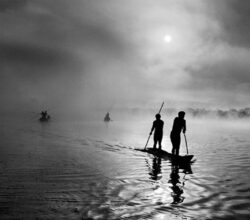
Remembering Sebastião Salgado

Salgado’s preferred self-description was photographer, not artist. His widely acclaimed, black and white, documentary-style work drew attention to environmental despoilation, Indigenous cultures and human labour. His most memorable work focused on the Amazon rainforest and illegal mining, images one critic described as “romantic narrative … [without] a drop of sentimentality”. Pushing back on criticism that he “aestheticized poverty”, he said “why should the poor world be uglier than the rich world?”

Revenge may be Sweet but Success is Sweeter

Gentileschi is an artist for our age, not just a first-rate Baroque artist but also a woman who overcame misogyny in pursuit of an art career. Has our view of her as a “proto-feminist” blinded us to a fuller interpretation of her work? Was her rape by a family friend the defining experience we might think? Was political power an equal motivation for her heroines as female revenge? Gentileschi has not been well served by stereotypes. Yes, she painted “sexual oppression”. She also painted maternal tenderness.

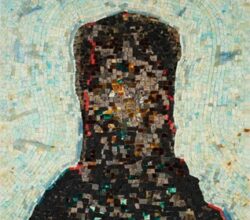
The Splintered Beauty of Jack Whitten’s Paintings

Such was Whitten’s facility with manipulating paint that one writer wonders if some of his paintings are sculpture. Other works have a resemblance to photographs due to the “precision” of the images. And then there are paintings that are mosaics. Whitten was happy to “follow his materials over the edge to the not-yet-known,” the end result being abstractions of the highest order. Whether his works carry specific meaning is unclear. “He’s not asking us to make sense of it. Just dwell there”. A video (12 min) is here.

The British Museum’s Hiroshige exhibition will restore your faith in art

The Japanese artist Hokusai had a major influence on 19th century European art but so too did Hiroshige. His landscapes depicted real vistas and were filled with a riot of colours – “seas like sapphire, skies on fire, acid reds and oranges”. Their expressiveness, done in the fiendishly difficult medium of woodblock printing, won van Gogh as a fan. Hiroshige can fairly be considered a “great precursor to the Impressionists”.

National Gallery Rehang: First Pleasure, Then Politics

Who cares about the re-hang of London’s National Gallery? Many people were, worried about that its Eurocentric, masterpiece-laden collection might be hijacked to tell some new curatorial story. They needn’t have worried. Works largely follow a chronological sequence and downplay today’s cultural battles. Works mostly tell the stories of their times and their presentation strikes a balance between “education and entertainment”, even though the male gaze remains strong.

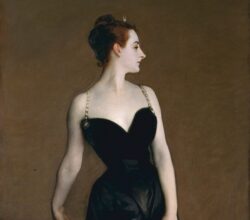
As the Met’s Gorgeous New John Singer Sargent Exhibition Proves, There’s Much More to Madame X Than That Scandalous Strap

A favourite art world story. As an early career artist in Paris, Sargent was working hard to establish his reputation. An audacious portrait of “Madame X” for the 1884 Salon suited not only his career ambitions but also the desire of his subject to enhance her social position. These plans came unstuck with scandal erupting over the portrait’s supposed immodesty. Sargent soon left Paris for London where it quickly became evident that his career prospects were undimmed. A video (22 min) is here.

15th April 2025

David Hockney 25 review: an absolutely enormous splash

Hockney is probably Britain’s most beloved, and widely covered, living artist. What can be learned from a huge Paris retrospective? Renowned for his optimism, Hockney’s recent work is more introspective, pushing back on accusations he is a hedonist. He remains prolific. And, seeing Hockney at scale reminds (again) that he is “a fabulous painter”. Another agrees “Like Monet and his Haystacks, there are things from our time that Hockney has shown us how to see.” A review of some key works is here.

Suzanne Valadon

Valadon is usually considered a minor figure in fin de siècle Paris. A “stellar” retrospective indicates she is more than that. Entering the bohemian art world of Montmartre as a model, she somehow managed to become an artist herself. Not surprisingly, themes of motherhood and adolescent self-discovery appear often in her paintings. Her female figures are shown empathetically, as “subjects, not objects”. Although they are being scrutinised by the artist, “their secrets and obsessions are their own”.

What-ho, Watteau!

As with Vermeer, we know little about Watteau. He came from modest Flemish circumstances and lived a “vagabond life”, mostly in and around Paris. An acute observer of life, his portraits and scenes of soldiers have nuance and emotional depth. His re-invention of the fêtes gallantes genre owed something to Flemish art traditions but more to imagination and an attentiveness to fashions of the day. Watteau is unsurpassed in “capturing feminine elegance” and communicating that “elegant pleasures are fleeting”.

Grayson Perry’s Delusions of Grandeur asks not if it’s great or even good art, but if it makes you laugh – and it does

Perry, a potter and famously a transvestite, seems a very British artist., His art is both cerebral and full of anti-establishment humour. A new show of pots, prints and tapestries, spread amidst the ornate rococo splendour of London’s Wallace Collection, is a case in point. Replete with fictitious identities, it includes items such as a tapestry in “hallucinogenic” colour that “makes you chuckle with respect at [its] mad hubris”. The only thing that doesn’t work, says a writer, is Perry’s claimed status as an underdog.

Singh in exultation

What is going on in Singh’s paintings? A “pioneering” post-Independence artist, her works combine Indian elements like folk narratives and court painting with Surrealist influences. Teeming with ideas her works present detailed narrative tableaux that are “incohesive yet beautiful”. Even western eyes can detect themes of domestic life and India’s history of communal violence. Having struggled to interpret Singh’s work, one writer seems to give up and simply admires the “lush colours”.

Discover the Cubist World of Fernand Léger

A primer of sorts on Léger, who gets less attention than he should. He started thinking about cubism after a Cezanne exhibition in 1907, but an even bigger visual epiphany was seeing the sun glinting off gun barrels during WW1. Viewing the machine age with great optimism, he combined a “tubular” style of figuration with the use of primary colours to communicate how different the new age would be from the natural world. Léger’s emphatic use of primary colours is now regarded as a precursor of Pop art.