The Easel

10th June 2025

At the Yale Center for British Art, Tracey Emin’s Brutally Intimate Works Demand a Reckoning

Tracy Emin, the British artist, sure has an ability to divide opinion. A US show displays her large paintings that address personal experiences – abortion, her romantic life, femininity. It’s an “emotional broil … in your face confrontational”. One critic is left unmoved by the “sketchy compositions of splattered reds and female undercarriage. Emin has long seemed incapable, or at least unwilling, to make art about anything but herself. Her art production has long outpaced her institutional acceptance.”

The flying Dutchman

De Kooning and Pollock were the two artists who established abstract expressionism. De Kooning, with his exacting training in drawing, never entirely relinquished figuration. His acclaimed “Women” series, for example, is a mix of abstraction and “ghosts of figures”. In addition he was, says one writer, an “enchanting colourist”. His reputation has suffered for decades but with figure painting now resurgent, he is back in vogue. “A timely show [and] a revelation”.

Hilma af Klint’s Botanical Drawings Probe Spiritualism and the Unknown

Hilma Af Klint’s large abstract paintings of geometric and organic shapes were inspired by her spiritual beliefs. In mid-career, she found another source of inspiration – seasonal flora. These watercolours on paper have the intricacy of scientific illustrations but placed next to each plant was a pictogram. Her objective was to compile a kind of botanical atlas that showed the spiritual character of each plant. A “jewel box exhibition … a seemingly growing resonance with contemporary audiences.”

Cartier: Jeweler of Kings, King of Jewelers

In the pecking order of the decorative arts, the look-at-me jewellery of Cartier is hard to beat. A London show of its pieces, drawn from aristocratic collections and Cartier’s archives, is “astonishing”. It profiles many aesthetic trends and tells cultural stories such as the Indian maharajahs bringing their ancestral jewellery to Cartier for re-setting. Yet it’s hard to resist the view that although exquisite, this is bling, made irresistible by the marriage of celebrity and great wealth.  Images are here.

Roberto Longhi: the tastemaker with a penetrating style

Longhi, along with Berenson, is a foundational figure of modern art history. Before him, Italian art largely meant the Renaissance in 15th century Florence. Longhi thought it was more. He highlighted della Francesca, not a Florentine; broke centuries of silence about Caravaggio and 17th century Italian art; and promoted a young Morandi. On top of that, he was a stylish writer. Longhi’s wife, Anna Banti, besides contributing to his writing, revived interest in Artemisia Gentileschi.

Asian painters were ‘othered’ in Paris a century ago. Now, the art world is taking note

We like to think of of 1920’s Paris as the place where great European talents invented modern art. That’s only part of the story. The city also hosted hundreds of Asian artists. They faced the usual challenges – money, a network, critical acceptance – plus more complex issues around how to relate to modernist ideas. If they embraced modernism, would they still be “Asian” artists?  Mostly they were met with indifference. Now, rapidly rising prices at auction serve as a reminder of their achievements.

Beyond Grosz

Germany’s Expressionist movement used shrill colours and bold forms to convey the anxieties of urban life. But defeat in war, a failed monarchy and a failed Weimar republic yielded tumult and a view that expressionism was “overly aesthetic”. Artists like Beckmann, Dix and others responded with “New Objectivity” art that was technically more traditional, yet pitiless and brutal.  Soon to be called degenerate, it portrayed a Germany losing its collective mind. “It is impossible not to see a ticking alarm clock”.

3rd June 2025

Lewd, Problematic, and Profoundly Influential

Robert Hughes called R Crumb, the cartoonist, “the Brueghel of the last half of the twentieth century”. Once a sub-culture illustrator, he is now seen as a widely influential artist. “Technical virtuosity and imaginative range” explain this change as well as the “ruthless introspection” of his personal oddities. It’s a mindset well suited to illustrating “modern American psychoses”. His candid graphics, once seen as over-the-top, now appear, according to his biographer, “profoundly articulate, thoughtful comics”.

A refreshed Rockefeller Wing reopens with a bang at The Met in New York

New York’s Met has re-opened its wing that houses art from Africa, Oceania and the Americas – what was once called “primitive” art. Apart from the meticulous architecture, what you see seems to depend on what you think. One critic sees a jumble of unrelated objects that perpetuates “colonialist” attitudes while another swoons at the newly respectful and scholarly displays. Few will disagree with the judgement that this is “some of the most moving art, old or new, you’ll ever see.” Images are here.

It’s among the largest collections of Michelangelo sculptures ever shown. But there’s a catch

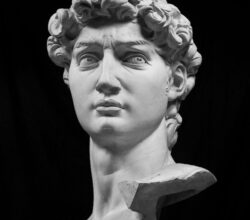
One writer calls artwork reproductions a “dirty concept”. Yet in the case of Michelangelo’s revered sculptures, not only are the originals mostly unavailable but some copies are themselves old and rare. A Copenhagen museum takes the plunge with a large Michelangelo show, using a mix of old plaster copies and digitally perfect facsimiles. Copies may not carry a sense of the miraculous but the curator decries the “fetishism of authenticity around original objects”. Wonders the writer, are they “Michelangelo enough”?

The second birth of JMW Turner

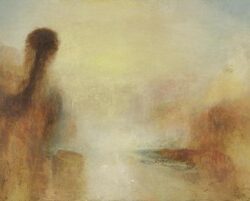
Turner’s contemporaries understood him to be a prodigy. His lovely “topographical draughtsmanship” changed on seeing the landscapes of Claude Lorrain. Not only did they convince him that landscape was an “elevated subject”, but he was seized by Lorrain’s atmospheric “ether”.  Turner became a painter of “mass, tone and light”, or as he commented “indistinctness is my forte”. His late works baffled many but, over a century before abstract expressionism, he had “redefined what landscape painting could do”.

See the Flower Paintings of Rachel Ruysch, Whose Stunning Still Lifes Are Finally Getting the Attention They Deserve

Ruysch has been flying under the radar for centuries. Her “sumptuous” floral still lifes were painted when botanical samples from the Dutch empire were flooding into Amsterdam. Although still life painting was not prestigious, she painted such a variety of plants and with such accuracy that they seemed akin to (manly) scientific inquiry. Such was her virtuosity that she commanded higher prices than Rembrandt. After her death, Ruysch was more or less forgotten. This is her first solo retrospective ever.

V&A East Storehouse is a thrilling meta-museum for the future

Most objects in museum collections rarely get exhibited. London’s Victoria & Albert Museum, for example, has 3500 pairs of shoes, most of which are in “deep storage”.  That museum has now opened a “storehouse” where the public can inspect the collection, either browsing out of curiosity or requesting items for close inspection. In the absence of curatorial logic, the ruling idea is the “primacy of the object. It is more factory than gallery, and all the better for it … a revolutionary prospect [for museography]”.

Giuseppe Penone: Thoughts in the Roots

Arte povera came to prominence in 1960’s Italy as a celebration of natural materials. Penone, a star of the movement, is famous for his many works – especially sculptures – featuring trees. All well and good but a London “mini-retrospective” has critics struggling to show much enthusiasm. The linked piece tries hard before admitting that the show feels “unduly modest” and many of the works are “underwhelming”. The show, says one writer, is “a beautiful idea but with underpowered results.”.