The Easel

6th September 2016

MAD ENCHANTMENT: Claude Monet and the Painting of the Water Lilies

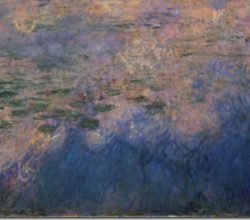
Monet’s water lilies project was wildly ambitious. Partly it’s the scale – the 22 panels total about 300 feet in length. But when the paintings left his studio after his death, Monet’s ambition was more fully revealed.  These were career-defining works that extended Impressionism “to the edge of pure abstraction”. Recognition of this, which took decades, has placed Monet among art’s immortals. A chapter of this book is here.

Image: Wikipedia

Camera-phone Lucida

Instagram viewed in the context of art history. The first selfie was a Renaissance carving. The first food pictures were seventeenth century Dutch still lifes. Romanticism gave us dogs playing in the grass. Instagram delivers what great artists have always found fascinating – “the lives of the people around us, and those of people we’ve never met.”

Image: Wikipedia

‘Alternative Dreams: 17th Century Chinese Paintings From the Tsao Collection’ at LACMA

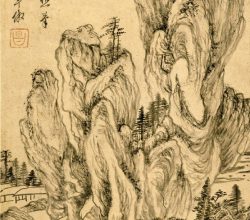
China’s Ming dynasty (1368 – 1644) was a period of significant artistic achievement and Dong Qichang one of its leading lights. A scholar as well as calligrapher and artist, his concept of painting from nature found many followers. In landscape painting, in particular, his expressive, less academic style was influential for centuries. “China’s Cezanne” is the writer’s summation. More images are here.

‘Can Old Masters be relevant again?’ (ctd.)

Is interest in Old Masters paintings declining? A recent New York Times article says yes. The writer, an art historian, disagrees. Bosch and Caravaggio, for example, are hugely popular. Still, one dealer wonders “where the collectors have gone, the people with knowledge … a really good Rembrandt [costs] $40-50m … not a lot of money when you think about how many Rembrandts there are – and how many Jeff Koons”.

Why Do Critics Still Hate Andrew Wyeth?

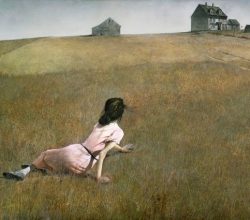
American realist painter Andrew Wyeth copped heaps from the city based critics of his day – “hopelessly conservative”, “dreary”, and more. But the crowds have always loved him. A retrospective next year will advocate a place for Wyeth in America’s realist tradition. But will a new generation of critics warm to his rural imagery?  “There are not just differing ideas about art at stake but competing visions of America.”

A Net Art Pioneer Evolves With The Digital Age: Rhizome Turns 20

If you find internet art hard to grasp, try this piece. Rhizome is a NY based not-for-profit and its ArtBase archives net art. It has become “a kind of protector of data, trying to preserve the moment—and technological atmosphere—of the day.” Now affiliated with New York’s New Museum, things are a little more serious – additions to ArtBase are by invitation only. Sounds like net art is here to stay.

30th August 2016

Easel Essay Nicole Eisenman and the Resurrection of Figuration

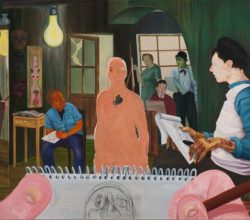
Grants awarded by the MacArthur Foundation are popularly called “genius grants”. When one was given last year to a figurative painter it was much more than a nice career development for the artist concerned. Easel Contributing Editor Morgan Meis argues that it signaled a broader shift in thinking about this form of painting which, for large parts of the last century, has been out of vogue.

“The beauty of a painting, as opposed to a photograph, is that you can put anything onto the canvas as long as helps fill out the narrative. The great painters of old discovered this fact long ago, artists like Peter Paul Rubens, with his giant canvases packed full of human bodies in complicated, many-layered levels of interaction. These lessons were set aside when painting, traumatized by photography, engaged in a non-representational journey of self-discovery that lasted for much of the last century. Today, the paintings of Nicole Eisenman serve notice; figurative painting with a narrative thrust is back in earnest.”

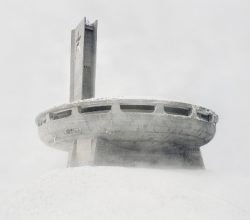
Ruin porn: the art world’s awkward obsession with abandoned Soviet architecture

Images of ruined Soviet era structures -“ruin porn” – are enormously popular. Why? Is it pleasure at the demise of Soviet Russia? Perhaps we are trying to avoid admitting that Western economies have also given rise to “ruins”- for example, Detroit.  Or, perhaps, disenchantment with utopian ideas – “”When there is a visualisation of [utopia], it evokes a response in people … There is disappointment in all utopias.””

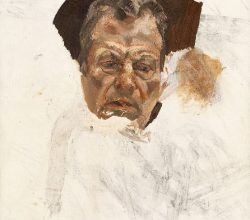
Lucian Freud: The Pitiless Eye

A small London exhibition shows the essence of Britain’s “greatest, strangest modern portraitist”. Freud had an almost eery view of the portrait – “the paint is the person. I want it to work for me just as flesh does”. For the writer, this gave Freud a “rather uncomfortable, even frightening power. For his sitters, vanity was out of place, affectation was punished; there is something rough, and dangerous about his work.”

Sorry, I’m Not Sorry

Politicians do it, celebrities do it … ours is the era of the set piece apology. Admissions of colonial-era misdeeds, in particular, are sometimes coupled with art exhibitions. Does this compromise the art – “art as consolation prize, exhibition as band-aid”? But art gets conscripted to aid all sorts of causes. When was it ever not thus?

In a bizarre trial, a judge rules in favor of famous artist Peter Doig

The principle that an artist is the final authority on their own work has been challenged in a US court case. Acclaimed artist Peter Doig was sued for denying he painted a particular work. Some seem to think involving the courts was a good idea. Not Doig who, despite winning the case, remains unhappy. “I feel a living artist should be the one who gets to say yea or nay and not be taken to task”.

Why People Collect Art

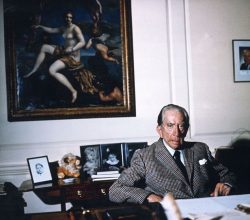
A somewhat less than charitable history of art collecting. The Roman rhetorician Quintilian deemed art collecting “an ostentatious desire to seem persons of superior taste.” Tax evasion and spreading one’s “message” also get a nod.  A favourite bad boy is J Paul Getty.  He bought antiquities because that’s what European aristocrats did. He eventually placed these treasures in the Getty Museum but never visited.