The Easel

26th May 2026

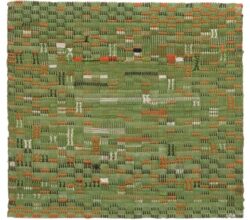
Anni Albers: the weaver who rewrote modernism

Albers began studying textiles at the Bauhaus which she found to be competitive and sexist. After leaving Nazi Germany for the US, she developed textiles as a serious medium within modern art. A solo show at MoMA in 1949 was a turning point, showcasing works that were abstract yet emphasised the inherent quality of materials. The way she prioritised structure over decoration led one critic to call her a “fabric engineer”.  Her late printmaking likewise created images “through process rather than gesture.”
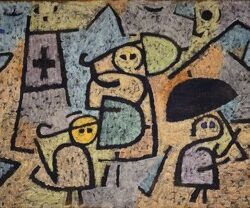
Paul Klee

The Nazi’s pursued Klee as a “degenerate” artist. Sacked from the Bauhaus, he went into exile where his art changed. His “wiry, scratchy black line” drawings, previously so often focused on idealised nature, turned to irony and satire as ways to confront fascism and political violence. This interpretation isn’t explicit in his work leading to complaints of “curatorial over-reach”. However, such criticism seems to deny the obvious that, disenfranchised by the Nazi’s, Klee would respond through his art.

Remembering Raghu Rai: The photographer who showed India to itself

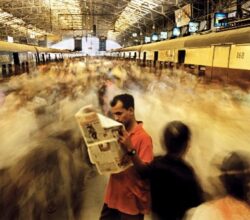
Rai was widely regarded as one of India’s foremost photographers. He chronicled major national events, such as the 1980’s Sikh militancy, with an understanding of the nation’s contradictions. His portraits of India’s political and social elite shaped how the nation saw its leaders. Just as importantly, he recorded the rhythms of everyday Indian life in a way that “bridged reportage and art”. He aimed, he said, to capture “life’s longing for itself.” Images are here.

Mum isn’t the only word at Tate’s magnificent Whistler show

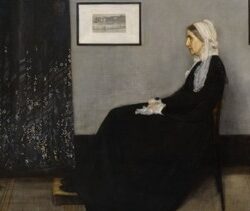
Whistler is rarely seen as a star of 19th century art. Living in Europe during the Japonisme craze, he absorbed it unfussy aesthetic, producing landscapes with features that are suggested rather than fully detailed. The famous portrait of his mother is likewise a study in restraint and proof that art could be both “abstract and accurate”.  But Whistler was an “egomaniac” and his own worst enemy, distracting us from the fact that he made “extraordinary and genuinely revolutionary paintings”.

Leonora Carrington At Last

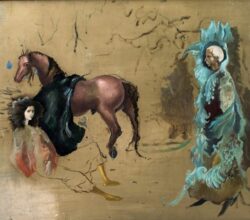
Slowly, Carrington’s place in 20th century art is being revised. Long seen as a surrealist “affiliate”, the macho character of that group (unsurprisingly) put her off. After the war, she ended up in Mexico where her art became a synthesis of pictorial imagination, feminism and the Celtic cosmology of her youth. Says one writer, the home for her became a “site of feminine power and magical metamorphosis. [For] Carrington, art was not an illustration of magic but its continuation by other means”.

Admit it, art snobs: Winston Churchill was a surprisingly decent painter

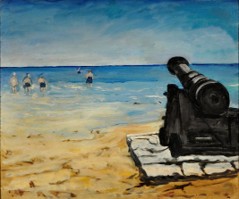
Some readers will wonder if Churchill has sufficient artistic cred to grace the pages of this newsletter. Well, the writer is emphatic that “on occasion he was surprisingly decent”, especially his landscapes of the Atlas mountains and of Marrakech. Admittedly he did not have the “blazing audacity” of Matisse but “occasionally a painting by him really comes together”. Comments by the curator (here) appear to indicate the show was not her idea.

The 21st Century’s Biggest Art Trend is Not a Style. But Once You See It, You’ll Notice It Everywhere

Systems art draws attention to the vast web of linkages that underpin modern life. Such art takes many forms, such as Burtynsky’s “industrial sublime” photography, or documents about intelligence gathering networks. These networks seem to be presented as undesirable, perhaps because they reduce our scope for “expressiveness”. But in an age of social media, is that right? With globalisation and the reality of climate change, isn’t such art sounding a little 20th century?

19th May 2026

Human Touch Wins Big With the 2026 Loewe Craft Prize

One writer, reviewing the Loewe Craft Prize, refers to the “tension” between craft and art. An alternative view is that the works on display emphasise, yet again, that craft occupies a unique aesthetic space. Fine craft, if one can call it that, is not about practical use but about materials, their uses and limits, and the techniques needed to create something. It’s “another way of thinking about objects”. Amidst anxieties about losing human invention a finalist observes reassuringly “we think through our hands”.

Beauty and Ugliness

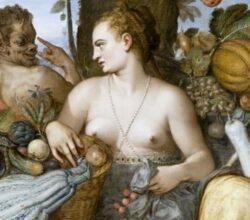
Renaissance artists had a fixation with beauty. Having inherited the ancient Greek view that beauty arose from symmetry and geometry, they added to it by introducing anatomical realism. Further, they thought that outward beauty expressed inner virtue. Of course, there was also a fascination with ugliness, which was deemed to manifest absence – an absence of virtue,  a disordered soul. Modern values eclipse these views; we prioritise the interesting; “strange faces are infinitely more alluring”.

The Ignorant Art Historian: The Blind Man’s Meal

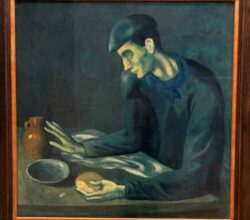
Current art criticism is often consumed by political or identity issues. Another, older approach, such as this piece, takes a more lyrical interpretation of a painting. This discusses a Picasso work.  “The man is not only sightless but eyeless; his sockets, which are dark green, are empty. The man is scarcely distinct from the dark gray room. It is as though we cannot see clearly anything that he cannot touch—the room above all. [But] he is not so alone after all; he is with things in a way that the sighted are not.”

‘It’s Personal’: Aerin Lauder Zinterhofer and Max Hollein on the Met’s Groundbreaking Merger With the Neue Galerie

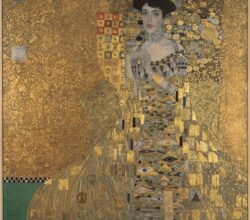
Successful museums rarely merge. This merger of New York’s Met and the Neue Galerie is described as “one of the most significant institutional partnerships in American museum history”. Neue Galerie, with its famous collection of early 20th-century Austrian and German art, brings strength to an area where the Met is (relatively) weak. In return the Met appears to be offering longevity. Says Neue Galerie’s (not immortal) founder “I want to make sure … the Neue Galerie will stay the Neue Galerie.”

AI induced cultural stagnation is no longer speculation − it’s already happening

As AI-generated imagery expands, one possible outcome is “cultural stagnation”. AI systems naturally produce “compressed and generic” outputs. Training other systems on this material could result in images that favour “the familiar and the conventional”, leading to a loss of diversity in our visual environment. One might spot a silver lining here. The spread of slick AI imagery is feeding a new appreciation of the hand made, “lo-fi” imagery that contains the minor imperfections characteristic of humans.

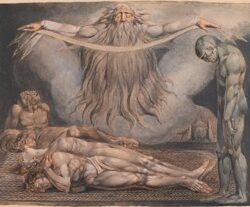
I thought William Blake was a one-off but this powerful show surprised me

Blake’s England was buffeted by the American Revolutionary War, the French Revolution and a “mad king”. Given this fraught society, perhaps we should not be surprised that Blake seems “totally bonkers”. Showing him alongside his contemporaries (including JNW Turner) reveals that they too painted monsters and fantastical beasts. The spirit of that age was “joyless people in unhappy landscapes.” Even so, no one was quite as good at “imagining the unimaginable” as Blake. He was unique.