The Easel

21st March 2017

Whitney Biennial 2017

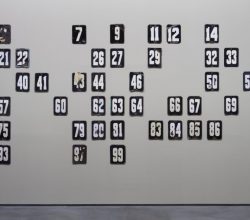
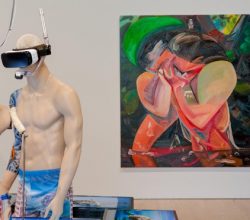
The Whitney Biennale is America’s premier event showcasing contemporary art. Discontent with current US politics is a major theme – Jerry Saltz calls it the “most politically charged” show in decades. This writer thinks there is a broader range of animating issues but still agrees with Saltz, kind-of. The show “[doesn’t] trumpet an overarching theme. Yet it’s impossible not to read it as a state-of-the-nation exegesis.”

Image: Frieze.com
The Fate of the Critic in the Clickbait Age

A topic dear to The Easel’s heart. Newspapers’ challenge to arts criticism is ‘why publish what no-one reads’? This feisty essay pushes back. Is the value of cultural commentary adequately measured by click rates? As the writer tartly observes, criticism is “the only antidote we have to paid publicity.” Who else does the critic’s “irritating, somehow necessary job: to stand in a public space and say, “Not quite.”

Thomas Struth on Documenting Invisible Systems

Struth has had a long standing interest in complex systems. At first it was the street grids of big cities, then big museums, jungles, and now big technology. “The pictures of technology have to do with the mindset of entanglement and passions and failures … When someone gets obsessed with something [technological], he can’t look at himself with perspective.”

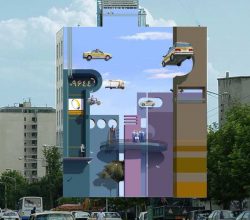
Double Take: Medhi Ghadyanloo uses the art of illusion to reveal truths

Some years ago Tehran felt a need to brighten itself up. It tendered for ideas and new art graduate Ghadyanloo submitted ten, all of which were accepted. Another 90 surrealist, building-sized murals have since followed, as has international attention. “I feel a responsibility, especially for Tehran, because there, people there are on the edge, you know. I was one of them.’  More images are here.

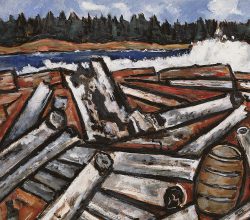
“Marsden Hartley’s Maine,’ His Muse, First and Last

Marsden Hartley, the greatest of the early American modernists, was from small town Maine. But he was gay at a place and time when that was particularly difficult. Cosmopolitan Paris and Berlin were a much happier fit but then came the First World War and a return to the US – and Maine. The focus of this show, as the curator comments, is “if you are from one place, you leave it and you try to come back. What happens?”

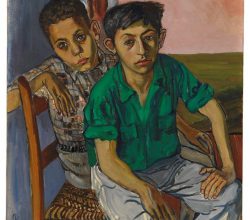
Hilton Als, Alice Neel, and the Faces Of New York

A previous linked piece on Alice Neel took an historical view of her work. Renowned essayist Hilton Als, having curated a smaller show of Neel’s work, describes her Harlem milieu. “There’s an extraordinary act of will in this world to not believe that you are seen, and then there’s this person that sees you, and … it is so moving … that those boys would come to her door and say, we hear you paint Spanish kids.”

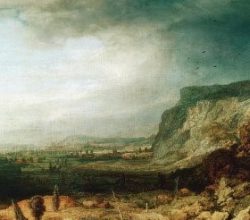
Darker Horizon

Holland’s golden age of painting is now often associated with realist interiors – think Vermeer. But at the time the Dutch were “besotted” with landscapes. This genre was home turf for Segers. He painted not from real life but from what he imagined. One keen collector of his work was Rembrandt, who copied some of his images. All in all, a “master in an age of masters”.  An excellent short video (4 min) is here.

14th March 2017

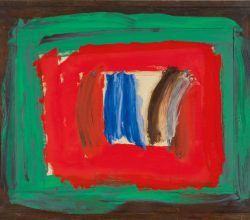
Howard Hodgkin, Whose Paintings Were Coded With Emotion, Dies At 84

Critics describe Howard Hodgkin as focused on emotional interiors, a subject explored in particular by Bonnard. Hodgkin described himself in similar terms: “I paint representational pictures of emotional situations.” But neither characterization pinpoints why he was so distinctive and so lauded. One critic gives an answer – “the finest colourist in painting since Mark Rothko.” More commentaries are here.

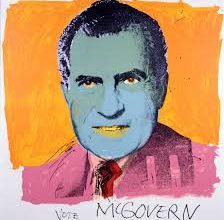
How art chronicled the birth – and death – of the American dream

Pop’s mass market tastes suited print making and sparked, in America,  no less than “the great renaissance of the print “. The role of Pop in printmaking is also picked up in another review, one that verges on the bad-tempered. Why is the British Museum, “full to the brim with what it owns already”, borrowing works to stage a blockbuster? “Is it some kind of a joke?”  Some images here

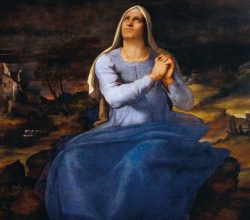
The special relationship

As Michelangelo worked on the glamour commission of the Sistine Chapel, Raphael was working on the Papal Apartments. Competition irked Michelangelo who began a painting collaboration with the young Sebastiano. It suited both – Michelangelo’s drawings enhanced composition while Sebastiano’s painting prowess aided execution. Best of all, for Michelangelo, he got most of the credit.  A nice video (3 min) is here.

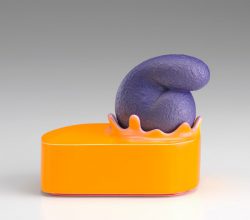
Pottery, But Not As You Know It

Few artists would admit, as does Ron Nagle, that hot rods are a source of inspiration. Their loud auto-body colours still feature in his work which pays cheerfully little regard to the rules of craft ceramics. That’s OK – he sees himself as a sculptor and a West Coast sculptor at that. Some of his small “painted objects” look good enough to eat but others look “like nothing else on earth”. Multiple images are here.

Images: Matthew Marks Gallery

Moscow’s First-Ever Garage Triennial Casts a Floodlight on Russia’s Elusive Art Scene

Contemporary art in Russia is diverse – the art scene spreads across 200 nationalities and 11 time zones. It is also troubled because officialdom is very touchy about free expression through art. Russia’s largest ever contemporary art show rises to the challenge, showing “a bracingly expressive slice of the zeitgeist” as well as “hard-bitten post-Soviet resilience”. A background piece is here.

See Arabic calligraphy from a new angle at Inside/Outside exhibition in Dubai

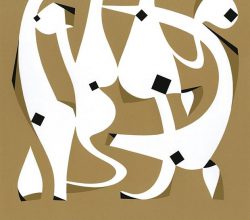
Acclaimed Arabic calligraphist Wissam Shawkat last year announced he would henceforth take an abstract art approach to this ancient lettering. Why such a radical step? From a young age, he admitted, “I have been attracted primarily to the graphic values of the letters. I dutifully studied … until at last I felt qualified to judge which principles could be overridden and unbound”. A background piece is here and images here.

Image: Islamicarts

Gluck’s rebellion against artistic and gender norms

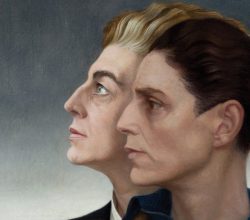
If you were going to be a rebel in 1920’s London it helped to be from a wealthy family. Then again, to be gay and Jewish guaranteed more than your fair share of challenges. Gluck painted the landscape of rural Cornwall as well as life up in London. Her insistence on solo shows limited her market profile then and now, in retrospect, there is a vague sense of an under-fulfilled talent. More images are here.