The Easel

4th April 2017

In Remembrance of James Rosenquist: 1933 – 2017

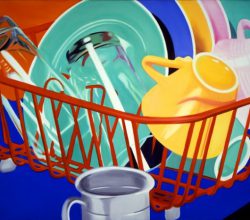
Rosenquist started off painting billboard ads but then brought this advertising aesthetic to fine art. Kapow!- he helped launch Pop. One critic noted that, unlike Warhol, Rosenquist “rendered his blue-collar view of American things without mockery”. “He extended art into the hyperspace of culture and brought more of the culture into art; [creating] what amounted to a buzzing optically alive American Cubism”

Image: MoMA
Alphonse Mucha: In Quest of Beauty

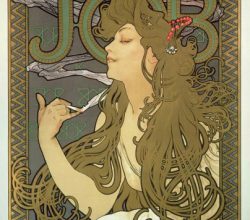
Mucha got lucky when asked to design the street posters for Sarah Bernhardt’s new play. His Byzantine-style designs were an instant sensation. Thus art nouveau was born. Huge commercial success didn’t change Mucha’s artistic beliefs – his Slavic heritage and Freemasons belief in human progress. He wanted to help promote products that benefitted people, such as bicycles and … cigarette papers.

Image: Mucha Foundation

Digital replicas are not soulless – they help us engage with art

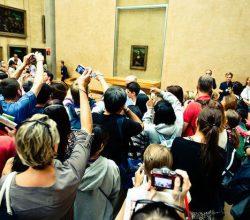
Roman sculptures were often copies of Greek antiquities. Should we regard them, or modern digital reproductions, as no different to forgeries? “The worry that replicas will lead us to lose interest in originals is just speculation”.  Crowds wanting selfies with the Mona Lisa show that “where digital reproductions are concerned, people still care about the proximity of the replica, and themselves, to the genuine article.”

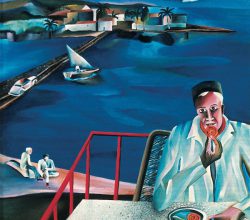
Vermeer and the Masters of Genre Painting

Coming from regional Delft and with little known about his background, Vermeer somehow got the reputation as a loner. Except it seems he wasn’t. A Paris exhibition demonstrates amply his close interactions with other contemporary Dutch artists. That doesn’t mean his works were the same as theirs. To modern eyes, his sublime interiors look “hypnotic and intimate … a sense of time nearly stopped”. Multiple images are here.

At the MFA, bearing witness to the unbearable

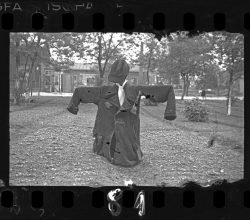
How should we regard images taken in a WW2 Jewish ghetto? Their survival is miraculous and they are a valuable historical record. Another review digs deeper. “Did [the photographer] have much of an artistic vision? Is it even fair to ask that, given the circumstances…? [If this] is art, it’s an art that gets its undeniable power through the suffering and ultimate demise of its subjects.” An excellent video (4 min) is here.

Colour is

How does colour work in art and how important is it? These issues are explored in a London show, reviewed in the linked piece. But perhaps more intriguing is the introduction to the book that inspired the show. “[T]he problem of colour is often its unreliability, its seeming randomness and its apparent autonomy. While almost always connected to objects, colour nevertheless doesn’t seem quite to belong to these objects.”

Image: Tate

Selfies at the Saatchi Gallery: This isn’t art, it’s an advert

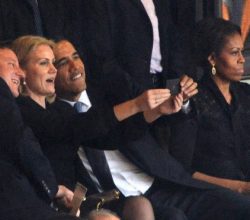
What exactly is the impact of social media’s selfie culture? Does it create pressures for social conformity or to have an enviable persona? Is it that selfies “create the illusion … of direct contact and intimacy”? Sadly a selfie exhibition in London, prominently sponsored by a phone maker, ignores all this. One critic muses “I think we know the corporate tail is wagging the art gallery dog.”

28th March 2017

Raw Material

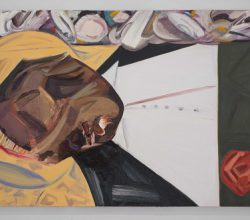
A firestorm has erupted over the Whitney Biennial including a painting of the black victim of a 1950’s lynching. The white artist is being accused of “appropriating” black suffering and “aestheticizing” horror. But these are not the only issues. “Whose art is it, and who gets to make it?” Further, are critics of the painting denying that “sympathy, and … identification, are possible across racial lines?”

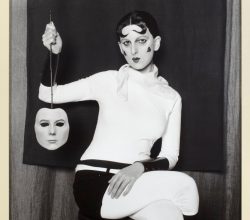
Wearing the Mask

We all put on a ‘public face’ – but what lies behind that mask? For Surrealist artist Claude Cahoun, the answer was ‘another mask’. Gillian Wearing, an admirer of Cahoun, probes these same issues in her art. “This need to author your identity seems innate … Part of our experience of life now is to look at ourselves, over and over again. Recording and living are part of the same thing.” More images are here.

Timothy Hyman’s ‘The World New Made’ – an alternative history of twentieth-century painting

The 1950’s critic Clement Greenberg dismissed figurative painting as “necessarily minor”. Critical opinion is not treating this judgement kindly and a “brilliant” new book argues that figuration deserves greater recognition in twentieth century art. “[M]ore [figurative painters] still lie unrecognised and … the full history of twentieth-century painting must therefore still wait to be written.” A fuller review is here.

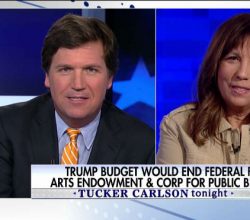
Critics of the NEA often say its funding is welfare for rich, liberal elites. They’re wrong.

The draft US budget eliminates funding for the key arts agency, the NEA. Some agree because the arts enjoy substantial private sector support and because NEA disbursements favour the rich. But NEA grant offers are often needed to unlock private support. Further, its grants are spread widely: “about 40% [to] programs in high-poverty neighborhoods and 36% … aimed at underserved populations”. More culture wars.

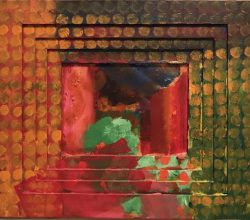
Howard Hodgkin Portraits The Insider’s Insider Review By Edward Lucie-Smith

Howard Hodgkin died two weeks before the show he so wanted – an exhibition of his portraits. Most reviews are gushing, but less so the above piece. Hodgkin’s abstract style leads to this charge – “Without the catalogue note, the painting can’t exist on its own”. But another critic sidesteps this criticism: “[W]ith artists you judge by results: the [paintings] we are left with. Often Hodgkin’s were sumptuously beautiful.”

Raucous, Disorderly Downtown

Art history tends to focus on the commercially successful. In 1950’s New York the big uptown galleries feted Jackson Pollock while downtown an eco-system of humble artist-run galleries promoted lesser names. An exhibition about these galleries shows that they promoted an “especially raucous art”. They tell “alternative art histories” and reveal “the robust roots of art-making, rather than only the flowers.”

11 Takeaways from Art Basel and UBS’s Report on the Art Market in 2016

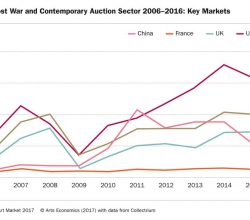
The scorecard for 2016 is out. Global art sales declined 11% to $57bn, following declines in 2015. Contemporary and modern works (75% of sales) were down but Old Masters sales recovered slightly. Art fairs account for nearly 25% of market turnover, still less than half the dealer market. Online sales grew (again) but auction sales were down 25% – and for the glamour pieces over $10m, were down 53%. Ouch!