The Easel

8th March 2017

EASEL ESSAY: Night Swimmers

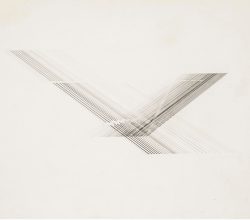
“If you love art, the possibility of revelation is always present.” Thus begins Rachel Spence’s contemplative essay about two paintings, one from 1970’s India, the other from Renaissance Venice. Although separated by centuries and cultures, these works speak to timeless questions about human existence. What is the relationship between the external environment and our internal world, our “interiority”? How does one know and express truth? And, for Rachel, what do these works – one by a woman, the other a painting of a woman – say about the choices that a woman faces in life?

Rachel testifies to the power of art to change lives. “These are images that shift your world on its axis. To look at these drawings is to feel you are witnessing a world, or a cosmos, in a state of both becoming and departure. These are visual testaments to a holy order. In the beginning, they murmur, was the Line. The images whispered to me of stillness. Of silence and solitude. Of an introspective gaze, abstract, unwitnessed.”
In Defense of Cultural Criticism in Trump’s America

What starts out as an anti-Trump rant becomes an insightful consideration of art criticism in the era of social media. A musician states that Trump will make punk rock great again. But this greatly narrows art: “akin to 31st-century scholars poring over the novels of, say, Jonathan Franzen to discover whether he thought Donald Trump was good or bad, instead of absorbing his [work] on its own terms. Its not always about Trump.”

How William Eggleston Changed the Way We See the World

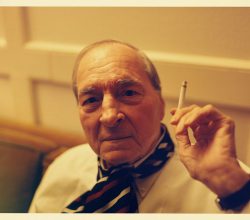
The photographer William Eggleston is having a particularly high profile year – books, exhibitions, guest of honour at gala dinners. Such a high profile that it takes some effort to put his great contribution to photography in perspective. “What he has perfected in his photographs is a way of seeing without judgment. Now it struck me that his way of looking is the visual equivalent of deep, intent listening.”

10 things to know about Peter Doig

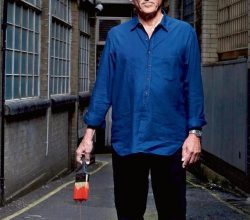
Such is Peter Doig’s importance that, in advance of selling two major works in London tonight, Christie’s have produced a nice background piece on him. Some titbits: Trinidad, where he now lives, is increasingly influential in his work; he learns from teaching art, he has a feeling for snow and he didn’t mind being the odd man out in 1990’s London: “I think that’s a big mistake for artists — to … want to be part of something.’

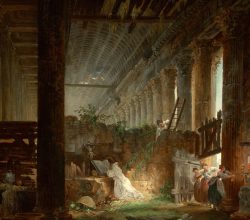
Image: Walker Art Gallery

Quantum Wall: An Interview with Jack Whitten

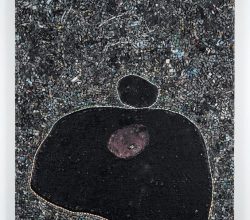
Jack Whitten comes across as obsessed with materials, constantly trying out pigments, new papers, specialty waxes and chemicals. Paint is not applied with a brush but cured slowly in slabs, cut into tiles and assembled as a kind of collage. The effect he is seeking is a marriage of contemporary and timeless: “Everything I do is grounded in geometry … [tiles are] like working with stone—it becomes a primal element.”

More on Met Directorship: My Takes on Puzzling Punditry by Cotter, Gibson, Dobrzynski, Oliver

The Director of New York’s Met has resigned suddenly. Financial woes seem important but likely not the full story. Moving into modern art has improved the Met’s image and grown attendances but has been costly and less than popular with curatorial staff. One insider also queries Board governance:  “If you look [at MoMA] it is a much more involved board with probably a higher proportion of real collectors.” (my emphasis)

‘Mind-boggling structures in a stunning landscape’: Tony Cragg: A Rare Category of Objects, review

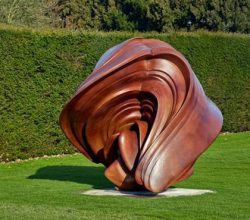
Apparently Cragg was interested in fossils as a youth. Small wonder then that now, a famous sculptor, he sees manmade objects as “fossilized keys to a past time which is our present”. That’s perhaps a clue to his work, difficult though it is to understand: “how did he dream up the ideas and processes that brought these mind-boggling structures into being in the first place?” An extended video interview (1 hour) is here.

Image: Yorkshire Sculpture Park

28th February 2017

Alice Neel, Collector of Souls

Despite being enmeshed in New York’s art world Neel’s style was immune to its famous art movements. Right from her earliest work she viewed herself as a realist painter, one without an agenda. Her emotionally insightful portraits, including those of pregnant women, now underpin a lofty reputation.  She observed “if I hadn’t been an artist, I could have been a psychiatrist.” A video (5 min) is here and images here

Depression Era Painting and Its Resonance: America After The Fall – An Extract

By 1930 the US had experienced decades of rapid immigration, war, industrialization, a stock market crash and then depression. Little wonder that artists struggled to portray this rapid social change. “It’s an unruly show from first to last, wildly stylistically inconsistent” notes one critic. But there can be no doubting the significance of the decade – or the art that emerged from New York soon thereafter. More images here.

How Egon Schiele Went From Radical Punk to Respected Artist

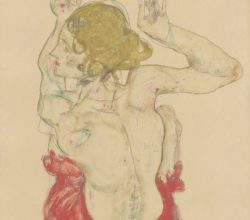
Schiele subscribed, it seems, to the view that all art is erotic. In a short career the majority of his thousands of works were nudes. Then again he was a spendthrift, living from hand to mouth and erotica sold well. By portraying subjects without contextual background he highlighted his greatest gift – line. “It defines the work conveying both form and emotional energy at a level that has not been surpassed.”

SC Edit – Contemporary Jewellery Designers in London

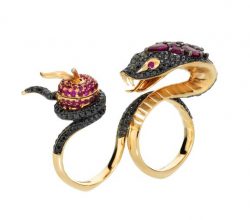
London – specifically the Hatton Garden district – boasts an organized precious metals and jewellery trade dating back over 700 years. This longevity speaks to the metalworking expertise needed to turn great design into exquisite objects. The specialization also extends to eminent design academies. For those looking for personal decoration, you now have a destination.

A Luminous Look at Turner’s Port Paintings

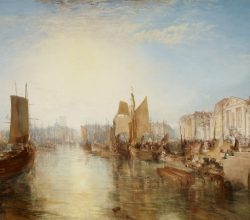
Given his fascination with light, sunset-lit vistas of bustling port activity were bound to attract Turner.  Once travel to the continent was freed up, he took his chance. “Although some of Turner’s port paintings recall a nostalgic past, the present is always haunting the view, with the sun-soaked settings acting as a gateway between lost history and a rapidly dawning future”. A video (5 min) from Frick is here.

Ed Ruscha, the pop painter with ‘the coolest gaze in American art’

If your paintings sell for millions and you are regarded as cool then life must be sweet. That’s the impression Ruscha gives in this pleasant bio piece. He admits to being relaxed about having labels put on his work – “Most of my work comes out of popular culture. I can’t deny that. So call me a pop artist.” And what makes him laugh? “Everything that goes on in the world.”

Jason Rhoades: is Installation Art the Whitest Privilege?

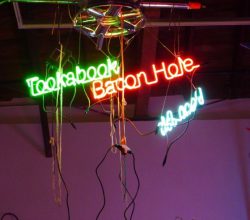
The late “great” installation artist Jason Rhoades died young, just as his reputation was growing. Now he is getting a survey show that, according to one critic, is taking Los Angeles “by storm”. But not everyone is in love with the work: “what was good for 1994-2006, the years covered in this survey, may not be good for 2017. Does any of this more-than-a-decade-old work suddenly seem to reflect the times we live in?”