The Easel

24th January 2017

The Many Faces of John Berger

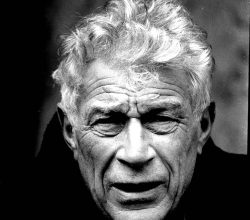
The art critic and writer, John Berger, died on January 2. Many standard obituaries don’t clearly explain his stellar reputation. The linked piece, a review of Berger’s last book, does better. “Berger doesn’t view art history as something that happened, rather as something that continues to happen. [He] decides to firmly root himself in the present and focus on why a particular artwork …appeals to us today”.

The Chameleonic Cate Blanchett Brings 20th-Century Art Manifestos to Life

Hot on the heels of last year’s Pippilotti Rist show comes another video art notable. Julian Rosenfeldt is a German video artist who has created an installation comprising 13 films, all featuring the actress Cate Blanchett. Each film covers a set of manifestos – mostly rants written by young male writers, including Karl Marx – read by Blanchett. Rosenfeldt describes the work as “text collages”.  A trailer is here.

The Life Emphatic with Valentin de Boulogne

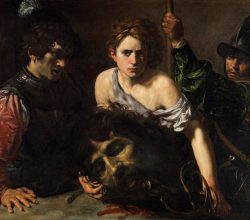
Who carried on Caravaggio’s radical innovations after his death? In France his foremost follower was de Boulogne who, with few exceptions, stayed faithful to Caravaggio’s idea of portraying real individuals. But when de Boulogne died young his style fell from favour. “Caravaggio and his followers were reviled and then virtually forgotten [for centuries]. Caravaggio had his first major show in 1951; Valentin gets his 65 years later.”

Bronwyn Oliver

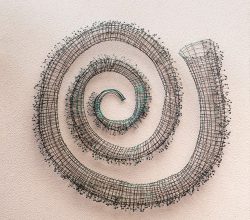
Nature’s patterns inspire many artists. Not her, avowed the sculptor Bronwyn Oliver. “My work is about structure and order … “I am not interested in structures in nature”. Given the graceful organic forms that her metal sculptures take, few are persuaded. As the writer observes “For Oliver to deny nature is akin to Balthus saying there is nothing erotic about his paintings”. An excellent video (3 min) is here.

The Dark Side of the Belle Epoque

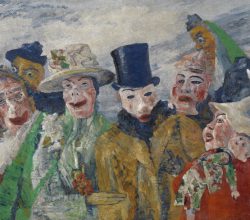
The decades around January 1, 1900 are popularly associated with sunny outdoor scenes by the Impressionists. But this period also had a darker side. Modernising pressures and urbanisation were breaking up old social structures. What might a new century bring? One French writer, referring to a bleak contemporary novel, concluded “we must have become what in fact we are – a race in its last hour.”

William Merritt Chase at the Museum of Fine Arts

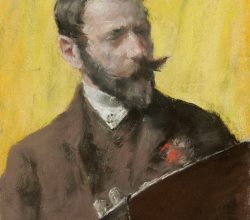
By his mid-30’s Chase was among America’s most famous artists. Then along came Impressionism. His stylistic response was too little, too late and as the fullness of modernism unfolded, he became a forgotten figure. Notwithstanding some glib works, is history’s judgement too harsh?  With maturity, his technical ability and painters eye allowed him to move “the ordinary subject … into the realm of the timeless.”

20th December 2016

The Easel in holiday mode

This is the last normal Easel for the year. The next two issues will be a look back at 2016, highlighting those stories that were most popular among subscribers. Then there will be a two week break with normal publication resuming in mid-January.

Keep an eye on your inbox – an important announcement is imminent.

This has been a year of significant growth for the newsletter and 2017 looks like being more of the same. Many thanks for your continuing interest and seasons greetings to all.

Andrew

The Long View

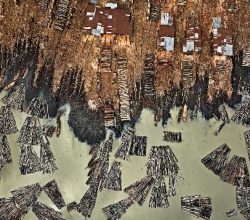
Edward Burtynsky is interested in “how to describe large-scale human systems that impress themselves upon the land.” His renowned images of industrial landscapes are both an expression of his artistic aesthetic and a testament to the incredible capabilities of new digital technology: ““Increasingly, digital photography is showing us the world in a way we can’t see it—that’s even beyond my capacity to see.”

Extraordinary Icons Of Modern Art Collection: Van Goghs, Picassos, Monets In Paris And Worth A Trip

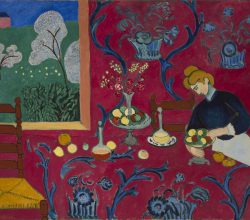
From 1898 to 1915 a Russian textile magnate put together an art collection “widely regarded as the most important anthology of modern art in the world”. Removed from public display on Stalin’s orders, it has, for the first time, been reassembled in Paris. Does the businessman behind the show have a favourite? “Not really, [but] sometimes, in this room here [the Matisse room], people cry – its so strong.”

The unknown Zaha Hadid , revealed at the Serpentine

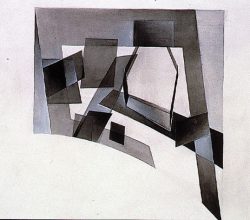
Do Zaha Hadid’s paintings have artistic merit separate from her architectural ideas… and does anyone care?   It took the development of computer design before any of her acclaimed architectural plans were built. By then she had produced a large body of paintings and drawings to explain her design concepts. Housed in a building she herself designed this show might be viewed as a homage to a longtime gallery supporter.

The 10 Best Art Books of 2016

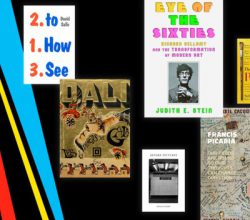
A “best of” list – given the proximity of Christmas, why not? It may provide emergency inspiration for those who have left things to the last minute. If still desperate a listing of the best photography books of the year is here.

Impressions of Australia

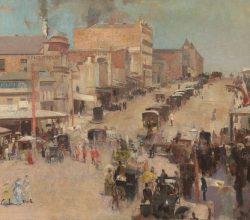
Impressionism was not solely a European affair. Australian artists of the time who travelled abroad felt the style was sympathetic to the spirit of a new country. But their paintings in this London show also capture a particular cultural moment. The colony, flush with economic success, sensed nationhood was close and wanted its art to capture that feeling. An interview with the curator is here and more images here.

LACMA’s uneven new Picasso and Rivera show reveals an unprecedented, must-see discovery

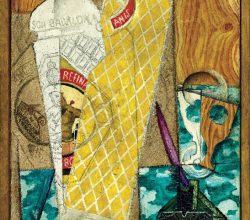
Diego Rivera was a twenty-something in Paris during the birth of cubism. The Mexican borrowed ideas from Picasso who, in turn, bought one of Rivera’s paintings. Their paths diverged once Rivera returned home but a parallel in their art remained: “they synthesized the radically new with the venerably old, forming a kind of “Modernist Classicism” — Picasso’s based on European models, Rivera’s on American ones.”