The Easel

13th December 2016

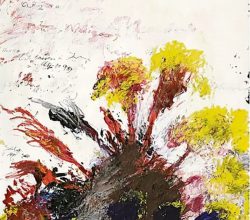
Cy Twombly at the Pompidou Centre: out of time and ahead of it

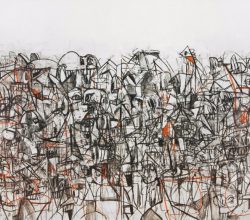
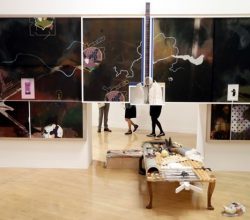
Everyone it seems struggles with Cy Twombly’s canvases. One critic puzzles whether they should be regarded as paintings – “let’s call them that”. As this is Twombly’s first major retrospective since his death, this writer is drawn to broader conclusions. “Majestic, mysterious, messy, languid … [Twombly] is the most unexpected, original painter of the later 20th and early 21st centuries.” More images are here.
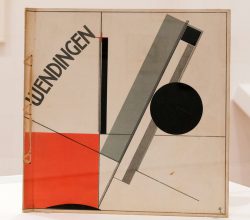
The Russian Avant-Garde Rising in ‘A Revolutionary Impulse’

Russia had a great artistic flowering in the last decades of Tsarist rule. The Bolsheviks’ initially were tolerant.  Artists such as Tatlin and Rodchenko responded with Constructivism – art aimed at utopian social change. This movement had a sustained influence in the West but Bolshevik tolerance soon waned. By 1935 Stalin decreed Constructivism gone and social realism became the only game in town. More images are here.

Brett’s Bet: What Gorvy’s Sudden Exit from Christie’s May Mean for the Art Market

Christie’s edge over arch-rival Sothebys is frequently credited to contemporary art specialist Brett Gorvy. Hence his sudden – and apparently amicable – departure is generating speculation. Perhaps after years of high growth, the gloss is coming off art auctions: “He didn’t need a weatherman to see which way the wind was blowing … air has been seeping out of the inflated, high-pressure auction and art-fair markets.”

Inside Net Art

Rhizome is a digital arts organization affiliated with New York’s New Museum. It has developed the technology to preserve digital artworks and has launched a project to display 100 influential web-specific works.  Sounds like a good idea.  But in an online world dominated by social media does web art have the freedom to continue to flourish?

Review: Paul Nash Tate Britain “Powerful, Moving and Surreal”

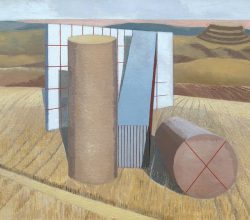
A London exhibition themes well with contemporary Brexit anxieties. Paul Nash’s abiding love was the English landscape. He was greatly influenced by the first World War and then by abstraction and surrealism. With his friends Henry Moore and Barbara Hepworth, he pioneered modern art in Britain. For him, the question was –“can you be both modern and British?” A short video (3 min) is here.

What Are the Chances? Success in the Arts in the 21st Century

Long but still interesting. The odds of financial success in the arts are scarily low. If you make it, selling and admin will takes up most of your time. So, should artists try to “live their passion”? “If your only definition [is] getting a solo exhibit at MoMA, chances are pretty low that you will ever achieve it. But if you have different terms for success the odds could improve substantially.”

Why was Renoir so fascinated by flesh?

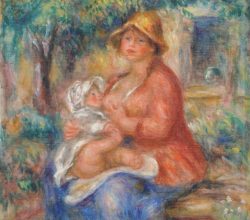
More mixed press for Renoir. Tiring of the limitations of Impressionist spontaneity, his later work was more classical in style. It is this period of Renoir’s work that attracts criticism – sentimentality, pandering to his bourgeois clients, voyeurism. But the writer mounts a rearguard defence. For Renoir, flesh was a “site of painterly experimentation”, inspired partly by the intimacy of his own family life. A video (2 min) is here.

6th December 2016

Combine Harvester: Robert Rauschenberg At Tate Modern

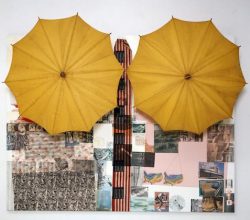
Robert Hughes called Rauschenberg a “protean genius” and a London show supports his judgement.  An avid experimenter across painting, collage, sculpture, printing, choreography and more, Rauschenberg blazed a trail from ultra-serious expressionism to what would become Pop. An “exhilarating ride” gasps this reviewer. An excellent background video (9 min) is here.

Helen Marten’s Intricate Sculptures Win the Turner Prize

Helen Marten is having a year to remember. She was included in last year’s Venice Biennale. Then, a few months ago, she won the Hepworth Prize for sculpture. Now she has scooped the Turner. “Her sculptures seem to recreate the swirling confusion and messy abundance of contemporary life” observes the writer. A short video of Marten talking about her work is here and images here.

What Sold at Art Basel in Miami Beach

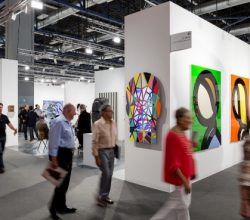
Following Art Basel Miami dealers are finding new ways to say “softer market”. Anxieties about Brexit and Trump made it, according to one critic, “more sedate than the running-of-the-bulls ambience of recent years.” Another commented recently: “[I]f a gentleman is wearing a sharp Saville Row suit, but he hasn’t showered in two months … it looks good but sort of smells funny”.

The museum of the present

Booming museum attendances are due partly to a greater focus on the visitor experience. This didn’t use to be such a priority. “The museum of the past … was content to care for the … pleasure and delight of its permanent collection”.  Might their focus on box office lead museums to neglect their custodial role of cultural objects? “Our times [need] a real, unmediated engagement with the objects of the past “.

When Cecil Beaton Shot Mick Jagger’s X-Rated Film Debut

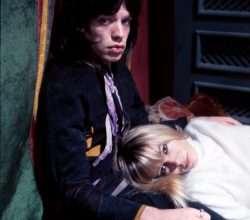
A nostalgia piece for baby boomers.  Cecil Beaton was often called a society photographer, but that term underrates his substantial talent as a portraitist.  Performance was Mick Jagger’s first movie role and Beaton was invited to photograph the film production. The film was shot in a London flat. Beaton’s images reflect quintessential 1960’s culture, complete with one of its greatest celebrities. A Sotheby’s promo video is here.

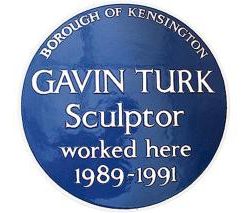
Now you see him, now you don’t: the young Turk who keeps changing his look

When you see a guard in a sentry box, do you see the person or a “soldier”? That encapsulates the question that fascinates Gavin Turk, “the point at which a thing becomes something else”.  Ironically, this mid-career survey is being held in the gallery of Damien Hirst, about whom it could be asked – is he an artist or an icon of an artist? Turk provides a helpful explanation of his work in this interview.

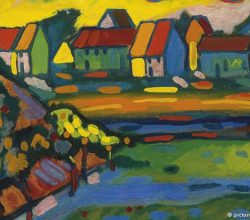
Why Kandinsky chose to make abstract art

Kandinsky had some big ideas. One was that there was a systematic language of colour. He pioneered abstract painting and was among the first to remove all recognizable objects from his work. He was also an ardent spiritualist – hence his interest in art that could express elevated emotional states. He died in 1944 confident that, despite Nazism and two wars, a spiritual Millennium was just around the corner.