The Easel

24th November 2026

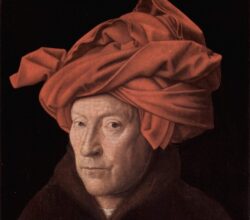
Van Eyck: The Portraits — an unforgettable show of masterpieces

The reviews of this show are reverential. This praise in part reflects surprise that all ten of van Eyck’s surviving portraits could be brought together. More importantly, it is a reaction to stellar works that define the moment portraiture was “transformed” in the 1430s. Built on van Eyck’s refined use of oil paint, the faces are “brooding creations of north European melancholy” and are, says one writer, “some of the finest in all of Western art”. Says another “this is the exhibition of the year”.
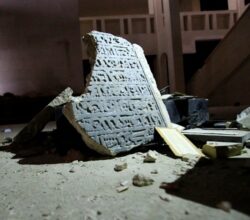
Inside the Restoration of Iraq’s Mosul Museum and Its Remarkable Revival

During three years of ISIS occupation, key Mosul cultural institutions were ransacked and their collections looted. This loss highlighted the importance of culture to that community. Using international money and expertise, together with local enthusiasm, Mosul Cultural Museum will reopen next year. Thousands of its artifacts have been returned and others have been restored. Says one archaeologist, “They were attacking our identity. They wanted to erase who we are”.

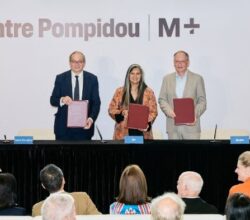
What does MoMA’s merger with {Pompidou and M+ mean for the art world?

The recently announced “alliance” between MoMA, Centre Pompidou and M+ is causing ripples. It validates the difficulty museums face in storing huge collections while also making them more diverse. With government and philanthropic support ebbing, museums cannot afford to continue being “insular”. Collections will need to be shared and presumably there will be fewer, more distinctive, acquisitions. Internal cultural change will also be needed: “Sometimes it’s just getting over the ego of it all”.

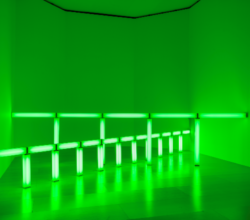
Dan Flavin: when light needs to represent nothing else

Perhaps reacting to Abex and its gestural obsessions, Flavin insisted that his unassuming fluorescent tube works were without symbolism. Using standard light fittings and a few colours, he created an “architectural” feeling that changed how we experience space. Putting his light works in a corner made walls “lose their substance” while barriers and light corridors defined self-contained spaces. He introduced “an emotional element into the austerity of [minimalism]”.

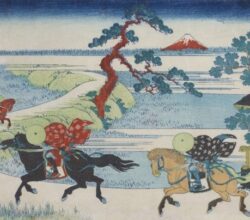
A Beginner’s Guide to Hokusai’s Thirty-Six Views of Mount Fuji

Hokusai was in his 70s and enduring a range of misfortunes when he produced Thirty-six Views of Mount Fuji. The extensive use of a new blue pigment made the print series so successful he added a further 10 prints. The series remains popular in part because of his compositional skills, making the mountain dominant in some views and a backdrop to village life in others. That, says one writer, is Hokusai’s key achievement, “the juxtaposition of the earthly and the cosmic, all within the same frame”.

17th November 2026

Willem de Kooning review – the artist’s lifelong rebellion against himself is thrilling to watch

de Kooning was “the last great artist who really knew how to draw”. When he arrived in the US, magazine illustrations used bold outlines, leading him to un-learn his traditional Dutch training. Perhaps that delayed his first solo show (in 1948) but it certainly arrived with an impact – he eliminated the distinction between drawing and painting. “People call him an Abstract Expressionist. He never much liked being called anything.” Images are here.

The resounding success of Elmgreen & Dragset, a leading duo in contemporary art

Having first met as non-artists, Elmgreen and Dragset are now art world stars. Their works, such as a Prada store in the desert or a diving board sticking out of a museum’s upper floor window, carry a sense of capriciousness and subversion. Easily identifiable objects or figures are placed in “an architecture” to create a discordant situation that makes viewers stop and think. Says Elmgreen, “it’s important to infuse new dynamics into stuffy institutions”.

Unfinished magic

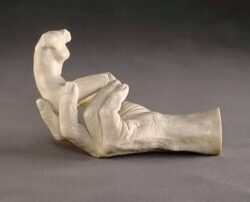
A Paris show contrasts Michelangelo and Rodin. When Rodin encountered Michelangelo’s works, he felt freed from “academicism”. Like his predecessor he was fascinated with anatomy and used that knowledge to express the body’s “force and energy and link to the soul”. Michelangelo used rough stone to achieve an “unfinished” style while Rodin’s modelling with wax and clay achieved a similarly expressive surface. Both wanted works that “seemed to be in flux—like life itself”. A video (8 min) is here.

Introduction to ‘Korea’

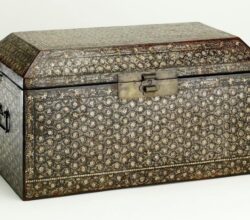
A show that boasts “2000 years of Korean creativity” – that’s impressive. Korea has enjoyed long periods of stability, starting with the Buddhist era when its art had an ethereal, contemplative quality. The Goryeo period yielded exquisite Celadon earthenware, a focus that continued under the Joseon dynasty. Korea’s 20th century brought great violence, but why has that century’s art not been included?  Is it “churlish”, a writer wonders, to complain that this “is a gem of a show [but] is itself a cultural product.”

How Islamic Art Becomes a Masterpiece: Inside the Louvre Exhibition at the Smithsonian

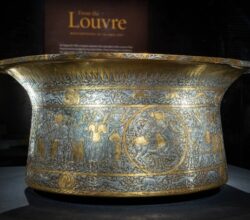
A collection of exquisite Islamic works poses the question, what is a masterpiece? These works are all exceptional and came from across the ancient Islamic world. Were they masterpieces in the societies they came from or is that just our historical interpretation? Does it matter if we don’t understand them at all? And is a masterwork diminished if it carries markings from its various owners? “An object’s identity is not fixed at the moment of its creation”.

Inside ‘Vanessa Bell & Duncan Grant: Inside Bloomsbury’: Why Tate Britain’s 300-Work Retrospective Ignited a Critical Civil War

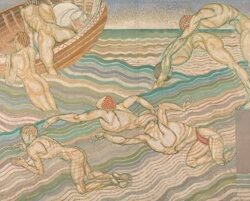
This review makes the best of a bad situation. The Bloomsbury Group, a circle of London sophisticates renowned for their unconventional sex lives, included the artists Vanessa Bell and Duncan Grant. A show of their work has one critic calling it “desperately mediocre modernism”. A defence, that they “did not paint to impress posterity”, convinces no-one. Says another critic, this show is “dispiriting, dreary, airless, without excitement. It tells us nothing about painting except how not to do it.”