The Easel

17th November 2026

Willem de Kooning review – the artist’s lifelong rebellion against himself is thrilling to watch

de Kooning was “the last great artist who really knew how to draw”. When he arrived in the US, magazine illustrations used bold outlines, leading him to un-learn his traditional Dutch training. Perhaps that delayed his first solo show (in 1948) but it certainly arrived with an impact – he eliminated the distinction between drawing and painting. “People call him an Abstract Expressionist. He never much liked being called anything.” Images are here.

The resounding success of Elmgreen & Dragset, a leading duo in contemporary art

Having first met as non-artists, Elmgreen and Dragset are now art world stars. Their works, such as a Prada store in the desert or a diving board sticking out of a museum’s upper floor window, carry a sense of capriciousness and subversion. Easily identifiable objects or figures are placed in “an architecture” to create a discordant situation that makes viewers stop and think. Says Elmgreen, “it’s important to infuse new dynamics into stuffy institutions”.

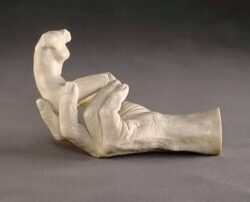
Unfinished magic

A Paris show contrasts Michelangelo and Rodin. When Rodin encountered Michelangelo’s works, he felt freed from “academicism”. Like his predecessor he was fascinated with anatomy and used that knowledge to express the body’s “force and energy and link to the soul”. Michelangelo used rough stone to achieve an “unfinished” style while Rodin’s modelling with wax and clay achieved a similarly expressive surface. Both wanted works that “seemed to be in flux—like life itself”. A video (8 min) is here.

Introduction to ‘Korea’

A show that boasts “2000 years of Korean creativity” – that’s impressive. Korea has enjoyed long periods of stability, starting with the Buddhist era when its art had an ethereal, contemplative quality. The Goryeo period yielded exquisite Celadon earthenware, a focus that continued under the Joseon dynasty. Korea’s 20th century brought great violence, but why has that century’s art not been included?  Is it “churlish”, a writer wonders, to complain that this “is a gem of a show [but] is itself a cultural product.”

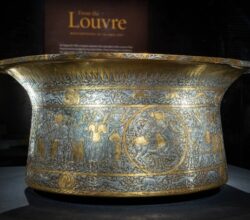
How Islamic Art Becomes a Masterpiece: Inside the Louvre Exhibition at the Smithsonian

A collection of exquisite Islamic works poses the question, what is a masterpiece? These works are all exceptional and came from across the ancient Islamic world. Were they masterpieces in the societies they came from or is that just our historical interpretation? Does it matter if we don’t understand them at all? And is a masterwork diminished if it carries markings from its various owners? “An object’s identity is not fixed at the moment of its creation”.

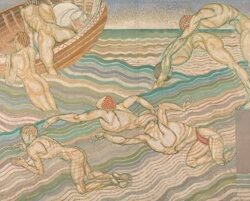
Inside ‘Vanessa Bell & Duncan Grant: Inside Bloomsbury’: Why Tate Britain’s 300-Work Retrospective Ignited a Critical Civil War

This review makes the best of a bad situation. The Bloomsbury Group, a circle of London sophisticates renowned for their unconventional sex lives, included the artists Vanessa Bell and Duncan Grant. A show of their work has one critic calling it “desperately mediocre modernism”. A defence, that they “did not paint to impress posterity”, convinces no-one. Says another critic, this show is “dispiriting, dreary, airless, without excitement. It tells us nothing about painting except how not to do it.”

10th November 2026

A tribute to Marisa Merz, Arte Povera’s only female artist

Merz was married to one of the stars of the Italian arte povera movement whose mantra was to use humble materials. A belated retrospective makes clear just how much she contributed to the group. She made art in her kitchen –shapes formed by knitting copper wire, small clay figures, hanging pieces of aluminium sheeting – in what one writer calls “a total collapse between art and life”. Said one writer of an earlier Merz show, “Arte Povera may turn out to dwell largely in Ms. Merz’s shadow.” Images are here.

Yoshitomo Nara’s Big-Headed Girls Are Taking Over New York

The volume of Nara merch is so big, one reviewer comments, that it can obscure his artistic achievements. He does not try to satirise Japanese consumer culture but offers cuteness as “an expression of authentic feeling”. Over the years, those feelings ranged widely – anger, loneliness, “punk insouciance”. Now, his girls are a little mellower and show a social conscience. New sculptures also seem softer, painted metal with contours like soft ice-cream. “Nara is an artist of a generation”.

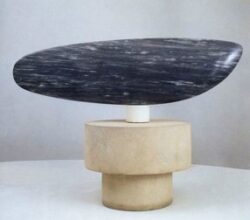
At MoMA, Brancusi Is Lost in Space

With Centre Pompidou being renovated many of its Brancusi works are showing in New York. They are “glorious” when seen firsthand. Up close, says one critic, he comes across as “less a purist … than a craftsman enamored of the sweaty satisfactions of cutting stone and wood.” And bases mattered to him. Compared to his polished modernist sculptures they sometimes seem “gloriously mismatched”. Ever the visionary, Brancusi was demonstrating the potential in disjunction and dissimilar textures.

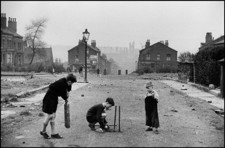
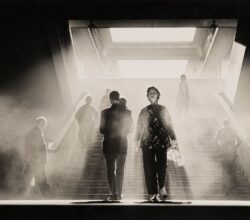
A Lasting Moment: Marc Riboud in England

Riboud trained as an engineer but got his chance to work in photography when sent on assignment to Leeds. Leeds in 1954 was “the most depressing city in England”. His images, forgotten for 50 years, are among the first to document postwar social change. Riboud shows a hard-pressed working-class, worn down by rationing and battered infrastructure, yet drawing on its tight community bonds as it faced a diminished and uncertain future.

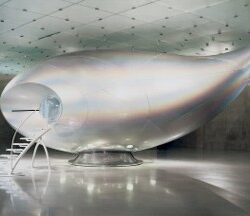
Mariko Mori predicted the future. She’ll do it again

Mori’s art sounds so characteristically Japanese. Her early, mid-1990s works focused on anime, pop culture and the role of women in Japanese society, but soon she began paying attention to technology. Later performance and installation works blurred the boundary between technology and self, anticipating avatars well before social media. Subsequent works including sensors projecting viewers brain activity onto large displays, place Mori at “the cutting edge of art, technology and consciousness”.

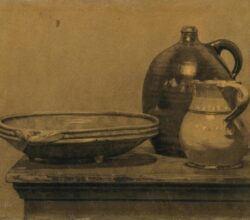
Light and Magic at Tate Modern – why turn a photograph into a painting?

Once photography emerged in the 1820’s, a debate started about whether it was art. Pictorialism was one response to that debate. Spread through camera clubs across the world, it advocated for photos that looked like … paintings. That meant “the darkroom, not the lens” was where the magic happened. For example, images of ballet dancers were made to look like Degas’ damsels. But why bother? By the time some of these images were made photography was already “its own kind of art”.