The Easel

18th November 2025

Studio Museum in Harlem Reopens in a Stunning New Home

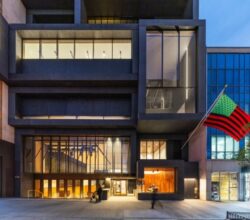
After a seven-year closure, the Studio Museum in Harlem has re-opened in a “brilliant” new building. It can display three times as many works as previously. More space is allocated to an artist-in-residency program that boasts illustrious alumni. It is a moment of recognition for an institution that, initially “invisible” to the mainstream, has since had “grand influence [and] rewritten the canon” for artists of African descent. Claims its chairman, Studio Museum has helped “the margins … come to the centre”.
Refurbishing modernism

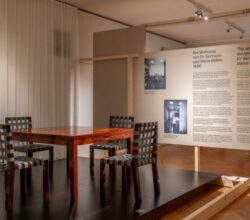
In the early 20th century, new ideas were crowding into furniture design. The arts and crafts movement espoused truthfulness in materials. The Bauhaus embraced industrial materials. Frank’s pioneering home designs emphasised neither luxury nor modernist simplicity, but comfort. Interiors, he said. should be casual with a “warm and eclectic atmosphere”. A dining table setting by a Frank acolyte combines “comfort, luxury and the minimalist ethos of the Bauhaus”. Despite talk of design for the masses, nothing was cheap.

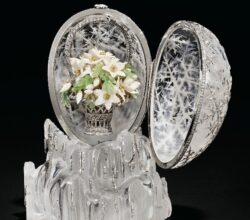
Gifted by Emperor Nicholas II to the Dowager Empress Maria Feodorovna on Easter Day, 1913: the Winter Egg

Is the Winter Egg the greatest of all the eggs made by Fabergé for the Romanov family?  Who is to say, but it is often listed among the favourites. Carved from rock crystal and adorned with over 4000 diamonds, it is a technical tour de force. Its delicate, beautiful exterior hides a surprise – inside is a hanging basket filled with wood anemones. History gives this egg a poignancy – it was made in 1913, the year before war and revolution. It is going to auction next month.

The enduring appeal of Limoges

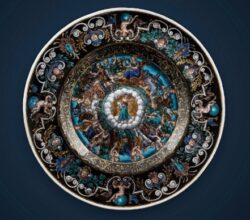
Enamelling started in monasteries in the Middle Ages. Its heyday, though, was in the Renaissance when a technique was developed to paint translucent paste onto a metal surface before firing. This allowed for more precise, free-flowing images. Multiple layers created painterly images in gleaming (unfading) colours on small caskets, plates and rings. Of course, it was frightfully expensive and most work went to royalty, the church or the Rothschilds. A specialist gallery in Paris is the place to go if interested.

Malick Sidibé Was an Architect of Utopia and Purveyor of Nostalgia

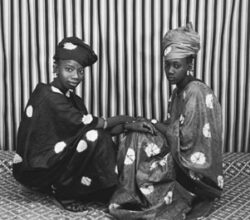
Sidibé was in the right place at the right time, opening a photographic studio in Bamako just as Mali became independent. His images brim with the exuberance and pride of new nationhood, not anticipating the nation’s turbulent post-colonial politics. “There is no future to be glimpsed … but there is at least a hint of the uncomplicated past”. Sidibé’s vivid backdrops and sanguine subjects helped establish the visual vocabulary of African portrait photography.

The fallout from Nigeria’s spectacular $25m museum and the Benin Bronzes

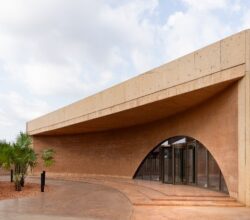
The saga of restitution of the Benin bronzes is still not over. A major new museum – the Museum of West African Art – now about to open, was expected to house these artifacts but local politics have intervened. Ownership of the bronzes has been passed to a traditional ruler, who says he will open his own museum. Facing a PR disaster, the embattled museum director gasps “we will be about the modern and contemporary [art]”.

Wright of Derby: From the Shadows, National Gallery review – an exhibition that illuminates the shadows of the enlightenment age

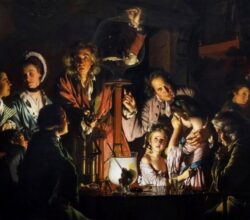
Wright trained in London but then returned to regional Derby. Despite being technically prodigious, some have regarded him as a “provincial” artist. He followed Caravaggio’s heightened light and shade, using it in his “seminal” images of the British Enlightenment. Two works that show “scientists” demonstrating experiments convey an unease with the power of their knowledge. Supposedly provincial Wright had articulated the age-old fear of “the scientist playing God”.

11th November 2025

Egypt’s Grand Museum opens, displaying Tutankhamun tomb in full for first time

The Grand Egyptian Museum, now officially open, is claimed to be ‘the largest cultural building of the 21st century”.  It’s huge, and brags that it covers 30 dynasties of pharaohs. Says one writer “it’s absolutely stuffed with treasures” – boats, golden idols, statues, sarcophagi plus items from everyday life. Says another, it is “a gesture of modern nationhood, Egypt announcing itself as a cultural superpower.”

Facing the truth about apartheid

Edelstein was a press photographer in apartheid-era South Africa, left for Britain, and then returned during the Truth and Reconciliation Commission hearings. Her portraits of victims and perpetrators of apartheid have become renowned. One, featuring a boy’s murderer with the boy’s mother, “hums with a sense of uncomfortable uncertainty”. Are we seeing “performative contrition”? Was amnesty offered too broadly? The Commission revealed “what happened”, but its overall success remains “questionable”.

100 years of Calder’s circus

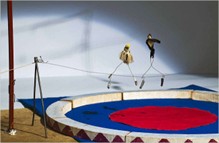
Arriving in Paris in 1926, Calder wanted something to announce himself in art circles. He came up with a miniature circus, a work now enjoying a 100th anniversary show. Charm is not its only quality. It shows his interest in movement and his facility with wire, thus foreshadowing his sinuous wire portraits and mobiles. His circus has a whimsical quality much appreciated by art critics of the time. And, with performances that could go for two hours, “Cirque Calder predated performance art by forty years.”

This 17th-Century Female Artist Was Once a Bigger Star Than Rembrandt. Why Did History Forget About Johanna Koerten and Her Peers?

Opportunities open to artistically inclined women in 17th century Holland were governed by class more than gender. With family support, they could become “art stars” and those that did sold work at Rembrandt-level prices, helping define the visual culture of that age.  However, female lace workers were poorly paid and anonymous despite lace being an expensive fabric. By the 19th century, art by men overshadowed everything and the preservation of works and reputations was prioritised accordingly.

A Devotion to Art

A new view on Vermeer. Married to a Catholic, it has long been assumed Vermeer was under their influence. Now it is claimed he was a Remonstrant, a Christian sect that, like the Catholics, was unable to worship publicly. This view prompts “beautiful” new interpretations. His Little Street, for example, is claimed to be a hidden Remonstrant church. Other paintings have supposed religious meanings. This helps explain what most characterises Vermeer’s work – “immanence – that simmer of the sacred in the everyday.”

Paris Photo 2025: Exploring the Curation

Paris Photo claims to be the world’s leading photography fair. It is, by its nature, eclectic, exactly the moment when Magnum Photo can delve into its fabled archive and highlight some great images. Running parallel to the main event are shows by Susan Meiselas (reviewed here) and Luc Delahaye, one of the greats of French photography (reviewed here; 9 min).