The Easel

28th May 2024

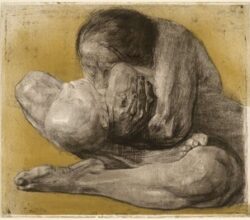
A Century Later, Käthe Kollwitz’s Phantoms of War Go Unheeded

Being called “the conscience of her age” sounds like a compliment. In Kollwitz’ case, it has also been a line of attack. She has been dismissed as a maker of “sentimental” work, or merely a printmaker with political views. Her refusal to be stoic in the face of war and personal loss led the Nazi’s to tag her work as “degenerate”. Now she is recognised as having made some of the most enduring images of maternal grief. “Despair should not be this beautiful”.
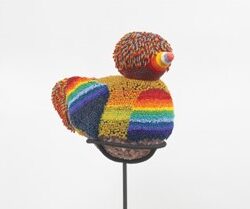
In Radiant Paintings and Beaded Extravaganzas, Jeffrey Gibson Remixes Native American Histories

Gibson becoming the first Native American to lead the US presence at the Venice Biennale is a cause for celebration. But are we celebrating his Native identity or his contemporary art? It’s not always easy to separate the two because Native perspectives on things like the materials that are used may differ from mainstream views. Gibson responds “My goal was never to recreate what was made previously [basket weaving]. I wanted to learn [that] technology so I could then make a sculpture.”

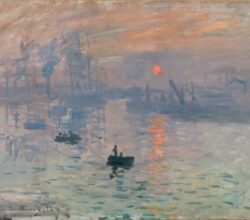
‘A Plaything for Rich People and Fancy Museums’? Reevaluating Impressionism at 150

Surely there is nothing new to say about Impressionism. On the 150th birthday of the movement, a Paris museum makes a valiant effort to show otherwise. Its “erudite” show demonstrates how radical the Impressionists were – their optimistic modern vision compared to a moralising status quo. A curator explains that in the first “Impressionist” show in 1874, such works were actually a minority – not quite the confrontation that art history tells. Yet in a Paris battered by civil unrest, the work did carry a shock.

Sitting on the art

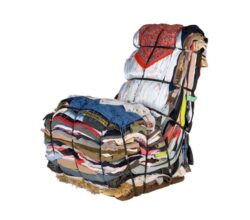
Why don’t we think of furniture as art? We could blame the Renaissance and its ”valorisation” of fine art, or 20th century modernism, that also was high minded about its own spiritual qualities. Notable efforts to eliminate the boundary have come from Britain’s Arts and Crafts movement and the Bauhaus. Furniture is slowly being liberated from the strict protocols of product design, resulting in “a whole species of ambiguous objects where furniture meets sculpture. Art and design exist in a continuum of possibilities”.

Memling’s Faces

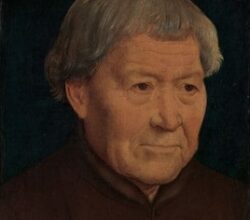
An appreciation. Renaissance folks were attracted to virtue signalling – and signalling material success – just as we do today. This “extraordinary” portrait by Memling does none of that. We know nothing about its subject except that he is old. An absence of personal identifiers “pre-empts our current insistence on identity as the ultimate measure of existence”. This is a different expression of being human, something almost universal. “He has been through some things and known some pain, but he is still searching …”

Masterpiece Story: The Arnolfini Portrait by Jan van Eyck

A useful primer if you have seen references to the Arnolfini portrait but don’t know its background. When van Eyck painted it in 1434, oil painting was new. This work’s “spectacular” detail and plentiful symbolism made it the first iconic example in this medium. It’s also enigmatic. Is it really Giovanni Arnolfini? Is his wife pregnant? Does it commemorate their wedding or, as argued here, her untimely death? “Jan van Eyck has certainly left us with one of the most intriguing paintings in the history of art.”

Herbert List’s Couples, In Three Vintage Prints

List worked professionally in inter-war Germany when surrealism was influential.  It influenced him too, but there was another influence at work – he was gay. The classically composed images that brought him renown often had a sense of contemplation or melancholy. Little wonder – homosexuality was illegal, so his images of his friends and their relationships had to be allusive, and only appeared in avant-garde publications. His best known book, featuring homoerotic male images, was published posthumously.

21st May 2024

Why textiles are all the rage in the art world right now

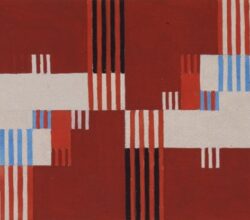
Textiles have long been discounted as craft rather than art. Two “fabulous” US shows of textiles indicate this may be changing. One reason is a greater appreciation of textiles’ role in the development of modernism. In addition, current textile artists – like the American Sheila Hicks – are wildly inventive. This writer declares that weaving is “one of the most extraordinary, sophisticated things humans have ever managed to do. It’s connected not just to survival … but also to the human capacity for abstract thought.”

Jenny Holzer’s Facile Guggenheim Museum Show Fails to Meet Our Moment

Holzer made her name in the 1980’s with text propositions such as “PROTECT ME FROM WHAT I WANT” and “MONEY CREATES TASTE”. Now re-presented in a major New York show, the numerous reviews seem lacking in enthusiasm. Perhaps that’s because, in the 1980’s, her calculated texts revealed “the slipperiness of language”. Now, in the world of the internet, the mechanics of language and power are all too familiar, making her work “dated”.

Indigenous Histories

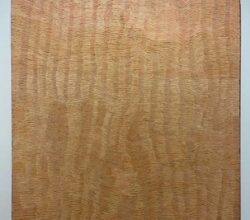
This piece starts as a straight forward review of an “extraordinary” show surveying Indigenous art from around the globe. But it get more complicated. These works declare cosmological beliefs and connection to nature and place, sharply contrasting with the ideas that “colonising cultures” disseminated about “the colonised.” Another issue is who gets included in today’s global art conversation. One observer notes wryly, “We don’t appreciate things in our culture until other people show an interest”.

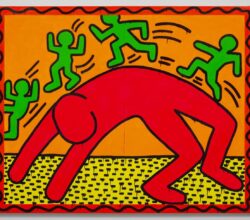
How Keith Haring’s art transcended critics, bigotry and a merciless virus

A new biography of Keith Haring extensively details the background to his meteoric art career. Arriving in New York when graffiti was everywhere, his thousands of chalk drawings helped him find his artistic voice and also brought him to attention. One critic likened the work to “boogieing on a Saturday night”, perhaps reflecting the view that work of such popularity could not be great. He quickly became wealthy, actively supported public causes and declared his real interest in art was “as a means of living a life.”

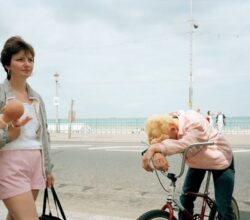
The controversial photographs that skewer British peculiarities

For all of the acclaim that Parr receives, the criticisms of him persist. Some call him a snob and think his images are a form of sneering about the British. One critic accuses him of “smash and grab photography”, for not working closely with communities where he is photographing. Most critics are more lenient, thinking that Parr celebrates British quirkiness and pragmatism. Parr’s own defence – “one can learn much more about the country where you live from a comedian than from a conference of sociologists,”

Yinka Shonibare CBE: Suspended States And Decolonialised Structures – Serpentine

Perhaps, in art, there can be too much of a good thing. Shonibare has made a career out of using African patterns to decorate the symbols of British imperialism – especially statues of its acclaimed figures. It’s a deft way to call out colonial attitudes while also highlighting that our world has long been interconnected. Several critics point out, Shonibare has been producing the same work for decades. Observes one, “there’s nothing new here, but if you had an idea this good you’d probably overdo it too.

One painting at a time: ‘King Charles III’ by Jonathan Yeo

Irresistible! A portrait of King Charles has been unveiled, capturing attention for a few moments. A review by the national broadcaster is straight-faced, but other reactions are more colourful. One viewer called the work “a blood bath”. A London critic called it “curiously unthrusting” (not a typo) while a US critic said it was “confused, obsequious, oversized and unaccountably frightening”. Queen Camilla is said to approve (which is important), as does the reviewer. A short survey of royal portraits is here.