The Easel

14th December 2021

The Neglected Afterlife of the Great Georges Braque

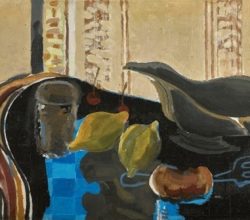
Braque co-invented cubism and was the first modern artist given a show at the Louvre. Why is his profile so low? He was “a swimmer against the currents”, someone without the gift of self-promotion. Notes one critic he “”did not paint “look at me” but “here it is””. For a profile of this artist, none is better than the beautiful essay by Picasso’s biographer. Braque had a “zenlike spirituality … [on visiting his studio] I felt I had arrived at the very heart of painting.”
Van Gogh Experiences: Immersive Art in the COVID Era

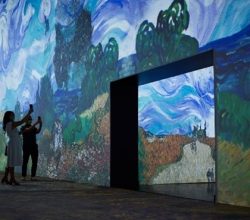
“Immersive Van Gogh” is a multimedia extravaganza of “projected visuals, animation, music [and] sound.” Such productions “are not art”, protests one museum director, “they are entertainment”, reflecting a view that beauty should not be judged on the basis of “primitive physical pleasure”. This logic has contributed to the elitism and “inhospitable gatekeeping” many associate with museums. The writer’s verdict – “It was … ideologically suspect in numerous ways, and — I won’t lie — I loved it.”

Francesca Woodman: The eerie images of a teenage genius

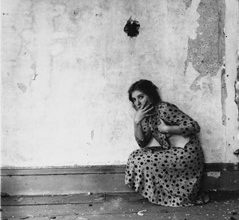
Genius can announce itself early. In Woodman’s case, even as a teenager she was creating images of “sophistication and deliberation”. Critical discussion of her work has tended to obsess over her early death. Work newly released from her estate shows “just the right balance between control and improvisational freedom. Whatever Woodman’s photographs evoke … it’s not remotely straightforward”. A backgrounder by a former classmate is here.

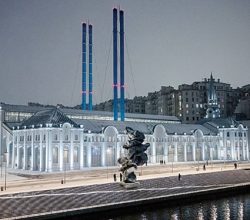
In Moscow, a new arts centre to brush up Russia’s image

Hot on the heels of Hong Kong’s M+ museum comes the opening of the huge GES-2 contemporary art centre in Moscow. It has the glamour location – a former power station renovated at vast expense – and financial backing to be a major international art venue. Such an institution may burnish Russia’s reputation, but this report states the obvious – the potential conflict between a vibrant art sector and censorship. Says one local, “It looks like schizophrenia.” Images are here.

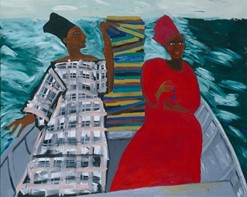
Lubaina Himid, Tate Modern, review: Rich, involving works with a political kick

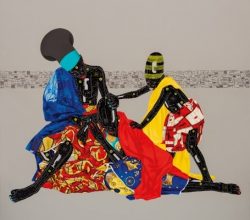
This retrospective is, everyone agrees, well overdue. Why then is there a tone of expectations unfulfilled? The themes of Himid’s career emerge clearly – colonialism, our unequal present. Her painterly skills, wit and clever use of materials – the things that have made her so influential – make many works “great”. As a show, though, it is “rather baggy and lacks focus”. Or, as one critic says, the show “is about as dangerous as a painting of a hammer. It doesn’t escape from art into life.”

The Hot Market for Toppled Confederate Statues

Last year, US cities removed over 90 Confederate statues. It turns out that they are in considerable demand. Some become accoutrement – golf course decorations – or are melted down. Others, more interestingly, are wanted by curators precisely because of their odious symbolism – the “Lost Cause” of the Confederacy. They are being sought for use in juxtaposition to black contemporary art. Even after demolishing the object work is still needed to demolish the idea.

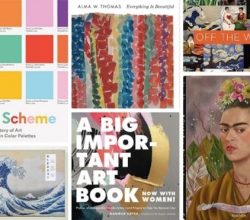
Best art books of 2021

An offering for those desperate for Xmas gift ideas. A partial list of lists is: Bookforum, Five Books, The Guardian, and Christie’s. No single book predominates, not even John Richardson’s Picasso biography, perhaps reflecting how that artist’s once exalted status is deflating. Besides books covering specific exhibitions, there are multiple publications covering women and artists of colour who have previously been ignored. A listing of coffee table-type books is here.

7th December 2021

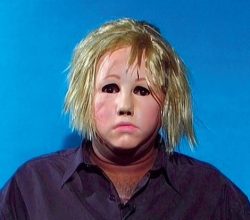
“We Carry Our Younger Selves Around”: Gillian Wearing on Life, Art and Time

Well before social media arrived, Wearing was making performative portraits – photographs of people in masks or holding cue cards that describe their thoughts. All addressed her core fascination – who are you? Given her view that people tend to live “in their dreams”, is the image we project who we really are or the person we wish we were – or both? The possibility that her approach will appear forensic is moderated by an evident empathy. Ultimately, she says “everyone is interesting”. Images are here.

Fabric of impulse: fiber artist Olga De Amaral melds artistic spontaneity with slow craft

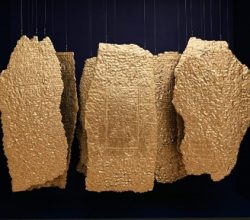
One might expect Amaral, “a weaver”, to be methodical and structured. Instead, her long career has involved the pursuit of intuitive abstraction. This journey has yielded large, sculptural, fibre works that “hang freely in space”. By also incorporating diverse materials – plastics, gold leaf, paint – her distinctive works have brought renown in her native Latin America and beyond. Amaral’s aspirations though, sound just like those of a weaver: “I wanted to make the thread and the knot more visible”.

Introducing the Power 100: the Most Influential People in the Artworld in 2021

In case you were waiting, ArtReview’s “influential” Power 100 list has just been released. Top of the list is the NFT, which has (possibly) created a broader future for digital art. At 100 is Mark Zuckerberg, for his shaping the direction of “virtual culture”. In between are a notably diverse who’s who. What does it mean? One view, admits ArtReview, is that it measures “perceived success on a field of combat”. More nobly, it shows who is “shaping the [global] development of contemporary art”. Take your pick.

Why black art matters — and the joyful Royal Academy’s Summer Exhibition

Some think Britain’s prestigious Turner Prize has been captured by political correctness. What then about the Royal Academy’s venerable Summer Exhibition which this year emphasises “diversity”? In fact, it is “wonderous”. Works coming from outside the Western canon have given it “a brightness and uplift that wasn’t previously there … a sense of direction, [and] fresh energy”. Says one critic, this show “has never been so much fun. And it has never been so serious.” Images are here.

Discoverer of modernity

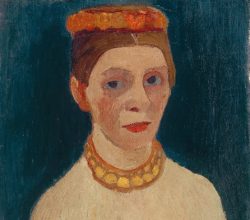
Modersohn-Becker is a case of ‘what might have been’. In her short art career, she unerringly headed for a modernist style, exploring tightly cropped close ups, daring nude self-portraits, “abstracted” landscape concepts. In 1907, just 10 years after her career started and before any commercial success, she died following childbirth. Like Picasso, her near contemporary, Modersohn-Becker pursued her own modernity, choosing “virtuoso dynamism instead of relying on balanced compositions”.

The Magnificent History of Japanese Screens

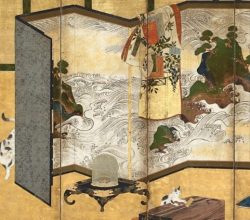
Screens can be functional – deflect cold draughts or partition spaces in a room. Their greater virtue, though, is that they are ideal for flaunting, be it wealth, erudition or, in the case of diplomatic gifts, national refinement. A new book describes them as “dynamic art objects”, a mix of “painting and sculpture, decoration and architecture”. Originally bought only by aristocrats, their appeal broadened over the centuries, mirroring a changing Japanese society. Images are here.

Fine Prints

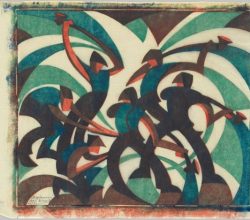
Vast social changes unfolding in the early decades of the 20th century produced some distinctive art. In Britain, the Vorticists celebrated the onrushing modernism of life. Their favoured medium was the humble print, which “exists somewhere between art object and art product”. Being inexpensive, printmaking opened up new possibilities for showing art: “The art galleries of the People are not in Bond Street but are to be found in every railway station.”