The Easel

30th November 2021

Getting real with Richard Estes

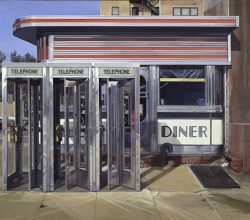
What Estes took from working in advertising – the power of detail, the importance of visual rhythm – is evident in his acclaimed photorealist cityscapes. He paints from photographs, though without attempting a replica image. The difference lies partly in which details he omits. In addition, while showing the “pulsing visual pattern of things”, he includes elements of abstraction. “You always have to have that quality [but] pure abstraction is like having a lot of sound without any melody”.

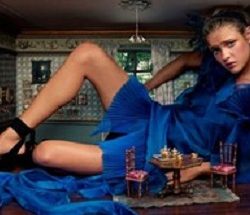
Trick of the eye: the visual deception of Lucy McKenzie

Artists pursuing a diverse practice can suffer because critics don’t know where to focus. McKenzie seems a case in point. Despite getting a prestigious retrospective at a young age, reviews are scarce. The heart of her art is the use of visual deception, including trompe l’oeil, to invite other ways of seeing things. She applies this approach in architectural painting, fashion, film, design and more. Says the gallery, McKenzie is “among the most singular artistic voices of her generation.”

An architectural survey in search of America

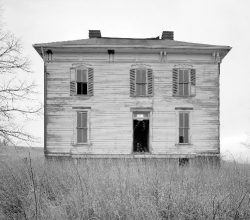
Since the 1930’s, the Library of Congress has maintained a photographic survey of ‘historic’ buildings. A book drawn from this collection chooses mostly vernacular buildings – “urban row-houses, suburban and rural homes”. They are restrained images, “the style of no style” and “unmoored from a particular time”. Yet they “anticipate virtually all contemporary photography of the man-made environment”, conveying a uniquely American sense of emptiness [and] possibility”. Images are here.

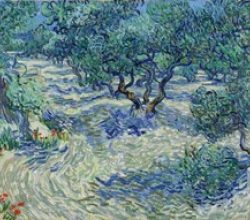
‘Van Gogh And The Olive Groves’ Opens At Dallas Museum Of Art

Van Gogh made about 15 olive tree paintings, yet despite being from his peak period, they have never been exhibited as a group Completed while he was struggling with his mental health, these are “focused paintings, just earth, trees and a touch of azure sky”. The seasonal changes reflected in the foliage of the trees show the artist’s optimism that he too would find renewal. When viewed as a group, they are “one treasure after another [but sadly], van Gogh in his prime was only a two-year enterprise.”

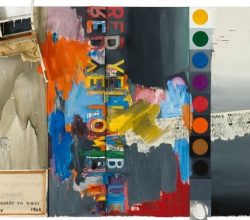
Which red is the real red?

A deep dive into Johns’ enigmatic paintings, suddenly out from behind a paywall. Johns commented that he liked to “use ‘things the mind already knows’ because ‘that gave me room to work on other levels’”. Taking his lead from Duchamp, Johns’ favoured tactic is to present a banal object and let the viewer spot the double meaning. Many such riddles appear in his work, and they can be tough to decipher. “Are we supposed to ‘unpuzzle’ Johns, simply because he is a great artist?

23rd November 2021

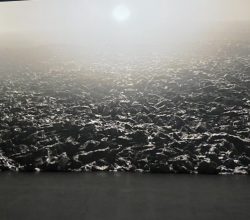
Arthur Jafa

Jafa’s 2016 video essays have made him a global sensation. His new work, AGHDRA, is quiet, comprising imagery of a lumpy surface of “stuff”, with waves going out to a distant horizon. This “supreme mass” is “terribly beautiful—beautiful despite the terror, terrible despite the beauty.” Jafa calls it an attempt to “embody black experience in non-narrative terms”. The piece has no conclusion, “just endless, gut-wrenching, but still gorgeous churning.”

Annie Leibovitz: “A lot can be told in those moments in between the main moments”

Leibovitz is having a moment with multiple shows and a book. The reviews reveal a photographer of disparate parts. Her fashion images often indulge in fantasy, evoking narratives from history or literature as much as they showcase clothing. Her portraiture is about realism, perhaps reflecting her photojournalism roots at Rolling Stone. For Leibovitz, though, everything is a performance, with “both the photographer and [subjects as] contributors to cultural moments.”

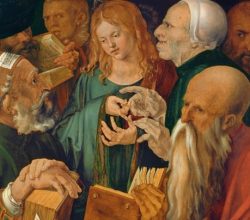
Dürer’s Journeys: Travels of a Renaissance Artist review – Is the classic blockbuster exhibition in its death throes?

This show “loses its way” somewhat – but how far wrong can you go exhibiting Dürer? Travel to Italy allowed him to share his exactitude and dark Germanic imagination. Italian artists in turn exposed him to Venice’s sensuality, colour and focus on classical beauty. Who influenced whom the most is moot. Travel ensured that Dürer entered “the bloodstream of European art”. What he learned, says one critic, included a new, modern idea  – the artist as a genius.

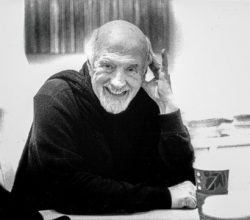
Remembering Dave Hickey, brilliant art critic and renegade Texan

Hickey has been called “the philosopher king of American art criticism”. His reputation rested especially on two 1990’s books that contain “some of the best writing on art and culture that any American has ever done”. A critic described him as “a resolutely nonsystematic thinker …  a critic who constructs no rules, but instead rhapsodizes about what he loves, aiming not to convince you of its worthiness but to demonstrate that such love is possible.”

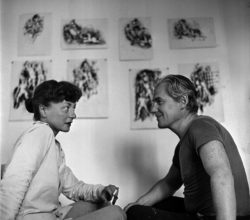
In Willem de Kooning’s Loft at the Dawn of Bohemian New York

What was it like to be in New York when, after WW2, it was the white-hot centre of the art world? Schloss was a young art writer who seemingly had a talent for “being in the blazing-hot There”. Walking downtown with de Kooning was like “walking with Clark Gable in Hollywood.” His loft had “the smell of fire and brimstone in the air … A man had been measuring himself against the gods with nothing but a stick covered with paint … “Wow, that man, just standing there in his studio, wow!””

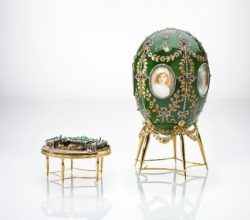
Fabergé in London: Romance to Revolution at the V&A exhibition review – still inspiring wonder

By the late 1890’s, Fabergé was the pre-eminent jeweller to the Romanov court. The “outrageously OTT” imperial eggs testify to his “gloriously creative vision” and a workshop that employed only “the brilliant”. Then came the horror of WW1 which made his objets de fantaisie “suddenly, utterly inappropriate”. Fabergé’s enterprise was finished off by the 1917 revolution, his legacy being those spectacular eggs – “ridiculous, yes, but exquisite, beautiful, magical”. Images are here.