The Easel

28th March 2017

Raw Material

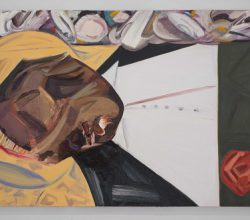
A firestorm has erupted over the Whitney Biennial including a painting of the black victim of a 1950’s lynching. The white artist is being accused of “appropriating” black suffering and “aestheticizing” horror. But these are not the only issues. “Whose art is it, and who gets to make it?” Further, are critics of the painting denying that “sympathy, and … identification, are possible across racial lines?”
Wearing the Mask

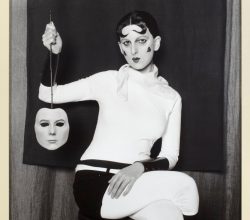
We all put on a ‘public face’ – but what lies behind that mask? For Surrealist artist Claude Cahoun, the answer was ‘another mask’. Gillian Wearing, an admirer of Cahoun, probes these same issues in her art. “This need to author your identity seems innate … Part of our experience of life now is to look at ourselves, over and over again. Recording and living are part of the same thing.” More images are here.

Timothy Hyman’s ‘The World New Made’ – an alternative history of twentieth-century painting

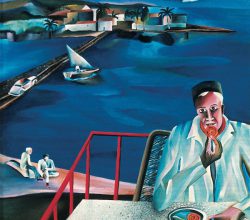
The 1950’s critic Clement Greenberg dismissed figurative painting as “necessarily minor”. Critical opinion is not treating this judgement kindly and a “brilliant” new book argues that figuration deserves greater recognition in twentieth century art. “[M]ore [figurative painters] still lie unrecognised and … the full history of twentieth-century painting must therefore still wait to be written.” A fuller review is here.

Critics of the NEA often say its funding is welfare for rich, liberal elites. They’re wrong.

The draft US budget eliminates funding for the key arts agency, the NEA. Some agree because the arts enjoy substantial private sector support and because NEA disbursements favour the rich. But NEA grant offers are often needed to unlock private support. Further, its grants are spread widely: “about 40% [to] programs in high-poverty neighborhoods and 36% … aimed at underserved populations”. More culture wars.

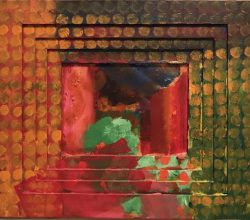
Howard Hodgkin Portraits The Insider’s Insider Review By Edward Lucie-Smith

Howard Hodgkin died two weeks before the show he so wanted – an exhibition of his portraits. Most reviews are gushing, but less so the above piece. Hodgkin’s abstract style leads to this charge – “Without the catalogue note, the painting can’t exist on its own”. But another critic sidesteps this criticism: “[W]ith artists you judge by results: the [paintings] we are left with. Often Hodgkin’s were sumptuously beautiful.”

Raucous, Disorderly Downtown

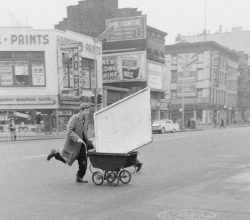
Art history tends to focus on the commercially successful. In 1950’s New York the big uptown galleries feted Jackson Pollock while downtown an eco-system of humble artist-run galleries promoted lesser names. An exhibition about these galleries shows that they promoted an “especially raucous art”. They tell “alternative art histories” and reveal “the robust roots of art-making, rather than only the flowers.”

11 Takeaways from Art Basel and UBS’s Report on the Art Market in 2016

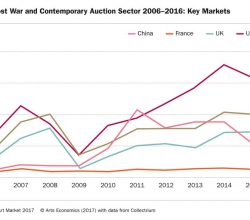
The scorecard for 2016 is out. Global art sales declined 11% to $57bn, following declines in 2015. Contemporary and modern works (75% of sales) were down but Old Masters sales recovered slightly. Art fairs account for nearly 25% of market turnover, still less than half the dealer market. Online sales grew (again) but auction sales were down 25% – and for the glamour pieces over $10m, were down 53%. Ouch!

21st March 2017

Whitney Biennial 2017

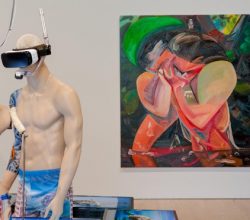
The Whitney Biennale is America’s premier event showcasing contemporary art. Discontent with current US politics is a major theme – Jerry Saltz calls it the “most politically charged” show in decades. This writer thinks there is a broader range of animating issues but still agrees with Saltz, kind-of. The show “[doesn’t] trumpet an overarching theme. Yet it’s impossible not to read it as a state-of-the-nation exegesis.”

Image: Frieze.com

The Fate of the Critic in the Clickbait Age

A topic dear to The Easel’s heart. Newspapers’ challenge to arts criticism is ‘why publish what no-one reads’? This feisty essay pushes back. Is the value of cultural commentary adequately measured by click rates? As the writer tartly observes, criticism is “the only antidote we have to paid publicity.” Who else does the critic’s “irritating, somehow necessary job: to stand in a public space and say, “Not quite.”

Thomas Struth on Documenting Invisible Systems

Struth has had a long standing interest in complex systems. At first it was the street grids of big cities, then big museums, jungles, and now big technology. “The pictures of technology have to do with the mindset of entanglement and passions and failures … When someone gets obsessed with something [technological], he can’t look at himself with perspective.”

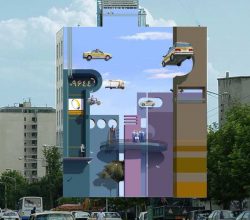
Double Take: Medhi Ghadyanloo uses the art of illusion to reveal truths

Some years ago Tehran felt a need to brighten itself up. It tendered for ideas and new art graduate Ghadyanloo submitted ten, all of which were accepted. Another 90 surrealist, building-sized murals have since followed, as has international attention. “I feel a responsibility, especially for Tehran, because there, people there are on the edge, you know. I was one of them.’  More images are here.

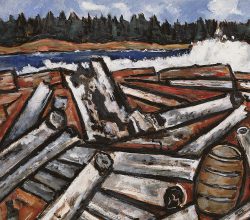
“Marsden Hartley’s Maine,’ His Muse, First and Last

Marsden Hartley, the greatest of the early American modernists, was from small town Maine. But he was gay at a place and time when that was particularly difficult. Cosmopolitan Paris and Berlin were a much happier fit but then came the First World War and a return to the US – and Maine. The focus of this show, as the curator comments, is “if you are from one place, you leave it and you try to come back. What happens?”

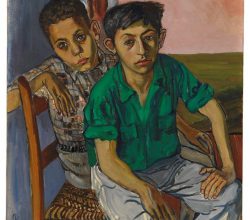
Hilton Als, Alice Neel, and the Faces Of New York

A previous linked piece on Alice Neel took an historical view of her work. Renowned essayist Hilton Als, having curated a smaller show of Neel’s work, describes her Harlem milieu. “There’s an extraordinary act of will in this world to not believe that you are seen, and then there’s this person that sees you, and … it is so moving … that those boys would come to her door and say, we hear you paint Spanish kids.”

Darker Horizon

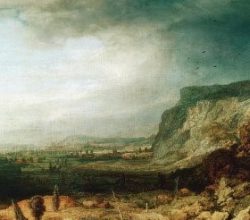
Holland’s golden age of painting is now often associated with realist interiors – think Vermeer. But at the time the Dutch were “besotted” with landscapes. This genre was home turf for Segers. He painted not from real life but from what he imagined. One keen collector of his work was Rembrandt, who copied some of his images. All in all, a “master in an age of masters”.  An excellent short video (4 min) is here.