The Easel

14th March 2017

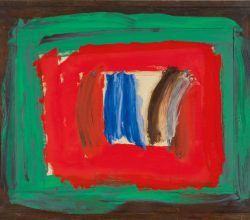
Howard Hodgkin, Whose Paintings Were Coded With Emotion, Dies At 84

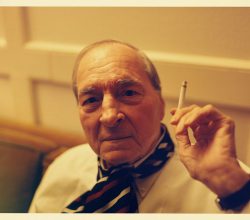
Critics describe Howard Hodgkin as focused on emotional interiors, a subject explored in particular by Bonnard. Hodgkin described himself in similar terms: “I paint representational pictures of emotional situations.” But neither characterization pinpoints why he was so distinctive and so lauded. One critic gives an answer – “the finest colourist in painting since Mark Rothko.” More commentaries are here.
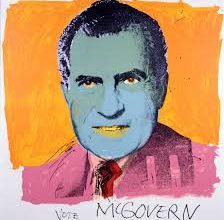
How art chronicled the birth – and death – of the American dream

Pop’s mass market tastes suited print making and sparked, in America,  no less than “the great renaissance of the print “. The role of Pop in printmaking is also picked up in another review, one that verges on the bad-tempered. Why is the British Museum, “full to the brim with what it owns already”, borrowing works to stage a blockbuster? “Is it some kind of a joke?”  Some images here

The special relationship

As Michelangelo worked on the glamour commission of the Sistine Chapel, Raphael was working on the Papal Apartments. Competition irked Michelangelo who began a painting collaboration with the young Sebastiano. It suited both – Michelangelo’s drawings enhanced composition while Sebastiano’s painting prowess aided execution. Best of all, for Michelangelo, he got most of the credit.  A nice video (3 min) is here.

Pottery, But Not As You Know It

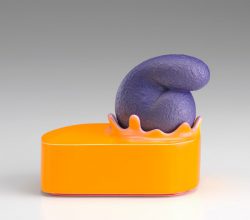
Few artists would admit, as does Ron Nagle, that hot rods are a source of inspiration. Their loud auto-body colours still feature in his work which pays cheerfully little regard to the rules of craft ceramics. That’s OK – he sees himself as a sculptor and a West Coast sculptor at that. Some of his small “painted objects” look good enough to eat but others look “like nothing else on earth”. Multiple images are here.

Images: Matthew Marks Gallery

Moscow’s First-Ever Garage Triennial Casts a Floodlight on Russia’s Elusive Art Scene

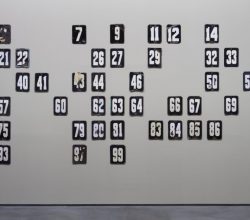
Contemporary art in Russia is diverse – the art scene spreads across 200 nationalities and 11 time zones. It is also troubled because officialdom is very touchy about free expression through art. Russia’s largest ever contemporary art show rises to the challenge, showing “a bracingly expressive slice of the zeitgeist” as well as “hard-bitten post-Soviet resilience”. A background piece is here.

See Arabic calligraphy from a new angle at Inside/Outside exhibition in Dubai

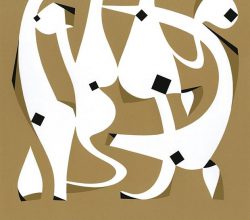
Acclaimed Arabic calligraphist Wissam Shawkat last year announced he would henceforth take an abstract art approach to this ancient lettering. Why such a radical step? From a young age, he admitted, “I have been attracted primarily to the graphic values of the letters. I dutifully studied … until at last I felt qualified to judge which principles could be overridden and unbound”. A background piece is here and images here.

Image: Islamicarts

Gluck’s rebellion against artistic and gender norms

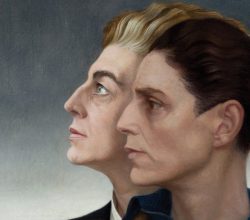
If you were going to be a rebel in 1920’s London it helped to be from a wealthy family. Then again, to be gay and Jewish guaranteed more than your fair share of challenges. Gluck painted the landscape of rural Cornwall as well as life up in London. Her insistence on solo shows limited her market profile then and now, in retrospect, there is a vague sense of an under-fulfilled talent. More images are here.

8th March 2017

EASEL ESSAY: Night Swimmers

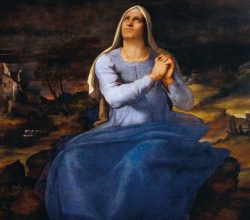
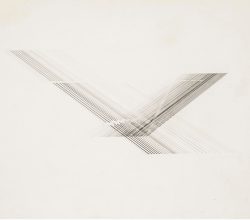
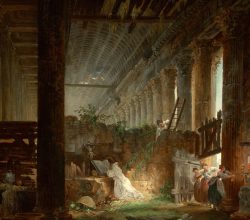
“If you love art, the possibility of revelation is always present.” Thus begins Rachel Spence’s contemplative essay about two paintings, one from 1970’s India, the other from Renaissance Venice. Although separated by centuries and cultures, these works speak to timeless questions about human existence. What is the relationship between the external environment and our internal world, our “interiority”? How does one know and express truth? And, for Rachel, what do these works – one by a woman, the other a painting of a woman – say about the choices that a woman faces in life?

Rachel testifies to the power of art to change lives. “These are images that shift your world on its axis. To look at these drawings is to feel you are witnessing a world, or a cosmos, in a state of both becoming and departure. These are visual testaments to a holy order. In the beginning, they murmur, was the Line. The images whispered to me of stillness. Of silence and solitude. Of an introspective gaze, abstract, unwitnessed.”

In Defense of Cultural Criticism in Trump’s America

What starts out as an anti-Trump rant becomes an insightful consideration of art criticism in the era of social media. A musician states that Trump will make punk rock great again. But this greatly narrows art: “akin to 31st-century scholars poring over the novels of, say, Jonathan Franzen to discover whether he thought Donald Trump was good or bad, instead of absorbing his [work] on its own terms. Its not always about Trump.”

How William Eggleston Changed the Way We See the World

The photographer William Eggleston is having a particularly high profile year – books, exhibitions, guest of honour at gala dinners. Such a high profile that it takes some effort to put his great contribution to photography in perspective. “What he has perfected in his photographs is a way of seeing without judgment. Now it struck me that his way of looking is the visual equivalent of deep, intent listening.”

10 things to know about Peter Doig

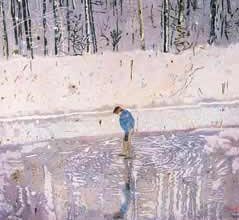
Such is Peter Doig’s importance that, in advance of selling two major works in London tonight, Christie’s have produced a nice background piece on him. Some titbits: Trinidad, where he now lives, is increasingly influential in his work; he learns from teaching art, he has a feeling for snow and he didn’t mind being the odd man out in 1990’s London: “I think that’s a big mistake for artists — to … want to be part of something.’

Image: Walker Art Gallery

Quantum Wall: An Interview with Jack Whitten

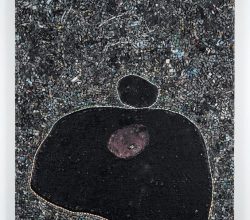
Jack Whitten comes across as obsessed with materials, constantly trying out pigments, new papers, specialty waxes and chemicals. Paint is not applied with a brush but cured slowly in slabs, cut into tiles and assembled as a kind of collage. The effect he is seeking is a marriage of contemporary and timeless: “Everything I do is grounded in geometry … [tiles are] like working with stone—it becomes a primal element.”

More on Met Directorship: My Takes on Puzzling Punditry by Cotter, Gibson, Dobrzynski, Oliver

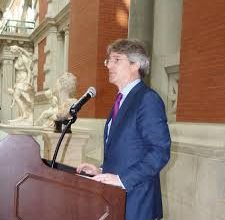
The Director of New York’s Met has resigned suddenly. Financial woes seem important but likely not the full story. Moving into modern art has improved the Met’s image and grown attendances but has been costly and less than popular with curatorial staff. One insider also queries Board governance:  “If you look [at MoMA] it is a much more involved board with probably a higher proportion of real collectors.” (my emphasis)

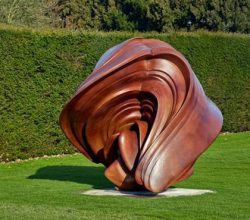
‘Mind-boggling structures in a stunning landscape’: Tony Cragg: A Rare Category of Objects, review

Apparently Cragg was interested in fossils as a youth. Small wonder then that now, a famous sculptor, he sees manmade objects as “fossilized keys to a past time which is our present”. That’s perhaps a clue to his work, difficult though it is to understand: “how did he dream up the ideas and processes that brought these mind-boggling structures into being in the first place?” An extended video interview (1 hour) is here.

Image: Yorkshire Sculpture Park