The Easel

14th June 2016

“Munch and Expressionism” at The Neue Galerie, New York

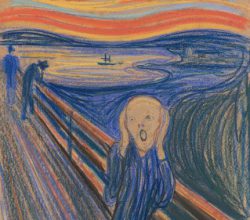
It might be said that Edvard Munch had one brief shining moment. When he painted The Scream in 1983, he amplified van Gogh’s ideas about expressive distortion to create modern art’s defining image of inner conflict. After that – the bulk of his career – came little else. “An inherent parochialism both powered his vision and prevented a full reckoning with Modernism.  The post-1900 canvases are … a mish-mosh”.
Surfing on Acid

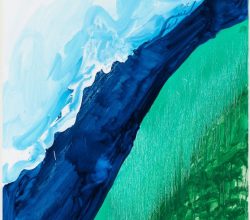
Mary Heilmann moved to New York because of the entrenched “guy culture” on the West Coast. She was not the big hit she thought she might be but decades of quiet achievement followed. She draws inspiration from Mondrian and Matisse, along with popular culture and days spent on the beach in California. Now, with a London retrospective, she may become the big hit she had once hoped to be.  More images are here.

Diane Arbus: The First Chapter Jeff Rosenheim with Michèle Gerber Klein

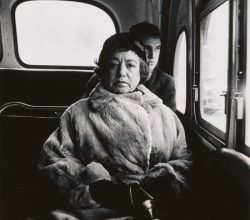
Diane Arbus has long divided opinions. Late career images of “freaks” are viewed by some as predatory but by others as empathetic. From the start, doing street photography, she took a different approach: “Although the image isn’t staged, she demands that the subject address her in a way that interested none of the other photographers of her generation … a completely new way of doing documentary style photography”.

Prado nudes on view in fascinating exhibit at the Clark

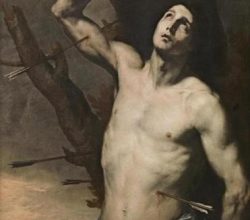
The Hapsburg kings were, for a time, Europe’s wealthiest and they had a particular art interest – nudes. Renaissance thinking opened up aesthetic and erotic perspectives on the nude quite at odds with religious interpretations. This made the art potentially dangerous: “self-contradiction — a kind of warning against the very act of looking at naked flesh — was often built into the paintings themselves”.

How Francis Bacon boldly thieved his signature image from Munch – and gave it teeth

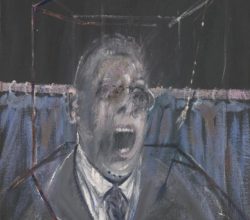
This review is unflinching in its candour. Acknowledging the “immense conviction” of the paintings, it focuses on particularities, including Bacon’s masochistic sexuality. Curtains: “[b]ehind the curtains, obedience and submission and the strong possibility of pain “. And the signature scream: “[t]he scream is stolen from Munch’s iconic painting. What a heist. So huge a theft that no one mentions it”.

Image: Tate

The Harvard Library That Protects The World’s Rarest Colors

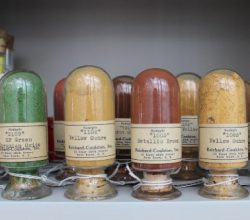
Some colour pigments used to be worth a fortune – lapis lazuli from Afghanistan or cochineal from the Spanish colonies. Harvard’s Forbes Pigment Collection harks back to this era, before the Industrial Revolution and organic chemistry made everything cheap. What colours can now boast a pedigree like, say, mummy brown, which came from resins taken off the wrappings of embalmed Egyptian bodies?

This Is America

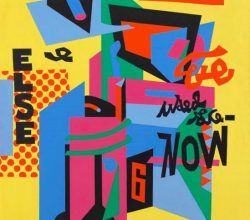
Early 20th century America fretted that its art followed European trends. Davis wanted to change that. In early career he tried collage like paintings – “proto-Pop art”; later career works were increasingly abstract. Elaine de Kooning wrote of him “His subject has always been America—not America as seen in American art but as seen on a walk down Broadway or a drive past a harbor in a fishing village.”

7th June 2016

How Philip Guston, America’s Great Painter of the Night, Completely Reinvented the Sublime

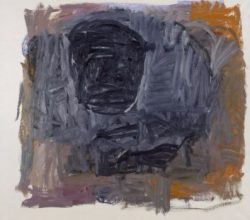
Philip Guston was slow to join abstract expressionism and, by the late 1950’s, desperate to leave. “A battle of wills with his art” over the next decade saw him emerge as a figurative painter. He was now all set for “what is perhaps the greatest last-act in 20th-century American art history: Guston’s all-hell-broken-loose id-under-pressure late figurative paintings.“ Images are here.

theartsdesk in Bilbao: The School of Paris at the Guggenheim Museum

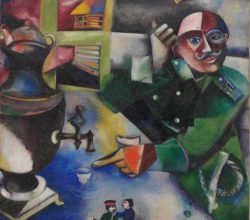
Guggenheim New York has lent its Bilbao offspring a host of early 20th century masterpieces. The title “School of Paris” implies a core narrative linking various art movements but the show doesn’t deliver on this. Who cares? The art explosion in Paris at that time has been told many times but still communicates “to all but the hardest of hearts, [the] still exhilarating story of modernism.” Background information and images are here.

Alex Katz: ‘Warhol ripped me off’

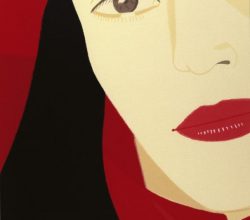
Most critics seem to like the current Katz show in London. The above reviewer seems to approve without exactly saying so. Katz images (often of his wife) are unsentimental, don’t give away much and are very popular. But misgivings persist. A review of some decades ago sums up the hesitation: “Katz is a poor draftsman. The idea of drawing as scrutiny of a subject … is quite alien to the pharaonic prettiness of his art.”

Ella Kruglyanskaya on Painting Modern Womanhood

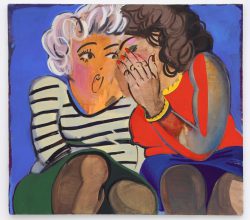
Tate Liverpool is splurging this summer on figurative art. Kruglyanskaya is the most contemporary of three artists represented and articulates distinctly modern views. On fashion – “I don’t dismiss it as this light thing”. On the nude – “When you look at the nude, you’re just consuming her. It’s not like she can fight back”. On influences – “my idea of an homage to other artists [is a work] that still has my own twist.”

The promise of Tate Modern

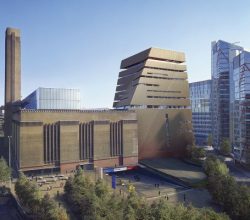
Despite an initially patchy collection Tate Modern is now the world’s most visited modern art museum. Its next step is thus of some importance. Overcoming surprise at Tate’s success, this review of its new building ponders the options. The showcase for global art? “Interest in world art expands as narratives [focused on Europe and the US] become stale…. Already it is evident … that geography has become a significant theme.”

“It is Like Going to the Heavens”: Environmental Art Icon Christo on Creating the Largest Sculpture in the World

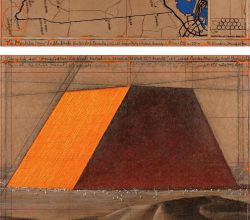
With his floating sculpture about to open in Italy (Lake Iseo, June 18), Christo is moving ahead on something even bigger. His plan – decades in the making – is to create a sculpture in Abu Dhabi that is comprised of 410,000 oil barrels – “bigger than the pyramid of Cheops”. Like all his projects, it does not express a sense of place: “it is a sculpture, a normal sculpture … [based on] a 7,000-year-old geometric form”.

Private collectors display their Banksy art in Rome

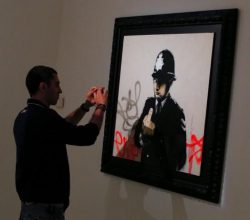
After 20 years of anonymously creating politically acute street art, Banksy is the subject of a survey show in Rome. It has been organized by a not for profit group and not, we are assured, by the artist. Speculation is rife that he may visit. A curator declared breathlessly “In the history of Western art, no other artist has managed to bring themes of this magnitude to the attention of a global audience”.