The Easel

28th June 2016

Bill Cunningham Saw Us All

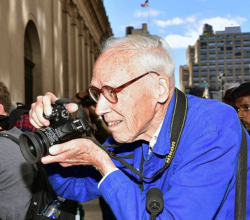
Street photographer is an elastic term but by many definitions the late Bill Cunningham led the genre. His column On The Street appeared in the New York Times for 38 years. An epic number of obituaries have some common themes – hard working, modest, great integrity and a democratic sense of fashion. Appreciations from the Times, industry notables and other photographers, are all revealing.
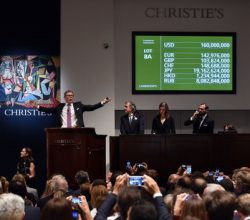
London’s Art Dealers Brace for Bargain Hunters Amid Brexit Chill

An auction just before the Brexit referendum saw disappointing results, jangling nerves about bigger auctions to come. Does Brexit threaten London’s position in the art world? Will sellers pull works from auction given the uncertainty? Will a lower pound help or hinder sales? And what impact on artists? “This divorce will cost a lot of money, and there will be less money available for culture.”

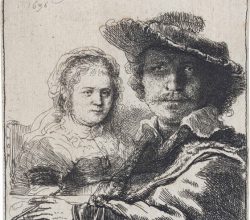
‘The perfect line’: How Rembrandt made some of his greatest works

As long as you can draw, etching is an art form within reach. Although still widely used today its popularity was at its height in the 17th century. Rembrandt was then, and still is, one of its great exponents. Ahead of a large sale of his works, Christie’s has released an elegantly narrated video (4 min) and short essay on Rembrandt’s use of the technique. “It’s such a perfect line, the etched line…”

Vision & Justice: Awol Erizku

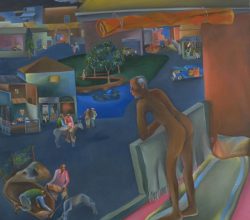
It’s hard to argue with the writer’s observation that the Western art canon has “almost blinding whiteness”. Kehinde Wiley has put people of colour into scenes drawn from Old Master’s paintings. Erizku does likewise in photography. His objective is to comment about both race and culture. “Honestly, I don’t see it as just being about black culture; it’s about my culture, and I’m documenting my culture”. More images are here.

The Formation of Georgia O’Keeffe

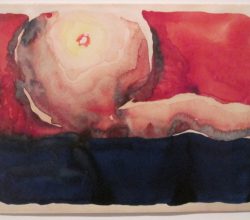
When she first went to Texas, O’Keefe found a deep affinity with the Southwestern landscape. The style she developed seemed new, not an echo of Europe. New York’s art circles were riveted – and her career was launched. It wasn’t just that she had a modernist style but more that, returning from those sparse landscapes “she was fully equipped to embark on her journey as a resolutely American original.”

Tales of Three Cities

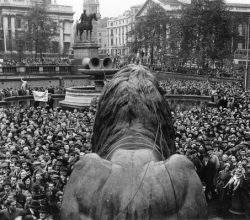
Change is a key theme of twenty first century conversation. Innovations from Silicon Valley are disrupting whole industries but a century ago it was the transformation and modernization of cities.  “[London, Paris and New York] were not only places of social division and political tension, but also of beauty and magic”. Comparative images of London over time are here.

How painter Winifred Knights became Britain’s ‘unknown genius’

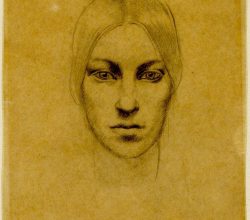
Winifred Knights seems almost a case study in being forgotten. She excelled at art school. A prestigious study grant to Rome followed where she honed her Renaissance-tinged figurative style. She produced a number of critically acclaimed works but was not prolific. When she died in 1948 abstraction was in vogue and no obituaries marked her passing. A first ever retrospective has just opened, gaining strong reviews.

21st June 2016

From selfies to virtual reality, how technology is changing the art world

No less an authority than the head of Art Basel thinks digital art is the next big thing. Using both off the shelf and bespoke programming, digital art is proving just as potent as painting or sculpture as a means of exploring “the dreams and nightmares of the digital age”. As an example of the genre, Ed Atkins, an artist who uses object recognition technology, is reviewed here.

Emperors’ Treasures Chinese Art From The National Palace Museum, Taipei

No country does cultural history quite like the Chinese. A travelling exhibition contains exquisite treasures from nine rulers, four dynasties and covers 1000 years. Unlike some imperial art these objects were not for public display but meant for the pleasure of the ruler alone. A collection was originally formed in the Forbidden City and parts were moved to Taiwan during the civil war. Key pieces are highlighted here.

What’s Sold at Art Basel in Basel

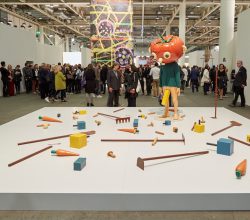
The spring art auctions in New York this year were mildly disappointing. Last week’s Art Basel fair was thus an important test of the market’s direction. Some 4000 artists were on display with works valued at $3.4bn. Overall it was a moderate success. “[W]e were on fire” boasted one dealer; others were perhaps more subdued. Will the market regain its previous exuberance? “The consensus remains that it will not”.

Throwaway Digital Culture Is Art in Cory Arcangel’s ‘currentmood’

Arcangel is fascinated by “lo-res images that have become a signature … of [the] repurposing nature of internet culture”. Such images feature significantly in his latest show. Do they belong in an art gallery? That, he says, is his point:  “I’ve put it there to say … [i]t’s how I see the world and how I would assume most people would see the world now.” A “decentering experience” notes the reviewer.

Cosmopolitan Folk

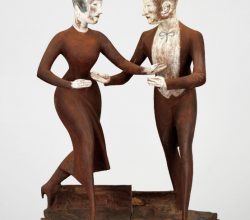
Folk art is made to express the social narratives and memories of a community. Often labelled as naïve or primitive, its artistic merit only began to be recognised in the twentieth century. An early American collector was sculptor, Elie Nadelman. His work and collection shows that folk art and high art in fact influence each other. Sadly, both his collecting and artistic practice stopped abruptly with the 1929 crash.

Art of the Hellenistic age at the Metropolitan Museum of Art, New York

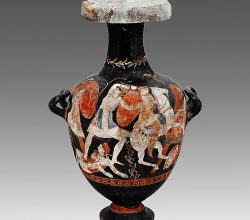
Alexander the Great loved Greek art. His tastes endured and the arts flourished for 300 years after his death until the rise of imperial Rome. Pergamon was a fabled city in the Hellenistic empire but there were others, all supported by the wealth from Alexander’s conquests. The reviewer notes “Lifestyle is propaganda”. Evidently so – Pergamon still impresses after several millennia.

Image: Metropolitan Museum