The Easel

6th October 2015

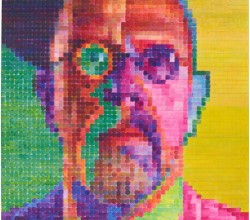
CHUCK CLOSE Red Yellow Blue

According to the critic Michael Kimmelman, Chuck Close says his interest is less the subject matter than his work method. His career-long focus on pixelated, shoulder-up portraits bears this out. Colour contrast is the aspect of work method that gets particular focus in his current show. Of one portrait – “Despite the initially cheerful palette of grapefruit, lemon, and bubble-gum, the work conveys a certain contemplation and wistfulness.”
Lawren Harris: Northern Exposure

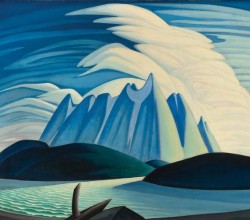
Robert Hughes lamented that artists can be overlooked if they are from the “provinces” of the art world. This may explain why Lawren Harris, often regarded as Canada’s greatest painter, is little known outside his home country. A retrospective in Los Angeles, co-curated by the actor Steve Martin, shows that Harris’s wilderness landscapes are anything but provincial. Background on his life is here.

Cindy Sherman Berlin Exhibition

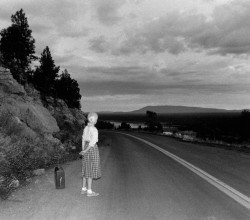
Cindy Sherman thinks her artistic practice germinated as a child when she would dress up in old clothes in the attic. She has since become widely acclaimed for enigmatic photos of herself dressed up as imagined characters. The recurrent theme of her work is the place of women in society and their depiction in the media. The above article also links to an interesting BBC doco (53 min).

What Becomes Of The Broken Hearted?: ‘Art Breakers’ And The Art World’s Reality TV Problem

Not all art programs have to be serious. A new reality TV show on art is about to launch and this reviewer displays a nice touch of black humour about the end product. “Of course, reality TV is inane by design, and what I appreciate about the form is that it provides me with some kind of substantive proof that life is supposed to be unbearably meaningless, and that any indication otherwise is both fleeting and a mistake.”

Silver Linings: The Art of Metalpoint Drawing

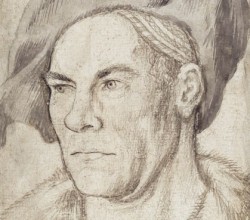
Metalpoint is a form of drawing where a metal stylus leaves traces on a specially abrasive paper surface. Albrecht Durer was an early pioneer, as was da Vinci. The popularity of metalpoint’s “lustrous line” has varied over the centuries as other graphic tools have become available. Perhaps its waning popularity owes something to it being an unforgiving medium – mistakes cannot be erased.

Turner Prize Sacrifices Visual Punch For Conceptual Filler In Glasgow

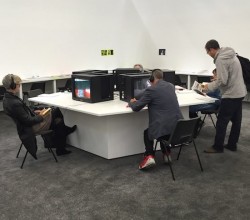
Art prizes may not be your cup of tea but they can reveal what is happening beyond the major gallery circuit. This year’s Turner Prize jury apparently wants to highlight artists who are “pushing the boundaries”. The short listed candidates include the re-created interior of a terrace house, a singing group, a re-created public reading room and a collection of fur coats on chairs. Consider the boundaries pushed!

Checking in on the Cape Town Art Scene

Interesting profile of ambitions and anxieties in Cape Town’s contemporary art scene. A major, privately funded museum opens next year to house a collection focused on contemporary African art. In advance of that event the city’s art dealers reflect on their aspirations. How much should they prioritise artists whose style is distinctly local, even if it is unfamiliar to international collectors?

29th September 2015

Tate Modern Finally Gives Pop Art’s Long-Ignored Female and Global Artists Their Due

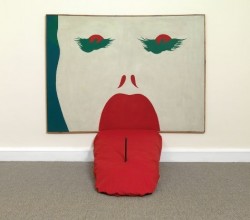
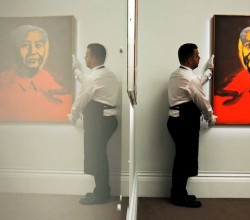
Pop art has always been a very American story – think Warhol – but an exhibition at the Tate aims to bring non-US artists into the narrative. The curator observes “History is written through commerce. If there is no commercial support, then they didn’t enter the world.” Often unaware of what was happening in the US, these unsung artists nonetheless picked up a shift in media imagery and responded to it.

A Story Behind The Arrass

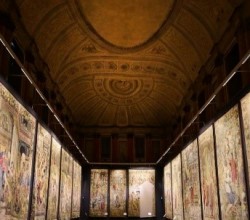
As soon as Cosimo de’ Medici unexpectedly came to power in Florence, he started to splash the cash on art. An early project was a set of 20 giant tapestries that are masterpieces of Italian Renaissance art. After extensive restoration these works have been reunified as a complete set for the first time in 150 years. They are touring Italy and went on display in Florence last week. A video (1.5min) is here.

A delayed tribute to France’s most famous woman artist

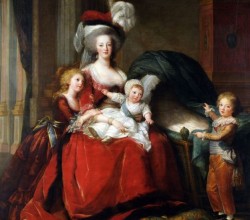
Such was Vigee Le Brun’s ability that, when she joined the Royal Court, it was hoped her portraits might fix the unpopular Marie Antoinette’s PR problem. No such luck. Given her royal connections, Vigee Le Brun had to flee Paris in 1789, but simply grew her reputation elsewhere in Europe. Despite enduring popularity, this is her first ever retrospective in Paris. An interesting video (4 min) is here.

This is bad news for people who spend millions on art

The art market moves in mysterious ways. Under increasing threat of litigation, some artist foundations no longer rule on the authenticity of works by the artist. Art experts are also becoming reluctant to give opinions. This has boosted the price of works with established authenticity but “the gray area for uncertified works … has become even grayer.” One possible consequence – more forgeries.

‘Portraits: John Berger on Artists’, by John Berger

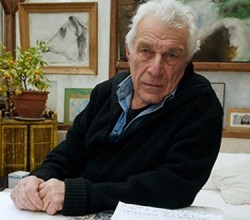
John Berger shook things up in his acclaimed 1972 book “Ways of Seeing” where he argued for including social context in art criticism. Now aged 88, his new book on portraiture takes a more conventional approach but is not lacking impact. “[A]rresting” is the reviewer’s assessment, “history filtered through a temperament … a definitive self-portrait of one of Britain’s most original thinkers.”

Cecily Brown Discusses Style, Insecurities, and Knowing When a Painting Is Finished

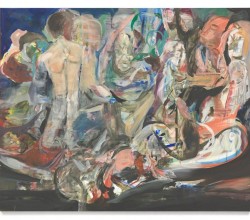
Cecily Brown’s CV reads like she is the next big thing. Prizewinner at the Slade School, represented by Gagosian, works in major collections, high prices at auction and not yet 50. She self-describes as “abstract at first glance… but full of figurative elements”. But, she frets. “I might love something but 10 minutes later questions creep in likeIs it enough that it’s pleasant to look at?” Her current show is on in Berlin.

The Anti-Expressionist: Jack Tworkov’s Paradigm Shift

Tworkov may not have been a giant of 1960’s Abstract Expressionism, but he was influential – and different. There was no out-of-control lifestyle. He wrote noteworthy essays. But most eye-catching was his switch from emotional abstraction to cerebral geometries. As the reviewer notes “of all the Abstract Expressionists, Tworkov traveled the farthest, an apostate from the temple of the emotive stroke”. That took strength.