The Easel

20th October 2015

Musée d’Orsay becomes world’s first gallery to stage prostitution exhibition – but French art critics aren’t happy

The Musee d’Orsay suddenly has a PR problem. Its major current show, on prostitution in nineteenth century Paris, has been praised for recognizing this aspect of the city’s rapid urbanization. However, local critics are questioning the recurring erotic content in recent shows. One writer has likened Musee d’Orsay to an art house cinema that shows “difficult films one week and pornographic films the next to make up their losses”.
An Ancient Egyptian Show That’s Low on Bling but High on Beauty

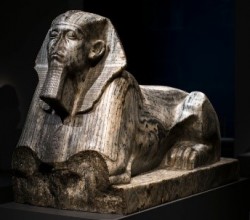
After a long civil war, Egypt emerged into the 400 year “Middle Kingdom” period during which the arts flourished. For both pharaohs and commoners, art was a status symbol and facilitated one’s journey to the afterlife. Non-regal objects have a particular contemporary appeal: “[W]e tend to identify with Egyptians … they drank beer, collected cats and wore flip flops. Who can’t relate to that?” More images are here.

To look a courtier in the mouth: how to see beyond the stiff upper lips in Goya’s portraits

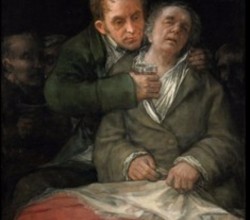
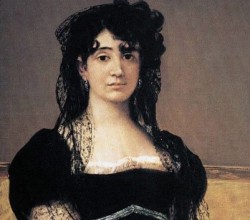
The English poet Craig Raine is a highly original writer on art, providing you can tolerate weighty literary references. His assessment of Goya’s portraits (see last week’s Easel) is focused on mouths. “Mouths in nature are often wrong…There are many brilliant mouths on show here – for example, the vacant, open mouth of the Infante Don Luis de Borbón (1783). You can almost hear him trying to breathe through his blocked nose”.

Head to Head With Martin Puryear at the Morgan Library

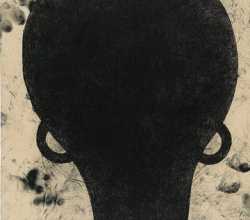
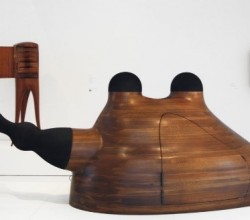
Before art school, Martin Puryear went to Africa with the Peace Corps. Fifty years on, that experience still influences his art. But his complex sculptures in wood and metal are not easy to categorize. Perhaps this suits him – he has said an appreciation of his art “doesn’t require knowledge of or immersion in the aesthetic of a given time or place.” More images are here.

The Rebel and the Robot: Wendell Castle Is Still America’s Furniture Maverick

If ever there was an artist who makes redundant the distinction between art and craft, it is Wendell Castle. As a sculpture student he started thinking about art-furniture and has spent a long career “going off the normal course of action”. He is enjoying a burst of late career creativity – and his first museum retrospective. Some images are here.

The Shoes Under the Art World

The art world’s neglect of female artists is well known. Here it is described beautifully with the voice of lived experience. “[My dealer] was trying to pitch [a picture] of mine. Bob talked about… “a Lipsky on your wall,” and sometimes he said the name “Pat.” And then I noticed—he never said “her” or “she.” You could buy without knowing you’d be going home with something female.”

Andreas Gursky Museum Freider Burda Exhibition – Wonders Of Colour Photography

A few years ago, one of Gursky’s images became the most expensive photo ever sold at auction. It was a characteristic work – a hyper-real image taken from a height. His signature style is to use elevation, plus digital trickery, to distort visual depth cues. You cannot tell whether you are near or far – the image, often brimming with detail, is “being seen from nowhere”.  A better but longer review is here.

13th October 2015

Goya at the National Gallery: Faces of a Changing World

Pretty much any superlative you can think of is being thrown at this show. Partly it’s the incredible coverage of Goya’s portraits but mostly it’s because of the enduring modernity of the paintings. Robert Hughes, who wrote a biography of Goya, linked this modernity to the artist’s desire to “know and tell the truth” and, from that, an ability to “project [his] images from [his] time to ours.” A nice (4 min) video is here and multiple images here.

Hating Renoir is Just a Phase

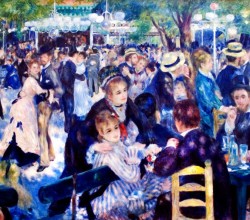
An anti – Renoir protest outside of Boston’s Museum of Fine Arts has ruffled feathers. Renoir’s crimes range from his anti-Semitism to having done too many syrupy paintings. Sebastian Smee from the Boston Globe has led the charge – “no meaningful motives at all.” Schjeldahl is a touch more sympathetic but also philosophical: “If you must hate yourself a little for loving Renoir, do so. You’ll get over it.”

Hammer Museum’s Lawren Harris show curated by celeb Steve Martin raises concern in art world

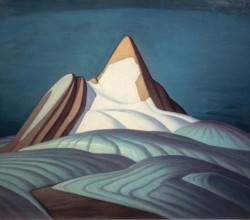
Coverage of the Lawren Harris show co-curated by actor Steve Martin (who owns a couple of Harris’s paintings) has generated an article highlighting potential conflicts of interest. Fair question. However, some will know the story of the art dealer who for decades bankrolled and promoted the Impressionist artists. When critical acclaim finally arrived, the dealer benefitted magnificently. But then, so have we all.

Cochineal

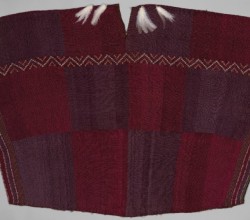
Its pretty easy to take red for granted but artists have found it to be a difficult colour. Only with Spain’s entry to Central and South America did a light-fast, brilliant crimson red dye become abundant in Europe. The cochineal insect was the source of this excitement – it became Spain’s most significant import after silver. Velazquez and Titian were early converts; the Impressionists were users, centuries later.

Celts: Art and Identity

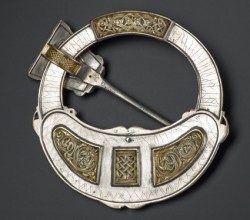
The Celts were a “will-o-the-wisp” as the reviewer expresses it, a loose group of Iron Age tribes who shared some linguistic and aesthetic traits but little else. Much of what we know comes from artifacts turned up by farmers ploughing their fields. However, the allure of Celtic art has not been limited by this lack of knowledge, as a current exhibition at the British Museum shows.

Robert Irwin: ‘my paintings were bad, I felt totally naked’

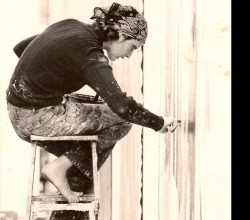
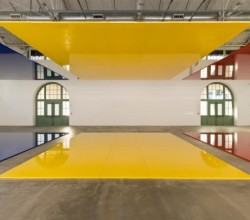
Irwin always wanted his art to extend beyond the frame. This drew him from an early stage to installation art and to the West Coast ‘Space and Light’ group. He is skeptical that his highly conceptual work will ever make him a household name: “At the very best, a few people will walk in and it will change their lives.”