The Easel

17th September 2015

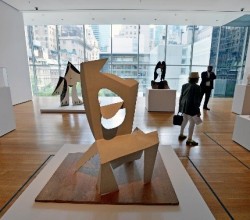
Review: Picasso, Completely Himself in 3 Dimensions

Wow! Roberta Smith is rarely so effusive – “..very few [exhibitions] are tantamount to works of art in their own right… [MoMA’s] staggering “Picasso Sculpture” is … a once-in-a-lifetime event.” Surveying these rarely assembled works she comments: “Picasso was … a magician, a magpie genius, a comedic entertainer and a tinkerer with superb reflexes”. Was he better as a sculptor or as a painter? “That’s a tough call”.
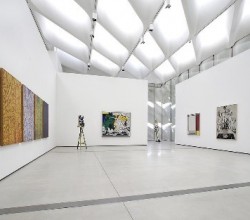
An early look in the Broad museum reveals a show that doesn’t quite gel

Donor-created museums – like the Courtauld, the Frick and the Getty – have a new club member, the Broad Museum in Los Angeles. Such grand generosity – building, collection, and an endowment – doesn’t quite overcome reservations about the art. The above review is polite but specific: “[A Jeff Koons] sculpture… underscores the narrowness of the collection. It’s mainly rich in blue-chip art, defined by market value…”

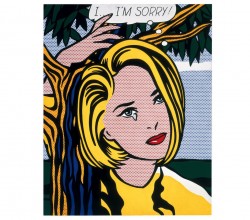
5 pieces in the Broad collection that highlight Pop art history and its almost immediate impact

In a companion piece to his overall review of the new Broad museum, Christopher Knight picks five Pop art masterpieces from its collection. They reflect the collection’s area of greatest depth – the Broads reportedly sold a van Gogh to expand their Pop purchases.

How To Fall In Love With Letters, According To A Typography Icon

Alan Petholick glimpsed his future career as a junior in an ad agency “I kept getting fired from these agencies because I spent too much time worrying about what the type looked like instead of selling the soap.” He became a pioneer of “expressive typography”– designing letterforms so that “the reader can really feel what the word means, not just read it”.

Old Guys Painting: David Salle on the Mature Painter’s Letting Go

Artists are sometimes especially perceptive critics of the work of other artists. David Salle, a prominent American painter, reviews three shows by artists in their late 70’s or 80’s to illustrate how artists change with age. “Painting is one of the few things in life for which youth holds no advantage. …[A] painter’s late work is characterized by letting go—the older painter needs do less.”

8th September 2015

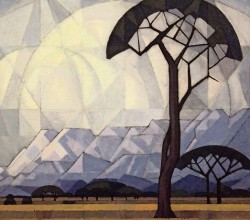
JH Pierneef’s people-less power

A great piece of writing. JH Pierneef was an iconic twentieth century South African landscape painter. A current exhibition of his work – the first since the end of apartheid – is being acclaimed, but there is a problem. Pierneef was very active in the movement that inspired apartheid. Should this exclude him from that nation’s cultural lineage? Further images and a less politically concerned review, is here.

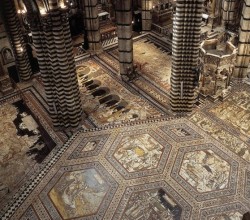
Siena’s Duomo unveils its mosaic floor

Once the residents of Siena are done with their famous horse race (the Palo) they have a scarcely less spectacular event – the unveiling of the cathedral’s inlaid marble floor. Completed about 500 years ago, the floor depicts over fifty biblical scenes and is among the most ornate in Italy. It is usually covered up for protection but is on view now for just the next month. More images are here.

Does Looking at Art Make You Smarter?

A new book reviews long term field research about the effect of creative activity on thinking. ““What we think of as representational art is pretty abstract”… having the ability to see an image in two-dimensions as a representation of an actual thing in three dimensions takes a level of abstract thought that, say, your cat doesn’t have”. An interview with the author is here.

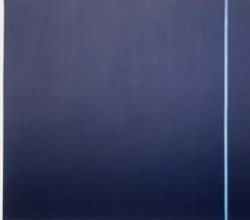
Total Surface: Barnett Newman’s Late Work / Interviews with Michelle White and Bradford A. Epley by David Ebony

Barnett Newman believed that his paintings with their vertical “zips” were epic.  Some critics at the time agreed and, as the curator of a recent show comments, the paintings do “[push] you out and into your own physical space [when standing] in front of the work”.  But critical ardour has perhaps cooled with time. Grumbled Robert Hughes, Newman’s colour field style “encouraged a phony grandiloquence”.

J.P. Morgan: The Man Who Bought the World

Art collecting was one of John Pierpont Morgan’s great passions and he did it on a vast scale, “travelling in a cloud of experts, dealers, and antiquarians”. That his will failed to spell out who should get what seems significant – “almost a recognition that art objects are objects caught for a little while in a cabinet of curiosities or a drawing room or a picture gallery, before they move again”.

After Utopia

Singapore has the reputation of being an efficient city state, so it is mildly surprising to hear about the emergence of a vibrant art sector. The Singapore Art Museum (SAM) focuses on contemporary South East Asian art and has a mission to “make infinite room for everyone to think, feel, experience and imagine”. A nice idea, even if it is not yet fully reflected in Singapore’s own community life.

Emerging from Ai Weiwei’s shadow: China’s new art

The newer generation of Chinese artists that is following Ai Weiwei were not as directly impacted by the trauma of Tiananmen Square. Neither have they faced the challenges of a poor art education system and the absence of a functioning art market. “Much of [their] art … is unapologetically “lite”… Yet this seeming banality often belies deeper concerns with the state of affairs in contemporary China—and the world at large”.