The Easel

19th August 2015

Vermeer in Manhattan

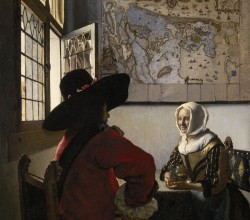
Vermeer’s interiors of unremarkable domesticity include little details that cause the viewer to speculate about what’s really going on. Therein lies the genius of the Dutch master and, for the person at the centre of this little essay, it supplies a refuge from a painful divorce.

‘Nobody Has Endless Strength’: Ai Weiwei’s New Life in Europe

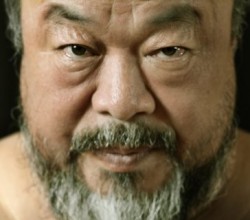
Two weeks after regaining his passport, Ai Weiwei left China for Berlin, his return date uncertain. Some wonder if his fame comes from his art or just his political activism. Jed Perl described him as “a man with a quick mind, indomitable energy, and no particular aptitude for art.” Perhaps Ai Weiwei is wondering if activism has been his muse: “[A]s an artist, I have a big problem with this situation… What should I do now?”

Richard Prince, Instagram, and Authorship in a Digital World

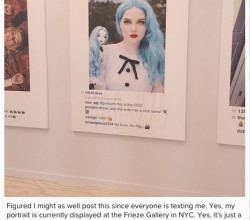
“Richard Prince is a jerk and he sucks”. This headline captures some of the uproar over Richard Prince’s exhibition of prints that reproduce images taken from Instagram. Some critics dispute its “artiness” while others are upset about copyright. But, really, it’s about what authorship means in the digital world. “What rights do you have to use the images that come at you in a flood you cannot escape?”

‘He loved weightlifting and buying jewels’: Andy Warhol’s friends reveal all

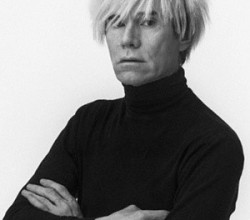
A new BBC documentary claims that, away from the cameras, Andy Warhol was a churchgoer, went to the gym and authored six books.” Warhol, the man who turned the everyday of American life into art – dollar bills, soup cans, Brillo-pad boxes – pulled off the same trick in reverse, making an artificial or at least contrived version of “Andy Warhol” part of everyone’s scenery”.

Hands Over Head: An Interview with Jack Pierson

After a not-too-subtle put down of the interviewer, this interview settles into a nice profile of a working artist. Pierson is a prominent American artist and is currently exhibiting work done while living on a Florida island. “I guess as artists, we want to indulge in the act of making …. For me it all starts with my hands instead of my head”. Multiple images are here.

What Dan Flavin’s First Light Pieces Tell Us About His Devotional Art

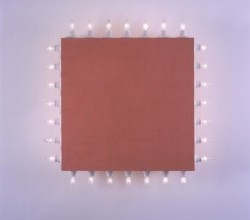
Dan Flavin greatly admired the Russian artist Tatlin and, like all the serious minded Minimalists, copied Tatlin’s use of common materials. Flavin’s material of choice is the “anonymous and inglorious” florescent light. For him it has no symbolism and his sculptures work by impacting the space around them. “They are constructed concentrations celebrating barren rooms. They bring a limited light.”

Review: High’s “This is Now” explores Alex Katz conundrum through lens of landscape

Alex Katz is, without doubt, a celebrated American artist so it’s strange that he hasn’t been able to shake off the naysayers. Robert Hughes was one critic not completely sold – “To doubt the ultimate value of Katz might be construed as a vote against sunny lawns…” More recently the critic Mark Hudson also seems in two minds: “Is his work deceptively facile, or is it simply facile?”  Multiple images are here.

12th August 2015

Artful Artfulness

In a recent item that was widely read, the writer Michael Lind argued that “the fine arts don’t matter any more”. His argument was far from bullet proof and Paula Cohen comes to this argument armed to the teeth. She enjoys much the better side of the debate, pointing out that just because contemporary art is not treated with “reverence” doesn’t mean that it lacks merit.

Image: Google

TO THE INNER CITY WITH SHIRLEY BAKER

The UK’s post-war Urban Clearance programs were ambitious – around 1.5m properties were demolished, impacting about 3.6m people. Shirley Baker was one of the few women street photographers who recorded the community impact – in her case in Manchester. Her work was largely neglected during her life but a current exhibition shows the important – and amazing – pictorial record that she created. More images are here.

Rachael Howard At Sea

Rachael Howard waitressed as an art student until Damian Hirst took her on as his assistant. Anything but a self-promoter, she recently decided to have a “year of saying yes to everything” – including her first solo show in the UK. Press coverage is limited but the above link is to an excellent video where she discusses her emotionally charged abstracts. Hirst’s assessment– “she’s brilliant. Absolutely fucking brilliant”.

Image: Google

JOHN CHAMBERLAIN AT INVERLEITH HOUSE Q&A with Paul Nesbitt

Asked why he used wrecked cars, the great American sculptor John Chamberlain said it was because that’s what he found in his back yard, just like Michelangelo found marble in his. Despite their bulk, these works have grace and energy and share the spirit of Chamberlain’s abstract expressionist contemporaries. As one reviewer commented “Scrap metal, crumpled… turns into weird new fruit”. More images are here.

Bronze sculptures in ‘Power and Pathos’ at the Getty capture pivotal era

Following the British Museum’s sensational exhibition of Greek sculptures early in the northern summer, the Getty in Los Angeles now has an “unprecedented” show of rare Greek bronzes. The Greek empire was declining militarily at the time of these sculptures but the humanist ideas they expressed endured. These bronzes would not be equaled until the Renaissance, 1500 years later.

“How I discovered a masterpiece”

Earlier in the English summer English Heritage announced that a painting previously thought to be a copy of the work of Renaissance master Titian is actually an original. Now fully restored, it is on display in London for the first time. It is one of a number of works originally created for the Spanish king Philip II– the improbable story of how it came to be in English hands is here.

Frames for Borders

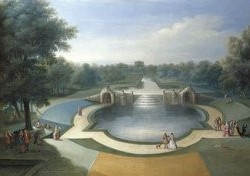
Centuries before gardening became a middle class pastime, the aristocracy used it as a way to display wealth and style. New botanical discoveries were inevitably expensive to cultivate, while garden layout expressed the aesthetics du jour. Unsurprisingly, paintings of gardens reflected these fashions. Given the longevity of the Royal collection, a selection of garden paintings from it, now on show in London, comprises a unique social record.