The Easel

4th August 2015

Larry Bell

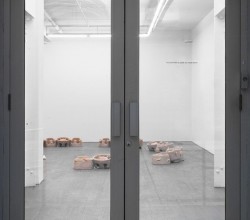
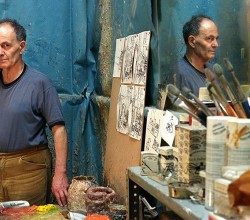
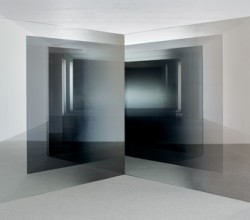
Bell was attracted by the “vagueness” of art and quickly became fascinated with glass and its optical qualities. Often included in the “Space and Light” group of American artists, he is best known for his glass sculptures – especially cubes and large wall panels. In the interviews for his new London show, Bell describes his focus without any vagueness: “my media [is] the interface between the light and glass”.

Why the Cosby exhibit is still a bad idea

The Smithsonian has got itself into a real mess with an exhibition drawn from the collection of comedian – and alleged sexual predator – Bill Cosby. Cosby is a major donor to the museum, raising questions about curatorial independence. Worse is the suggestion that the exhibition forms part of Cosby’s PR strategy: “The family themes of the Cosby exhibition … now look like an elaborate veil cast over the abuses of the patriarch.”

Image: Wikipedia

The genius of Uli Sigg unveiled at the Whitworth

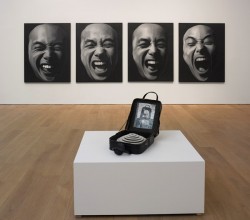
When Uli Sigg first went to China on business in the 1980’s he noticed that no-one was seriously collecting local contemporary art. He has since put together perhaps the largest collection of Chinese art covering the period since 1970. Given China’s astonishing transformation, its art is an important record of cultural change. The collection has been donated to a new art gallery due to open in Hong Kong in 2019.

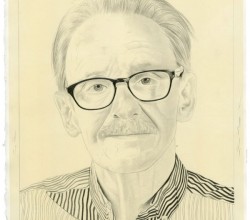
PETER SCHJELDAHL with Jarrett Earnest

A gem of an interview with Peter Schjeldahl, the longstanding head art critic at The New Yorker. Full of insights into art and art criticism. Two examples: “Three questions we might ask of a sculpture (a favoured medium) … What is that? Why is it there?” and When will it go away?” And “Looking at art is like, Here are the answers. What were the questions?”

‘Impressionism and the Caribbean: Francisco Oller and His Transatlantic World’ Review

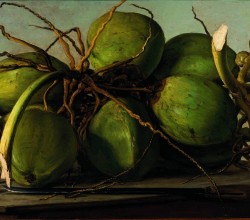
Oller’s story seems to be that of a hugely talented artist who chose his country of birth (Pueto Rico) over Paris. He visited France and Spain for extended periods – long enough to be appointed painter to the Spanish king in 1872 – and had close friendships with the Impressionists. When hung next to them in this widely praised exhibition, his art looks “at once international and indigenously Puerto Rican”.

Why Do So Many Art Galleries Lose Money?

Art gallery profitability might sound like a dry topic. However it is an important determinant of the health of the art sector because galleries are pivotal in providing support for working artists. A forthcoming book argues that the art market is antiquated and that relatively few galleries are strongly profitability. The proposed remedies are nothing if not provocative, including paying gallery staff more and artists less.

A Vibrant Display of Congolese Art at Fondation Cartier

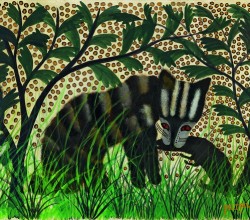
A first ever survey show of Congolese art in Paris is having to tiptoe around some touchy agendas. Are enough women artists included? Is bringing this art to Paris perpetuating colonial relationships? The curator’s motives seem blissfully straightforward– create a narrative that doesn’t dwell on the country’s political strife. Oh… and then there is the art – its “sparkling”. An interesting background piece is here.

28th July 2015

Jackson Pollock: Blind Spots

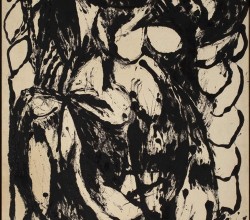
“Sensational” is the word some critics are using to describe this show at Tate Liverpool. It focuses just on the period 1951–3, when Pollock produced a series of predominantly black paintings – his “black pourings”. Some speculate that he was exploring the ideas that coalesced some years later in “colour field” painting. By that time Pollock had died, leaving behind a final, enigmatic, group of works that might be described as an “epitaph”.

Sitting for Frank Auerbach

The figurative painter Frank Auerbach admits he is hugely self-critical. When painting, he reviews his work, then scrapes the paint off and starts again. This is repeated dozens of times. A new book on Auerbach’s work has been written by art historian Catherine Lampert – a close observer given that she has been sitting for him each week since 1978. Even more interesting (but lengthier) is a podcast interview Auerbach recently gave at the Royal Academy.

Tom of Finland: the Pleasure of Play review – definitely not the marrying kind

A recently recommended essay debated whether Richard Tuttle’s cool minimalism is art. A similar debate arises over the widely reviewed exhibition of Tom of Finland’s homoerotic drawings, currently in New York. These explicit and stylized works (by Finnish artist Tuoko Laaksonen) were path breaking and pose the question – are art and pornography mutually exclusive? Note that images are NSFW.

Image: Wikipedia

Decoding Sarah Charlesworth’s Patricia Cawlings, Los Angeles at New York’s New Museum

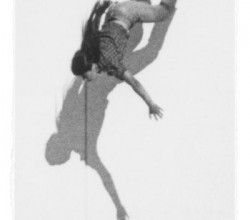
Sarah Charlesworth spent her career exploring the tension between the precision of photo images and the ambiguity of the associated story. In this large and acclaimed survey show, the exemplar of this is a series of haunting newspaper images of individuals falling from buildings. “One knows there’s a human history which exists outside the image, and yet as photographs they are complete” Multiple images from this show are here.

Open Book: Michelle Kuo Talks With Ingrid Sischy

After it moved to New York in the 1970’s, Artforum emerged as an eminent art magazine. A key player in the transformation was its editor, Ingrid Sischy, who died this week. In a recent interview now re-published in Artforum, Sischy discusses some of the key issues of her editorship, including the first hints of an emerging online world. A tribute from The New Yorker, where she went after Artforum, is here.

Image: Google

Lightning Bolt: A Realization of Clyfford Still

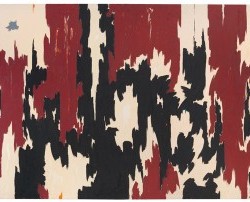
Clyfford Still wanted his art to impart a sense of overwhelming awe. So confident was he of meeting this standard that his will sealed off his estate until a purpose-built museum was available. The city of Denver came to the party in 2011, thirty years later. That museum holds 95% of his total output and is not permitted to sell or loan anything. Perhaps this splendid isolation explains why the reviewer is only now discovering the merits of this important artist.

Why is an artwork left unfinished?

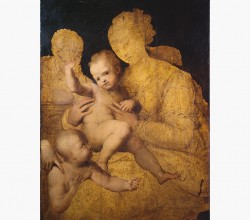
With a few notable exceptions musical and literary compositions are generally regarded as being of little value unless completely finished. Art can be different.  Incomplete figurative paintings can often convey the artist’s thinking and the same sometimes applies to abstract art. An exhibition at London’s Courtauld focuses on unfinished works to illustrate the creative process. Mulling over the same show, Marion Coutts observes “death is the great unfinisher”.