The Easel

1st September 2015

Life Lines: Portrait Drawings from Dürer to Picasso at the Morgan Library

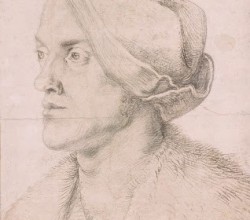
In the endless debate over the importance of line versus colour in art, an exhibition at the Morgan Library and Museum tips the scales toward the former. One critic gasped about a Durer portrait, drawn almost 500 years ago “as compact as a Brancusi sculpture, an audaciously abstract compression of solids and voids”. This reviewer is equally forthright: “Drawing is the foundation, the one indispensable prerequisite, of all great art.”
Mom’s Home

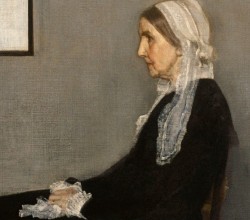
What is she thinking? Whistler’s 1871 portrait of his mother, “the most important American work outside the US”, was done seven years after she went to live with him in London. After an elegant consideration this reviewer’s concludes “[His mother’s] blank forbearance speaks of capitulation. She will do anything for him. She is his.”

A Nerd’s Guide To The 2,229 Paintings At MoMA

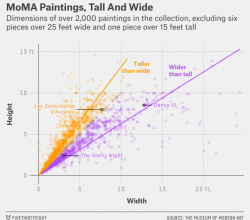
Some light-hearted numbers. A newly public database of MoMA’s paintings has been analysed by a renowned statistician and political analyst. “Oil painting … still dominates in the modern era [47.5% of the collection].” “[T]he average acquired painting was painted about 30 years before it joined MoMA’s collection.” “There are 956 paintings that are wider than they are tall and 1,079 that are taller than they are wide. There are 131 square paintings.”

Edinburgh Art Festival, review: ‘hit-and-miss’

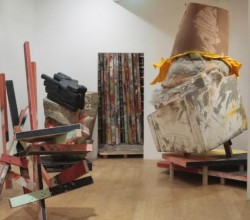
Phyllida Barlow has never felt drawn to British sculpture’s “moral tradition” – the beautifully crafted works of Moore and Hepworth. She prefers humble materials – timber offcuts, cement, foam – to create monumental sculptures with both presence and intimacy. “On one level, it is chaotic in a preschool way [but] has sufficient heft and intrigue to remain compelling”. An excellent video about her 2014 Tate show is here.

One of the world’s most respected curators vanished from the art world. Now she wants to tell her story.

The wealthy J Paul Getty Museum is surely an ambitious institution. When one of its curators was charged in 2005 with buying looted art, it was a big story. In court the case against Marion True failed and her story is one where bright moral lines are not always easy to find. “Unprintable words fly. Tears well up…. [Getty staff] acted as if I had done all this stuff on my own, which would have been impossible to do”.

EXHIBITION ROUNDUP: “CHINA 8”

Given the large number of newer Chinese artists, inclusion in exhibitions sometimes defaults to auction room profile. This exhibition, coordinated across nine German museums, avoids this risk by virtue of its scale – 500 works by 120 artists. That makes it not only a notable event for Chinese art in Europe but also an important opportunity to see new names in context.

Review: Elaine Lustig Cohen’s Paintings Move Into Philip Johnson’s Glass House

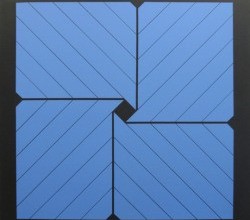
Elaine Lustig Cohen never thought of being an artist until the architect Phillip Johnson offered her a design brief. Thus began a long career straddling graphic design and painting. So, has the inspiration she drew from architecture led to great paintings? “Somewhat second string” according to the writer. Her paintings use a vocabulary “intended for other disciplines and purposes … book covers and … corporate logos”.

Image: Google

25th August 2015

The Tortured Genius of Yves Saint Laurent

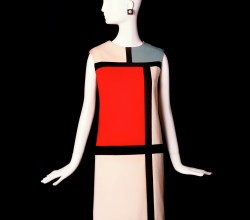
The concept of high fashion as “art” has been reinforced in several recent shows, including Sonia Delaunay’s “wearable paintings” in her Tate retrospective and the Alexander McQueen blockbuster at the Victoria and Albert. Now comes an Yves Saint Laurent retrospective, described by one art critic as “the best fashion exhibition I have ever seen”. The linked essay covers the designer’s life, some key images are here and excellent video clips are here.

Image: Wikipedia

Antony Gormley in Florence: torment and triumph of the body

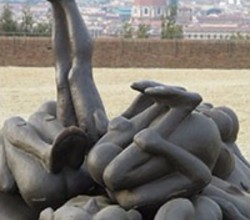
Kim Kardashian was married there but, apart from that, Florence’s ancient Forte Belvedere also hosts sculpture exhibitions. This summer’s invitation went to the British artist Antony Gormley who has responded with a “brilliant” show of human forms – “a rich and worthy contribution to the narrative of western sculpture”. An excellent video (2 min) is here.

From designing Seventeen mag to defining conceptual art: Sol LeWitt

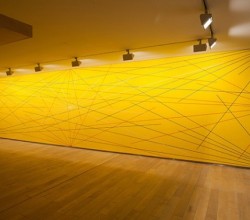
There may be a scholarly debate over whether LeWitt’s was a Minimalist or a Conceptualist but few object to his art being called austere. He was not the least interested in painterliness; it was all about the abstract idea. An exhibition of his wall drawings, now on display in Spain, was created by technicians and a mathematician following his written instructions. The result … “you couldn’t fail to be impressed”.

‘Dismaland’: A Theme Park by Banksy

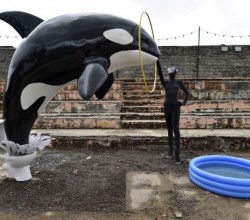
A derelict swimming pool park at Weston-super-Mare, a coastal town in Somerset, has a new tenant – the anonymous graffiti artist Banksy. He has created Dismaland, a “bemusement park” that is “the latest addition to our chronic leisure surplus”.  It shows artworks from 58 local and international artists and will be open until late September.  Disney have apparently declined to comment. Multiple images are here.

Selfie with ‘Sunflowers’

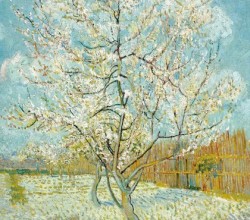
A perennial debate in art is whether colour or line is most important. Many argue that Van Gogh’s greatness derives from his audacious use of colour. Recent books on his life, and his letters to his brother Theo show, according to the reviewer, that Van Gogh’s greatness lies elsewhere – in his “heroism” in the face of mental instability and “his intense desire to make painting ‘a consolatory art for distressed hearts’”.

Beltracchi: The Art of The Forgery

Walter Beltracchi did “original fakes”, newly imagined works in the style of famous European artists. At his trial in 2011, he pleaded guilty to just 14 such works but claims that another 300 exist. One victim was the comedian Steve Martin. Another, interviewed in this documentary, sounds wistful: “The lady of the house notes that [a Magritte] is “not as nice” as the phony …done by Beltracchi that once occupied the wall.”

Roy Lichtenstein and the Sea in East Hampton

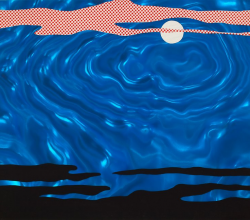
Lichtenstein worked for years within the conventional fine art tradition before his jackpot success in 1961 with comic strip based paintings. He quite quickly moved onto other things, including applying his pop art style to landscapes. These works don’t seem to carry the same charge as his comic-based works, but his intent was the same – render an image as an industrial artifact.