The Easel

3rd June 2025

Lewd, Problematic, and Profoundly Influential

Robert Hughes called R Crumb, the cartoonist, “the Brueghel of the last half of the twentieth century”. Once a sub-culture illustrator, he is now seen as a widely influential artist. “Technical virtuosity and imaginative range” explain this change as well as the “ruthless introspection” of his personal oddities. It’s a mindset well suited to illustrating “modern American psychoses”. His candid graphics, once seen as over-the-top, now appear, according to his biographer, “profoundly articulate, thoughtful comics”.

A refreshed Rockefeller Wing reopens with a bang at The Met in New York

New York’s Met has re-opened its wing that houses art from Africa, Oceania and the Americas – what was once called “primitive” art. Apart from the meticulous architecture, what you see seems to depend on what you think. One critic sees a jumble of unrelated objects that perpetuates “colonialist” attitudes while another swoons at the newly respectful and scholarly displays. Few will disagree with the judgement that this is “some of the most moving art, old or new, you’ll ever see.” Images are here.

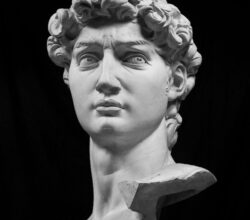
It’s among the largest collections of Michelangelo sculptures ever shown. But there’s a catch

One writer calls artwork reproductions a “dirty concept”. Yet in the case of Michelangelo’s revered sculptures, not only are the originals mostly unavailable but some copies are themselves old and rare. A Copenhagen museum takes the plunge with a large Michelangelo show, using a mix of old plaster copies and digitally perfect facsimiles. Copies may not carry a sense of the miraculous but the curator decries the “fetishism of authenticity around original objects”. Wonders the writer, are they “Michelangelo enough”?

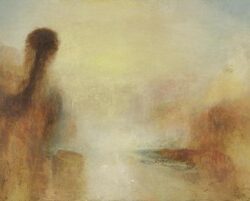
The second birth of JMW Turner

Turner’s contemporaries understood him to be a prodigy. His lovely “topographical draughtsmanship” changed on seeing the landscapes of Claude Lorrain. Not only did they convince him that landscape was an “elevated subject”, but he was seized by Lorrain’s atmospheric “ether”.  Turner became a painter of “mass, tone and light”, or as he commented “indistinctness is my forte”. His late works baffled many but, over a century before abstract expressionism, he had “redefined what landscape painting could do”.

See the Flower Paintings of Rachel Ruysch, Whose Stunning Still Lifes Are Finally Getting the Attention They Deserve

Ruysch has been flying under the radar for centuries. Her “sumptuous” floral still lifes were painted when botanical samples from the Dutch empire were flooding into Amsterdam. Although still life painting was not prestigious, she painted such a variety of plants and with such accuracy that they seemed akin to (manly) scientific inquiry. Such was her virtuosity that she commanded higher prices than Rembrandt. After her death, Ruysch was more or less forgotten. This is her first solo retrospective ever.

V&A East Storehouse is a thrilling meta-museum for the future

Most objects in museum collections rarely get exhibited. London’s Victoria & Albert Museum, for example, has 3500 pairs of shoes, most of which are in “deep storage”.  That museum has now opened a “storehouse” where the public can inspect the collection, either browsing out of curiosity or requesting items for close inspection. In the absence of curatorial logic, the ruling idea is the “primacy of the object. It is more factory than gallery, and all the better for it … a revolutionary prospect [for museography]”.

Giuseppe Penone: Thoughts in the Roots

Arte povera came to prominence in 1960’s Italy as a celebration of natural materials. Penone, a star of the movement, is famous for his many works – especially sculptures – featuring trees. All well and good but a London “mini-retrospective” has critics struggling to show much enthusiasm. The linked piece tries hard before admitting that the show feels “unduly modest” and many of the works are “underwhelming”. The show, says one writer, is “a beautiful idea but with underpowered results.”.

27th May 2025

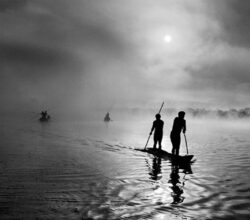
Remembering Sebastião Salgado

Salgado’s preferred self-description was photographer, not artist. His widely acclaimed, black and white, documentary-style work drew attention to environmental despoilation, Indigenous cultures and human labour. His most memorable work focused on the Amazon rainforest and illegal mining, images one critic described as “romantic narrative … [without] a drop of sentimentality”. Pushing back on criticism that he “aestheticized poverty”, he said “why should the poor world be uglier than the rich world?”

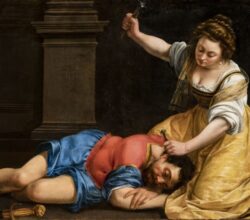
Revenge may be Sweet but Success is Sweeter

Gentileschi is an artist for our age, not just a first-rate Baroque artist but also a woman who overcame misogyny in pursuit of an art career. Has our view of her as a “proto-feminist” blinded us to a fuller interpretation of her work? Was her rape by a family friend the defining experience we might think? Was political power an equal motivation for her heroines as female revenge? Gentileschi has not been well served by stereotypes. Yes, she painted “sexual oppression”. She also painted maternal tenderness.

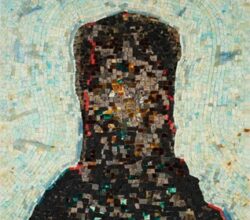
The Splintered Beauty of Jack Whitten’s Paintings

Such was Whitten’s facility with manipulating paint that one writer wonders if some of his paintings are sculpture. Other works have a resemblance to photographs due to the “precision” of the images. And then there are paintings that are mosaics. Whitten was happy to “follow his materials over the edge to the not-yet-known,” the end result being abstractions of the highest order. Whether his works carry specific meaning is unclear. “He’s not asking us to make sense of it. Just dwell there”. A video (12 min) is here.

The British Museum’s Hiroshige exhibition will restore your faith in art

The Japanese artist Hokusai had a major influence on 19th century European art but so too did Hiroshige. His landscapes depicted real vistas and were filled with a riot of colours – “seas like sapphire, skies on fire, acid reds and oranges”. Their expressiveness, done in the fiendishly difficult medium of woodblock printing, won van Gogh as a fan. Hiroshige can fairly be considered a “great precursor to the Impressionists”.

National Gallery Rehang: First Pleasure, Then Politics

Who cares about the re-hang of London’s National Gallery? Many people were, worried about that its Eurocentric, masterpiece-laden collection might be hijacked to tell some new curatorial story. They needn’t have worried. Works largely follow a chronological sequence and downplay today’s cultural battles. Works mostly tell the stories of their times and their presentation strikes a balance between “education and entertainment”, even though the male gaze remains strong.

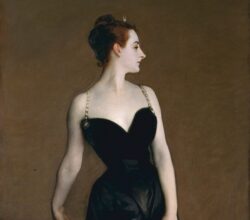
As the Met’s Gorgeous New John Singer Sargent Exhibition Proves, There’s Much More to Madame X Than That Scandalous Strap

A favourite art world story. As an early career artist in Paris, Sargent was working hard to establish his reputation. An audacious portrait of “Madame X” for the 1884 Salon suited not only his career ambitions but also the desire of his subject to enhance her social position. These plans came unstuck with scandal erupting over the portrait’s supposed immodesty. Sargent soon left Paris for London where it quickly became evident that his career prospects were undimmed. A video (22 min) is here.