The Easel

25th January 2022

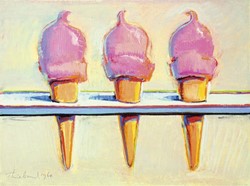
Wayne Thiebaud’s artistic eye was so much keener than pop art confections

One of Thiebaud’s early jobs was as a Disney illustrator, which gave him an enduring admiration for cartoons. He left to paint luscious cakes, pies, bow ties and other Americana, rendered in thick paint and exaggerated colours. They brought him fame. Some saw him as a Pop artist, but he denied his intentions were satirical. Affection seems closer to the mark.  He was still painting at 100, amazed at “the magic of what happens when you put one bit of paint next to another”.
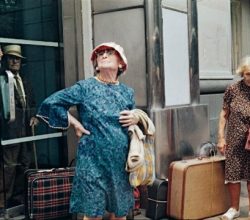

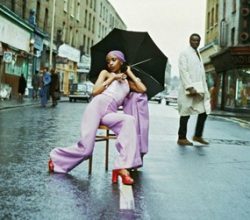
Street cred – how Helen Levitt turned a cool eye on life in New York

One critic calls Levitt a “quiet genius” of modern photography. Her photographs of street life – most famously children – in New York’s poor neighbourhoods helped define street photography. First in black and white and then in colour – but always with a certain tenderness – her images show an eye for the off-kilter and portray the street as “above all, a theater and a battleground”. More images are here.

What’s Really at Stake in the Debate over Whether NFTs Are Art

Wikipedia’s decision to exclude NFT sales from the category of art sales has ruffled some feathers. This writer, an NFT supporter, argues that a cultural shift is happening with digital art now backed up by serious money. Wikipedia is trying to stop these new players from “blowing [the traditional market] out of the water” – something akin to the upheaval of the Italian Renaissance. Rather than debate what is art, we should instead shape “this next chapter of human history for the better”.

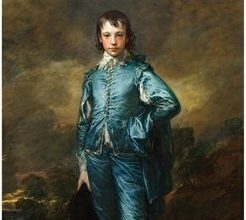
Gainsborough’s Blue Boy: The private life of a masterpiece

Gainsborough’s Blue Boy goes on show in London today. Quickly famous after its first showing in 1770, it remains so because its sumptuous beauty supports so many narratives. The image is performative – a young boy, a commoner, striking an aristocratic pose. Modern eyes detect gender fluidity leading to its use in anti-gay material and most recently as a marker of gay pride. It’s a two-century journey from “a pillar of traditional cultural values to gay icon”. Gainsborough would be astonished.

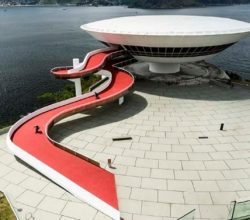
The 25 Best Museum Buildings of the Past 100 Years

You know that any list of the world’s “best” museums will be arbitrary and hope it will be entertaining. This list is both. Besides the usual starchitects it also includes many lesser knowns, including one who thought straight lines “godless and immoral”. Some of these structures are notoriously dysfunctional – but then, who can resist a pretty face?

21st December 2021

Holidays

Few, I imagine, will be sad to see the end of 2021. Signs that the pandemic is behind us have mostly come to nothing. The lifeblood of the art world – innovative displays of thought-provoking art – is far from back to normal. Producing a weekly newsletter has, to put it mildly, been challenging.

This is the year’s last regular newsletter. Next Tuesday, and the Tuesday after, we will highlight the year’s most popular stories among Easel subscribers. After a break of a few weeks, the Easel will resume on Tuesday January 25, 2022.

I hope you have enjoyed the year’s reading.

Season’s greetings,
Andrew

What Will Art Look Like in the Metaverse?

A call to action. Facebook’s promotional videos for its new corporate entity, Meta, use famous art images extensively. Why use art? Perhaps Facebook/Meta wants to be “a platform for creative self-expression” and thus define the coming ‘metaverse’ – whatever that will turn out to be. Artists have long expressed new ways of seeing the world. They should more actively exploit current technologies to do this for the metaverse, rather than leaving it to “technologists.”

Life Between Islands, Tate Britain, review: an exhilarating, ambitious look at the British Caribbean story

Immigrants from the Caribbean arrived in a post-war Britain that was reluctant to accept them. A show of British-Caribbean art belatedly acknowledges their “massive” impact on British culture. Whatever “British-Caribbean” means, it covers a diverse group of artists, making the show “baggy, rowdy … full of competing voices”. Socio-political overtones do not drown out a “celebratory Caribbean aesthetic”. Says one writer “it makes you damn grateful for immigration.”

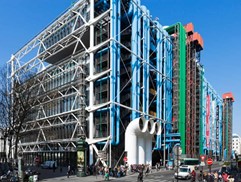
Pritzker Prize winner Richard Rogers dies at 88

When their plan for the Pompidou Centre was announced, Rodgers (and co-designer Renzo Piano) were booed. Once built, its radical design proved massively popular and showed how cultural architecture could spearhead urban regeneration. A pioneer of hi-tech, “inside out” buildings, Rodgers was also a “a tireless supporter of the compact, sustainable, pedestrian-friendly city”. Rodgers discusses two of his buildings here.

Conservative Backlash Erupts Over Notre Dame’s Restoration

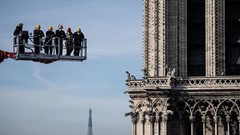
Restoration of Notre Dame cathedral is a flashpoint for ‘modernists’ and ‘conservatives’. Conservatives won the first battle – the exterior will replicate what was there before. Now, proposed modern interior lighting and better space usage have produced claims of a “woke Disney revamp” that poses a “crisis of personality” for the building. Sighs one writer, it’s a case of “performative outrage” versus a “benign reality”. The interior design was approved last week.

Hélène Binet’s architectural photography celebrated in Royal Academy show

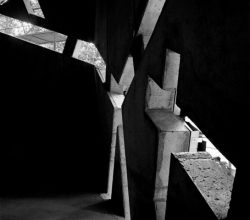
Architectural photography worries architects, because images may define a building in a way inconsistent with their vision.  In Binet’s case, she has the eye to define “the place where the building is made” and let that imply the rest of the structure.  That’s more easily said than done, as it requires striking a balance between one detail and the complexity of the whole structure. Says one architect, Binet shows the “luminosity of texture … and the enigma of presence”. Images are here.

By Her Hand: Personal Thoughts and Reflections on an Exhibition

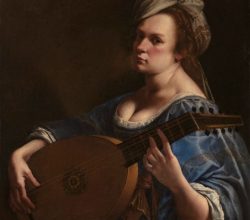
A new book about early art history shows how including female artists enriches the story. Up to about 1800, women artists were not as rare as is often thought. However, one has to look in different places to find their output – more miniature portraits, few grand “history” paintings. Their output was somewhat more sporadic as they toggled between part time and full time painting. Artemisia Gentilischi is the star of a current exhibition but the whole lineage, says one critic, calls for a re-think of what it means to be great.