The Easel

20th December 2016

The Easel in holiday mode

This is the last normal Easel for the year. The next two issues will be a look back at 2016, highlighting those stories that were most popular among subscribers. Then there will be a two week break with normal publication resuming in mid-January.

Keep an eye on your inbox – an important announcement is imminent.

This has been a year of significant growth for the newsletter and 2017 looks like being more of the same. Many thanks for your continuing interest and seasons greetings to all.

Andrew
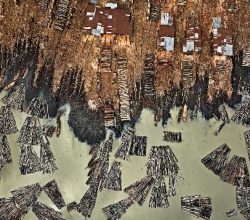
The Long View

Edward Burtynsky is interested in “how to describe large-scale human systems that impress themselves upon the land.” His renowned images of industrial landscapes are both an expression of his artistic aesthetic and a testament to the incredible capabilities of new digital technology: ““Increasingly, digital photography is showing us the world in a way we can’t see it—that’s even beyond my capacity to see.”

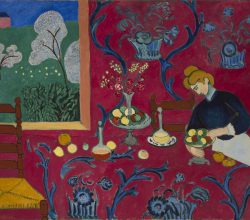
Extraordinary Icons Of Modern Art Collection: Van Goghs, Picassos, Monets In Paris And Worth A Trip

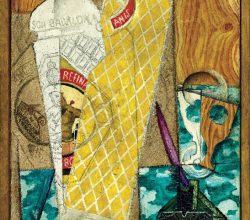
From 1898 to 1915 a Russian textile magnate put together an art collection “widely regarded as the most important anthology of modern art in the world”. Removed from public display on Stalin’s orders, it has, for the first time, been reassembled in Paris. Does the businessman behind the show have a favourite? “Not really, [but] sometimes, in this room here [the Matisse room], people cry – its so strong.”

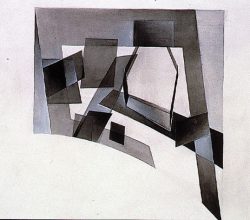
The unknown Zaha Hadid , revealed at the Serpentine

Do Zaha Hadid’s paintings have artistic merit separate from her architectural ideas… and does anyone care?   It took the development of computer design before any of her acclaimed architectural plans were built. By then she had produced a large body of paintings and drawings to explain her design concepts. Housed in a building she herself designed this show might be viewed as a homage to a longtime gallery supporter.

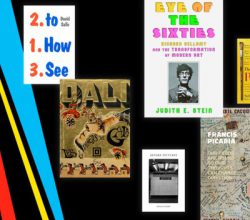
The 10 Best Art Books of 2016

A “best of” list – given the proximity of Christmas, why not? It may provide emergency inspiration for those who have left things to the last minute. If still desperate a listing of the best photography books of the year is here.

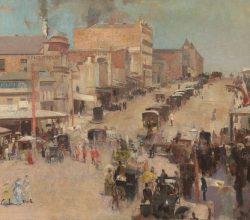
Impressions of Australia

Impressionism was not solely a European affair. Australian artists of the time who travelled abroad felt the style was sympathetic to the spirit of a new country. But their paintings in this London show also capture a particular cultural moment. The colony, flush with economic success, sensed nationhood was close and wanted its art to capture that feeling. An interview with the curator is here and more images here.

LACMA’s uneven new Picasso and Rivera show reveals an unprecedented, must-see discovery

Diego Rivera was a twenty-something in Paris during the birth of cubism. The Mexican borrowed ideas from Picasso who, in turn, bought one of Rivera’s paintings. Their paths diverged once Rivera returned home but a parallel in their art remained: “they synthesized the radically new with the venerably old, forming a kind of “Modernist Classicism” — Picasso’s based on European models, Rivera’s on American ones.”

13th December 2016

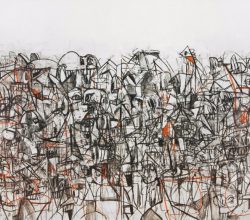
Cy Twombly at the Pompidou Centre: out of time and ahead of it

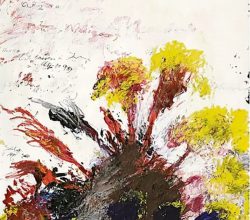
Everyone it seems struggles with Cy Twombly’s canvases. One critic puzzles whether they should be regarded as paintings – “let’s call them that”. As this is Twombly’s first major retrospective since his death, this writer is drawn to broader conclusions. “Majestic, mysterious, messy, languid … [Twombly] is the most unexpected, original painter of the later 20th and early 21st centuries.” More images are here.

The Russian Avant-Garde Rising in ‘A Revolutionary Impulse’

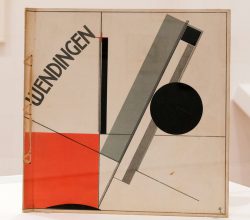
Russia had a great artistic flowering in the last decades of Tsarist rule. The Bolsheviks’ initially were tolerant.  Artists such as Tatlin and Rodchenko responded with Constructivism – art aimed at utopian social change. This movement had a sustained influence in the West but Bolshevik tolerance soon waned. By 1935 Stalin decreed Constructivism gone and social realism became the only game in town. More images are here.

Brett’s Bet: What Gorvy’s Sudden Exit from Christie’s May Mean for the Art Market

Christie’s edge over arch-rival Sothebys is frequently credited to contemporary art specialist Brett Gorvy. Hence his sudden – and apparently amicable – departure is generating speculation. Perhaps after years of high growth, the gloss is coming off art auctions: “He didn’t need a weatherman to see which way the wind was blowing … air has been seeping out of the inflated, high-pressure auction and art-fair markets.”

Inside Net Art

Rhizome is a digital arts organization affiliated with New York’s New Museum. It has developed the technology to preserve digital artworks and has launched a project to display 100 influential web-specific works.  Sounds like a good idea.  But in an online world dominated by social media does web art have the freedom to continue to flourish?

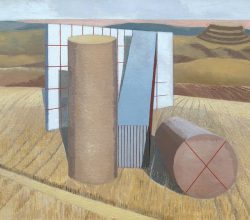
Review: Paul Nash Tate Britain “Powerful, Moving and Surreal”

A London exhibition themes well with contemporary Brexit anxieties. Paul Nash’s abiding love was the English landscape. He was greatly influenced by the first World War and then by abstraction and surrealism. With his friends Henry Moore and Barbara Hepworth, he pioneered modern art in Britain. For him, the question was –“can you be both modern and British?” A short video (3 min) is here.

What Are the Chances? Success in the Arts in the 21st Century

Long but still interesting. The odds of financial success in the arts are scarily low. If you make it, selling and admin will takes up most of your time. So, should artists try to “live their passion”? “If your only definition [is] getting a solo exhibit at MoMA, chances are pretty low that you will ever achieve it. But if you have different terms for success the odds could improve substantially.”

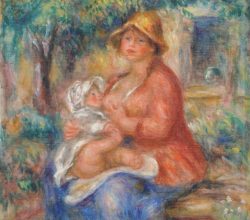
Why was Renoir so fascinated by flesh?

More mixed press for Renoir. Tiring of the limitations of Impressionist spontaneity, his later work was more classical in style. It is this period of Renoir’s work that attracts criticism – sentimentality, pandering to his bourgeois clients, voyeurism. But the writer mounts a rearguard defence. For Renoir, flesh was a “site of painterly experimentation”, inspired partly by the intimacy of his own family life. A video (2 min) is here.