The Easel

13th September 2016

Journeying Beyond Western Time in Contemporary Aboriginal Australian Art

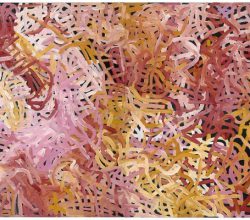
Ancient doesn’t necessarily mean primitive. Notwithstanding having the art world’s oldest lineage the critic Robert Hughes called Australian indigenous art “the last great art movement of the twentieth century”. A US show backs this up, containing works that “dazzle”. But behind this happy story lies a fraught relationship between indigenous peoples and mainstream Australia. Says one artist “We exist in Australia as a kind of non-people”.
Picasso, Manet, Degas and others’ rivalry revealed by Sebastian Smee

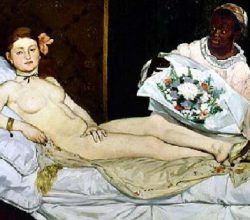
‘Frenemies’ can push artists to greater achievement. A highly praised study of four famous rivalries shows how competitive tensions benefited each party’s artistic development. Picasso resisted Matisse’s ideas about African design before brilliantly incorporating them in his own work. Having seen Picasso take that step, Matisse in turn realised Picasso was as an “electrifying innovator” whom he might learn from.

RAQIB SHAW with Allie Biswas

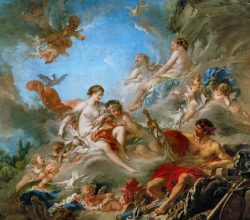
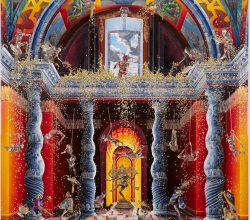
Shaw’s stratospheric prices can be a distraction. For some, he makes art for the rich. Other critics stay more focused on his distinctive art. He blends Old Masters scenes with Eastern themes, all in painstaking detail and with sumptuous materials (including inlaid crystals). “One has to go all the way, otherwise there’s no point.” Images (paired with the corresponding Old Master painting) are here.

On Writing and Criticism: An Interview with Jerry Saltz

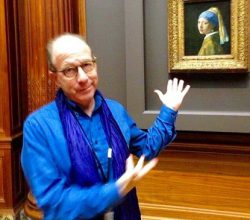
A refreshing blast from the inimitable critic. On art reviews: “you get to a word like “problematize” … What does this even mean?” Wall labels: “Just read the last two sentences. That’s usually where it tells you what you need to know.” Art critics: “I am lucky. I was a long-distance truck driver into my 40s” and: “I think we lost three generations of critics to academicism, writers made skittish about their own opinions”.

NEON: The Charged Line, Grundy Art Gallery, Blackpool

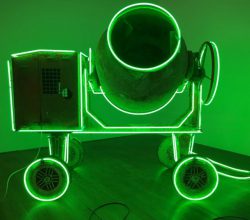
Neon lights always seem ambiguous – are they modern or retro? Eye-catching and versatile, they dominated signage in the first half of the twentieth century before cheaper alternatives emerged. And a long line of artists have worked with them. So what is the appeal? “[W]e can’t help but be drawn to it,” the curator of this show muses. “Perhaps we are all moths at heart.” More images are here.

The Weight of the World – Etel Adnan at Serpentine Galleries

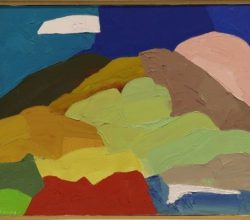
Etal Adnan came to painting after a successful writing career – reason enough to be called a polymath. Her colourful semi abstract landscapes don’t conform to any particular style. One critic describes her work as “not just a colorist’s paintings, they are visual poems, each color chosen as carefully as a word in a love letter to nature”. This is her first survey show in a UK public gallery. A video (5 min) with images is here.

Image: Serpentine Galleries

Why a growing number of museum veterans are crossing over to the commercial sector

More art experts are moving between (publicly funded) museums and commercial roles. Salary differentials are a factor as well as the challenge of putting curatorial expertise to new uses. One expert is relaxed – “no-one cares about the boundaries any more”. But sharp edged commercial roles are not for everyone. Says one “I wasn’t one of those people who can look at art principally in terms of market value”.

6th September 2016

MAD ENCHANTMENT: Claude Monet and the Painting of the Water Lilies

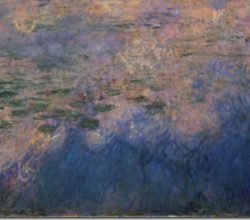
Monet’s water lilies project was wildly ambitious. Partly it’s the scale – the 22 panels total about 300 feet in length. But when the paintings left his studio after his death, Monet’s ambition was more fully revealed.  These were career-defining works that extended Impressionism “to the edge of pure abstraction”. Recognition of this, which took decades, has placed Monet among art’s immortals. A chapter of this book is here.

Image: Wikipedia

Camera-phone Lucida

Instagram viewed in the context of art history. The first selfie was a Renaissance carving. The first food pictures were seventeenth century Dutch still lifes. Romanticism gave us dogs playing in the grass. Instagram delivers what great artists have always found fascinating – “the lives of the people around us, and those of people we’ve never met.”

Image: Wikipedia

‘Alternative Dreams: 17th Century Chinese Paintings From the Tsao Collection’ at LACMA

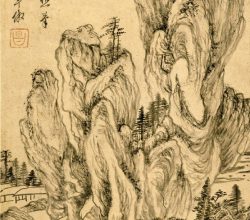
China’s Ming dynasty (1368 – 1644) was a period of significant artistic achievement and Dong Qichang one of its leading lights. A scholar as well as calligrapher and artist, his concept of painting from nature found many followers. In landscape painting, in particular, his expressive, less academic style was influential for centuries. “China’s Cezanne” is the writer’s summation. More images are here.

‘Can Old Masters be relevant again?’ (ctd.)

Is interest in Old Masters paintings declining? A recent New York Times article says yes. The writer, an art historian, disagrees. Bosch and Caravaggio, for example, are hugely popular. Still, one dealer wonders “where the collectors have gone, the people with knowledge … a really good Rembrandt [costs] $40-50m … not a lot of money when you think about how many Rembrandts there are – and how many Jeff Koons”.

Why Do Critics Still Hate Andrew Wyeth?

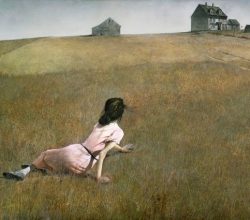
American realist painter Andrew Wyeth copped heaps from the city based critics of his day – “hopelessly conservative”, “dreary”, and more. But the crowds have always loved him. A retrospective next year will advocate a place for Wyeth in America’s realist tradition. But will a new generation of critics warm to his rural imagery?  “There are not just differing ideas about art at stake but competing visions of America.”

A Net Art Pioneer Evolves With The Digital Age: Rhizome Turns 20

If you find internet art hard to grasp, try this piece. Rhizome is a NY based not-for-profit and its ArtBase archives net art. It has become “a kind of protector of data, trying to preserve the moment—and technological atmosphere—of the day.” Now affiliated with New York’s New Museum, things are a little more serious – additions to ArtBase are by invitation only. Sounds like net art is here to stay.