The Easel

27th September 2016

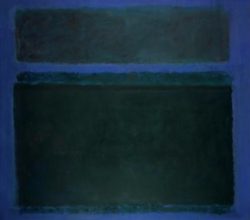
Abstract Expressionism — the show of the year

“Outstanding, astounding” “unmissable” – the superlatives tumble out about the Abstract Expressionism show at the Royal Academy. Conceived at a black time in history – the Depression, war(s), the atom bomb, – the audacious emotional imagery was revolutionary. With a diverse group of European born and home grown artists New York quickly eclipsed Paris. Art was changed forever.
Carmen Herrera, 101-Year-Old Overnight Success, Gets Her Whitney Close-Up

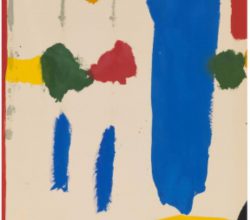
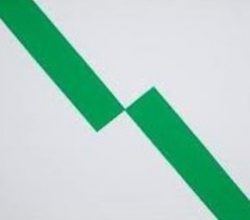
At age 101, it is astonishing that Herrera is still actively painting – and that she has received so little recognition. Exposure in post-war Paris to the work of Mondrian and Malevich led to her signature style – “a marriage of Minimalist and Op-Art sensibilities, invented before those movements were “a thing””. The verdict of one critic – a “ravishing” exhibition – seems to be a consensus view.

Image: Wikipedia

Serious Eye: Two New Books About Richard Bellamy

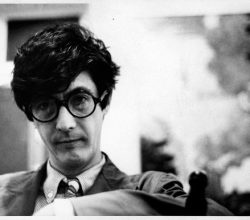
One measure of an art dealer’s prowess is the “talent for selecting the unlikely but strangely right work”. By this measure Dick Bellamy was, in 1960’s New York, a dealer without peer. His legendary Green Gallery helped launch many famous careers but ultimately folded due to Bellamy’s lack of interest in commercial matters. The gallery was, according to a fellow dealer “the great proving ground of the sixties.”

“The Spectacular Second Empire 1852-1870” opens at musée d’Orsay in Paris

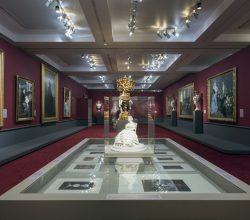
Napoleon III had mostly lived a life of aristocratic exile before becoming Emperor of France in 1851. His tastes lay with ornamentation and splendor, a lover of antiquities. However the modernizing economy was creating a prosperous urban middle class with a quite different outlook. Politically unpopular, Napoleon was gone within twenty years but left a legacy of artistic brilliance. Some images are in this video (1 min)

Open Secret

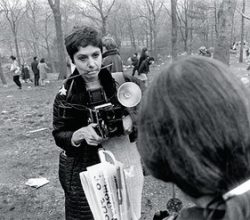
A new biography of the photographer Diane Arbus has been released after ten years of research. Some reviews seem to have a prurient interest in its revelations about her highly unusual private life. Do the new details illuminate her photography? At best, by loose analogy. “She was looking for the opposite … a seam that was designed to be hidden. [Arbus said] there are things that nobody would see unless I photographed them”.

The 20th century’s last art movement

Italy’s arte povera movement peaked around 1970 but has remained influential. It focused on making art – often sculpture – in a style that “follows and understands” its materials. This may reflect a particularly Italian sensibility. As one artist notes “Bernini had a great feeling for the nature of the material”. The first of a series of forthcoming London shows is reviewed here.

Auctioneer Simon de Pury: ‘Owning art puts you on a different level’

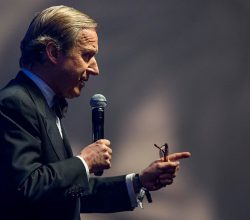
The memoir of “celebrity auctioneer” Simon De Pury offers some light reading. Described by the BBC as “the man with the golden gavel” he also revels in the descriptor “the Mick Jagger of art auctions”. On collecting art – “it is an addiction”. Reasons to sell – “debt, divorce and death”. The merits of art versus money – “[art] puts you on a different level”. He has now started an online art business that “aims to disrupt the market”.

Image: Artnet

20th September 2016

Nicholas Serota: art’s modern champion

Nicholas Serota is “one of the world’s greatest museum directors”.  Probably no exaggeration. During his 28 years as director, Tate has become the world’s most visited modern art museum, has opened a major extension and established a strong network of regional galleries. Friendlier public attitudes toward contemporary art might be an even greater legacy. The fascinating back story of how it all happened is here.

Pure color: A curator’s new view of Helen Frankenthaler’s unprimed legacy

The 1960’s critic Clement Greenberg claimed modern art had finished contemplating nature. Henceforth, pure abstraction would be about colour. Frankenthaler, a friend of Greenberg’s, took this path and produced images with thin paint washes – sort of Jackson Pollock without evidence of the painter’s hand. But her career past 1970 was artistically uneventful. Pure abstraction, it turned out, was running out of puff.

From Tiananmen to THIS: The new world of Chinese photography

Contemporary photography emerged in 1980’s China with a politically charged documentary style. Tiananmen Square changed that. A new generation of artists has emerged that put greater emphasis on abstract and constructed images. What is unclear is whether overt official support for fine art photography involves a quid pro quo: leave out the “politics of the past.”

When Milton Avery would visit Vermont

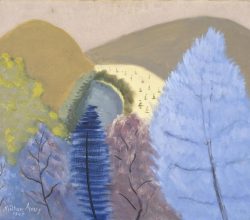
Milton Avery loved Matisse’s work. It inspired him to think of a painting as a flat field of colour, without depth. When he applied the idea in his landscapes he didn’t use Matisse’s pure colours but rather subtle “indeterminate hues”. Avery never moved to full abstraction but via his influence on younger artists – notably Mark Rothko – he played handmaiden to the more radical achievements of the next generation.

Saint Augustine, Napoleon, the Funny Guy: the many faces of Francis Picabia

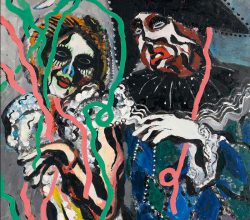
The latest Dada centenary celebration is a major Picabia retrospective in Zurich. Picabia left a bewildering legacy. He adopted multiple alter egos and had a wildly diverse artistic output, all combined with a frivolous lifestyle. Duchamp characterized his life as a “kaleidoscopic series of art experiences”. Picabia’s own summary was more enigmatic – “I’ve stopped trusting anything save chance and nonsense”. Dada to a tee!

El Siglo De Oro / Gemaldegalerie, Berlin

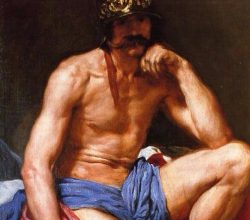
Gold from the New World funded one of European art’s great chapters – Spain’s Golden Age. A show in Berlin demonstrates just how impressive the artists of this period were. Velázquez, Murillo and El Greco were stars but there were many more. After quibbling about the wall labels, the reviewer admits “The works, of course, speak, and, in many cases, scream for themselves.” A video of images is here.

This large Tate Modern exhibition is cruel to Wifredo Lam

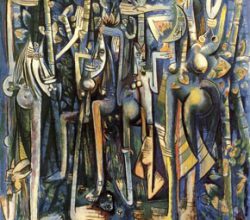
There is an ambivalence about the current London exhibition of Cuban painter Wifredo Lam. According to one critic we are unused to dealing with “cultural hybridity”. But the above writer is more direct – Lam never “attained exit velocity” from Picasso’s influence. “A small room of pictures by Lam might have made him look interesting; this large display ends up making him seem smaller”.

Image: Wikipedia