The Easel

30th August 2016

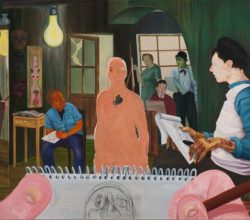
Easel Essay Nicole Eisenman and the Resurrection of Figuration

Grants awarded by the MacArthur Foundation are popularly called “genius grants”. When one was given last year to a figurative painter it was much more than a nice career development for the artist concerned. Easel Contributing Editor Morgan Meis argues that it signaled a broader shift in thinking about this form of painting which, for large parts of the last century, has been out of vogue.

“The beauty of a painting, as opposed to a photograph, is that you can put anything onto the canvas as long as helps fill out the narrative. The great painters of old discovered this fact long ago, artists like Peter Paul Rubens, with his giant canvases packed full of human bodies in complicated, many-layered levels of interaction. These lessons were set aside when painting, traumatized by photography, engaged in a non-representational journey of self-discovery that lasted for much of the last century. Today, the paintings of Nicole Eisenman serve notice; figurative painting with a narrative thrust is back in earnest.”

Ruin porn: the art world’s awkward obsession with abandoned Soviet architecture

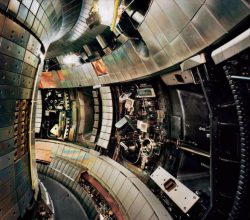
Images of ruined Soviet era structures -“ruin porn” – are enormously popular. Why? Is it pleasure at the demise of Soviet Russia? Perhaps we are trying to avoid admitting that Western economies have also given rise to “ruins”- for example, Detroit.  Or, perhaps, disenchantment with utopian ideas – “”When there is a visualisation of [utopia], it evokes a response in people … There is disappointment in all utopias.””

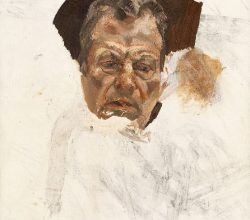
Lucian Freud: The Pitiless Eye

A small London exhibition shows the essence of Britain’s “greatest, strangest modern portraitist”. Freud had an almost eery view of the portrait – “the paint is the person. I want it to work for me just as flesh does”. For the writer, this gave Freud a “rather uncomfortable, even frightening power. For his sitters, vanity was out of place, affectation was punished; there is something rough, and dangerous about his work.”

Sorry, I’m Not Sorry

Politicians do it, celebrities do it … ours is the era of the set piece apology. Admissions of colonial-era misdeeds, in particular, are sometimes coupled with art exhibitions. Does this compromise the art – “art as consolation prize, exhibition as band-aid”? But art gets conscripted to aid all sorts of causes. When was it ever not thus?

In a bizarre trial, a judge rules in favor of famous artist Peter Doig

The principle that an artist is the final authority on their own work has been challenged in a US court case. Acclaimed artist Peter Doig was sued for denying he painted a particular work. Some seem to think involving the courts was a good idea. Not Doig who, despite winning the case, remains unhappy. “I feel a living artist should be the one who gets to say yea or nay and not be taken to task”.

Why People Collect Art

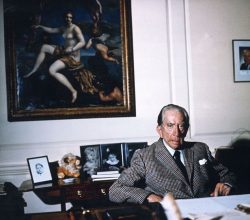
A somewhat less than charitable history of art collecting. The Roman rhetorician Quintilian deemed art collecting “an ostentatious desire to seem persons of superior taste.” Tax evasion and spreading one’s “message” also get a nod.  A favourite bad boy is J Paul Getty.  He bought antiquities because that’s what European aristocrats did. He eventually placed these treasures in the Getty Museum but never visited.

23rd August 2016

David’s Ankles: How Imperfections Could Bring Down the World’s Most Perfect Statue

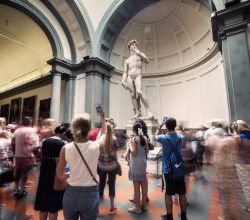
A love letter to the sculpture that defines Florence. Michelangelo, “a savant of marble” had to work with an imperfect block of stone. As a result, the figure is slightly off balance and now has structurally weak ankles. “Destruction happens in any number of ways, for any number of reasons, at any number of speeds – and it will happen and no amount of reverence will stop it”.

The power and glory of red

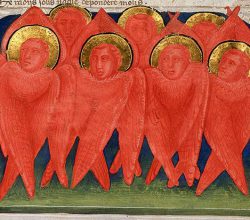
Colour, observes the writer, is all about culture. Red has always been associated with power – hence “the impulse to make red vermilion spanned the old world from end to end”. The chemical discoveries of the 19th century demystified much but new conundrums now exist. Neuroscience defines colour as a sensation: ““Is a red dress still red when there is no one to look at it?” asked Goethe…. The answer then and now is ‘No’”.

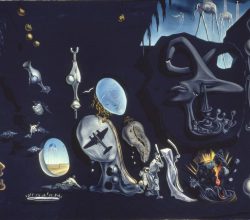
Salvador Dali: a life less ordinary

Surrealism started as a small literary movement until it attracted the attention of Paris-based Dali. His decade of work from the late 1920’s gave the movement artistic expression; he took the role of cheerleader. After that came a half-lifetime of relentless self-promotion and commercialism. Many dismiss his later work. One critic’s mixed assessment – “dubious Catalan genius” seems close to the consensus.

Does this image sum up Britain?

In the wake of the Brexit vote there is a nagging uncertainty about what it means to be British. A current London show demonstrates the answer isn’t simple and perhaps never was. It is more exciting and interesting than “that awful bland vision of bowling greens on a Saturday afternoon with high tea. That’s a part of Britain too, but it’s only a little part. It’s not a pattern for the whole country.” More images are here.

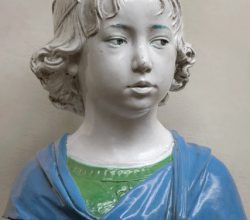
At the MFA, Renaissance mastery on display

The Florentine sculptor Luca della Robbia had one really big idea. He perfected the technique of making glazed terra cotta sculptures that were colourful, durable and cheaper than marble or bronze. Artistic genius, plus his family’s ability to keep secret its production techniques, led to a century of masterpieces from the family firm. A “resplendent show” is the local critic’s assessment.

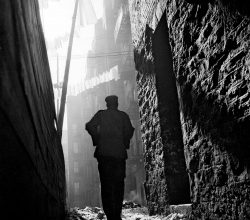
Gordon Parks and Ralph Ellison’s Collaborative Visions of Harlem

“Damage imagery”- the idea that black Americans were psychologically damaged by segregation – was a major debate in postwar America. Acclaimed novelist Ralph Ellison and renowned photojournalist Gordon Parks contributed with two illustrated essays about Harlem, “a place of outward suffering and internal turmoil”. Neither piece was published but one has now been reassembled. A short video (2 min) is here.

Contemporary Art Not Really Avant Garde Just Truly Irrational

During August, when the art world is at its slowest, a longtime critic vents his pessimism. Are artists truly radical anymore? Have the main protagonists all been “captured” – museums chasing big audiences, dealers and auction houses chasing big deals and artist chasing bigger personal profiles? “[T]he great age of radical re-invention, both of what was seen and also of ways of seeing it, has come to an end”.

Coming up next week …

The Easel’s Contributing Editor, Morgan Meis, reflects on the sea change in attitudes toward figurative painting.