The Easel

15th December 2015

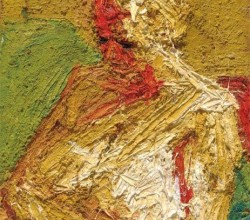
Auerbach’s defeat of death

British writers, in particular, like to play the “GLA” game – who is our Greatest Living Artist? Their current GLA is Frank Auerbach and this essay explains why. “Auerbach’s brushwork looks simple, offhand enough to assert a lack of care or liability. Really, it is a kind of English sprezzatura, as artful a dishevelment as a frayed collar or too-bright socks.” This piece should be an entrant in the “BEOTY” game – best essay of the year.
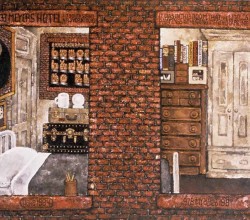
Big Heat: The Bronx Museum Champions the Brave, Unflinching Martin Wong

Martin Wong could churn out portraits at street fairs for $7.50 each – hence his name “human instamatic”. While he hung out with graffitists, most of his effort went into exuberant urban realist landscapes of New York’s then decaying lower east side. Critical recognition has come slowly – following his AIDS related death in 1999, he is only now getting a museum retrospective. A short background video (4 min) is here.

Who’s Afraid of Women Photographers?

Despite its somewhat silly title, this Paris exhibition has a good story to tell. In the nineteenth century, when they were barred from some areas of art, women were able to participate in the new field of photography. The intriguing question left hanging is not whether women were better or worse photographers than men but simply whether they notice different things. More images and a short introductory video are here.

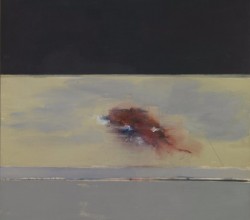
Flotsam Found at MoMA’s “Ocean of Images”

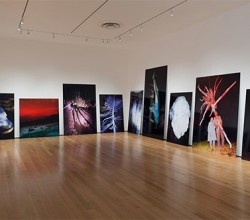
New Photography is MoMA’s notable annual exhibition of photographic art. This year’s show had a clear intent  – what is contemporary photo-based culture? – but the reviewer makes his complaint equally clear: “It has all the specificity of goulash… The curators ignored the individuality of the works… and instead crammed everything together inches apart, in the apparent hope that a new art form would appear.”

National Gallery Singapore finds first home for unseen art

Singapore has just opened its new National Gallery after a 10 year building program. Sniping that the new institution reflects Singapore “boosterism” may be unreasonable given the paucity of public art institutions in the region. Anyway, it seems positively virtuous compared to the Louvre Abu Dhabi which is renting the famous French name until 2037 and has been described as “a shop window for a society that doesn’t exist”.

Shades of White

The impact of some paintings is immediate but others shout quietly. Robert Ryman’s white paintings are in the latter category. With white, he claims, “you can see more of a nuance; you can see more.” The reviewer thinks these are classical paintings but frets “The mental toughness that defined sophistication in art [in the 1960’s] is rare now. [W]hat’s missing is a confident assumption that there will be an audience eager to put up with it.”

8th December 2015

Bill Henson’s Bewitching ‘Anti-Portraits’ of Ballerinas

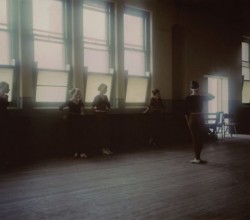
Bill Henson’s acclaimed body of work focuses on portraiture. A new book continues in this vein, including images of young ballerinas that could have come straight out of a Vermeer – dimly lit, sometimes blurry pictures that convey an elusive romanticism: “I’ve always had the feeling that it was what went missing in the picture that counted; that thing which is powerfully apprehended but not fully understood.”

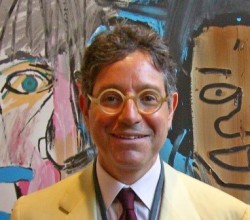
Jeffrey Deitch on Why Figurative Art Rules the Zeitgeist, and His New Calling as a Pop-Up Impresario

You just know that something is hot when it is the focus of a collaboration between Gagosian Gallery and Jeffrey Dietch. Figurative art is that new “hot”. Notwithstanding a slightly breathless tone, this interview with Dietch nicely profiles the argument about figuration, as well as his view that we are all suffering from abstraction fatigue. ”Figurative art is like the novel—it’s reinvented by every generation” More images are here.

Getting the Last Word: The 6 Most Withering Moments in Robert Hughes’s “The Spectacle of Skill”

Robert Hughes was copiously talented and he put those talents to good use. His Shock of the New and Nothing if Not Critical are widely regarded as classics of art criticism. Plus, he was thrillingly opinionated. Adam Gopnik says of him in this new volume “Robert Hughes was many things, but he was never a meta-thing. He was the real thing: living and breathing and red with exertion and, sometimes, rage.”

Image: Google

Francis Bacon in purgatory

Francis Bacon’s early paintings show figures in “desperate, nightmarish predicaments”. In later career, this shock factor mellowed out. A show in New York of his later work thus poses the question of whether the senior Bacon was resting on his laurels. Not really – “one does not get the sense… that Bacon had found peace in his work.  It makes more sense to say that his work found temporary respite.” More images are here.

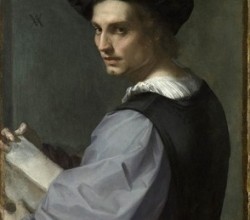
Andrea del Sarto: The Renaissance Workshop in Action, Frick Collection, New York — ‘Diligence and caution’

Art history’s view of Andrea del Sarto was seemingly set when a contemporary bemoaned a lack of “a slightly more courageous and daring spirit”. A show at the Frick attempts a reassessment but this critic resists. Del Sarto’s shortcoming was not “casual flawlessness.” Instead, “The sketches offer glimpses … of an artist who understood life’s difficulties but preferred to…buff all the vibrancy out of crude existence”.

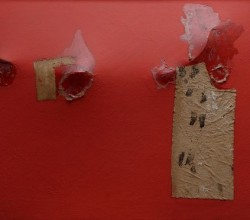
In Alberto Burri’s art, desperation and inspiration

Post-war US was brimming with optimism but Italy felt dispirited and diminished. Alberto Burri discovered art as a POW and began making paintings that were ”not so much paintings of ruins as ruins in themselves”. He influenced prominent American artists (especially Rauschenberg) but didn’t share their optimistic outlook. He remained in Italy and built a reputation making “art beyond illusion”.