The Easel

1st December 2015

Jeff Koons, The Man With The Big Glass Balls

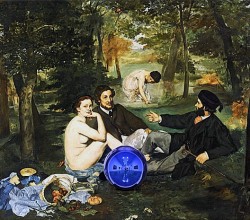
Fasten your seatbelt! Jeff Koons’ new show contains reproductions of 35 Old Masters each incorporating a shiny “bowling ball sized glass orb”. The artist suggests keeping an open mind. The response is apoplectic – “though judgment may be discouraged, discernment is OK. With Koons, do you shut it down with a hasty verdict or take your time to come to the same conclusion?” As Roy Lichtenstein might have said, KAPOW!!!
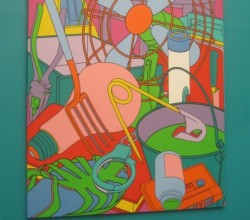
Michael Craig-Martin’s tour of his exhibition, Transience @ the Serpentine Gallery

Fleeting technological innovations (remember Palm Pilots?) are the subject of much of Michael Craig-Martin’s work. His flat, minimal outlines in riotous colour sound generic but are completely distinctive – a 21st century version of pop art. The curators observe that Craig-Martin’s work “reveals a search for the ultimate expression of contemporaneity in a way that we all experience – through the items we use every day.”

Allen Jones: ‘The thing about eroticism is that it forces a response’

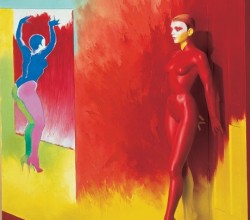
Abstract expressionism inspired British Pop artist Alan Jones’s to think afresh about figurative art. True to his word, he produced highly sexualized female forms that were hugely controversial. Now a celebrated member of the Royal Academy, he has no regrets: “I liked [the images] because they were dangerous… they suggested new ways of depicting the figure that weren’t dressed up for public consumption.” A short (2 min) video is here.

Iran Has Been Hiding One of the World’s Great Collections of Modern Art

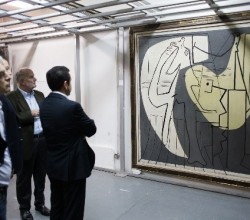
After the 1979 Iranian revolution a great collection of 20th century art, assembled by the Shah’s wife, became politically unacceptable. Amazingly, it survived the revolution, thanks to a museum staffer, and some pieces are cautiously being shown. ”As chaos engulfed Tehran’s streets, Shabazi spent most of the next two years locked in the vault with the artwork and the keys. “With this vault, with this museum, I am like a lion””.

Man on a wire: The playful simplicity of Alexander Calder

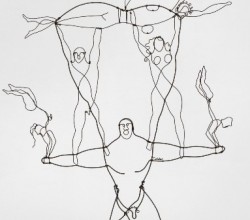
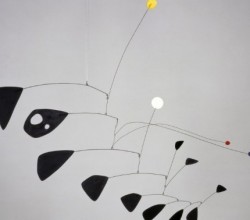
Last week’s Easel included a noted critic arguing that there is a sameness to Calder’s mobiles, now on exhibition in London. There may be some truth to this – if only because of the number that he produced – but it also surely understates Calder’s contribution to sculpture. Here, another noted critic offers a contrasting assessment – “[w]ho else but Calder could have made this unrelenting material [wire] so fluid?”

Exhibit review: In Virginia, a Rodin show changes how we see the sculptor

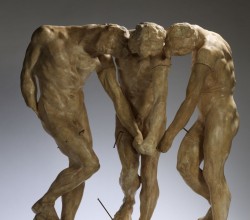
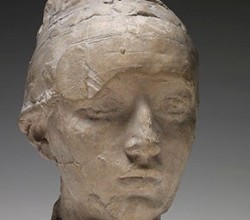
The Musee Rodin renovation (see last week’s Easel) has released key pieces for exhibition elsewhere. A US show uses the opportunity to focus on Rodin’s work methods. What is revealed is that his sculptures are “fundamentally heterogenous, joining the ancient and contemporary together without embarrassment … and with no effort to hide the dissonance… This is [close] to the contemporary idea of assemblage.”

24th November 2015

Alexander Calder: the man that made abstract art fly

The Tate’s Calder show is, according to one critic, the “happiest exhibition in Britain”. But, while his innovative mobiles are undeniably beautiful they prompt this writer to a sharp edged judgement. “None of [the mobiles] is really memorable… That is one of the paradoxes of art: still images can contain an immense amount of drama and action too.”  A short (2.5min) video is here.

Takashi Murakami: A reluctant homecoming

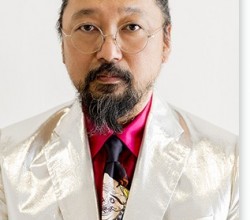
Notwithstanding a PhD qualification, Murakami is fascinated with manga – Japanese comics. His “superflat” paintings incorporate this aesthetic via cute / creepy cartoon characters, an uneasy blend of art and commercialism. That hasn’t stopped his work attracting huge prices at auction. His intricately rendered paintings are completed by large numbers of assistants, a process he likens to that used by Rubens.

The Man Who Shaped Tomorrow

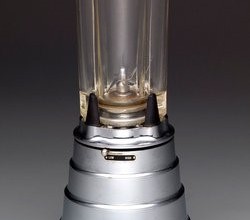
Peter Muller-Monk started capturing attention almost as soon as he had established his Greenwich Village silver studio in 1927. He left high end silver as the Depression hit only to re-emerge as a leading designer of products for the surging postwar consumer culture. After being largely forgotten, a Pittsburgh exhibition hails him as a key figure in industrial design. Multiple products are shown in this video (3 min).

Auguste Rodin’s long shadow

Musee Rodin has re-opened this month after a multi-yearr renovation, the first since it began in 1917. Huge tourist numbers confirm Rodin’s continuing popularity as an artist. As one critic commented “not even Henry Moore was able to release such torrents of expressive power from the sole image of the human body”. An excellent video (3 min) is here.

Is This the Greatest National Museum in the World?

Since Peter the Great, the Tsars have all wanted their country to be a part of modern Europe. One device to affect this shift in outlook was to buy current European art for the Hermitage – “a literal, almost limitless palace of human imagination”. Centuries of acquisitions have produced an “encyclopedic” collection, leading to the reviewer’s unprovable but plausible claim.

How One Artist Learned to Sculpt the Wind

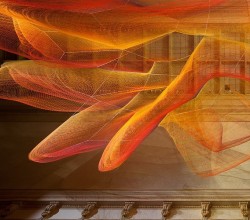
Stuck in India without her painting supplies, the aspiring painter Janet Echelman used local fishing nets to create a hanging sculpture. This started her career as a “volumetric sculptor”. Hi-tech polyethelene rope now allows her sculptures to be anchored to building facades without further support. At night computer controlled lights illuminate the sculpture. Images of a recent Boston installation are here.

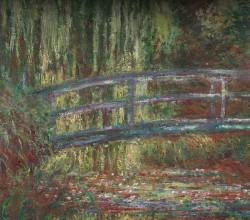
‘Looking East’ at Asian Art Museum features works of Van Gogh, Monet

Admiral Perry’s arrival in Tokyo Bay seems like, well, centuries ago. However, a current San Francisco exhibition demonstrates its ongoing relevance to Western art. Exposure to Japanese aesthetic concepts impacted both the public and a startling number of important artists. In a letter to his brother, van Gogh said “All my work is based to some extent on Japanese prints”. Interesting image comparisons are here.