The Easel

30th August 2022

Emma Talbot: The Age/L’Età at the Whitechapel Gallery review – a true visionary

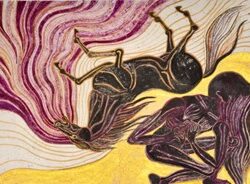
Talbot is having a moment – being hung at the Venice Biennale and winning a major art prize that comes with a solo show. The show takes the story of Hercules and reimagines it with an older woman protagonist. It’s a neat twist that allows Talbot’s paintings, which fuse “patterning, abstraction and lyrical figuration”, to extol matriarchal wisdom. One critic wonders if this makes the show “overtly feminist”. Not at all, says this writer “[Talbot] is a true visionary”.

Keep Looking

Shabazz claims that humility is essential for his work. His decades-long subject is the people he encounters on New York’s streets, people who are the “center of the photograph but not of the world in which the picture is taken”. Politics gets scant attention. Mostly, we see past fashions, old makes of cars, or passing acts of tenderness, evidence of people “acting out the story of being themselves”.  Collectively, Shabazz has produced an “archive” of New York’s street culture. Images are here.

The British Museum Takes the Feminism Out of Feminine Power

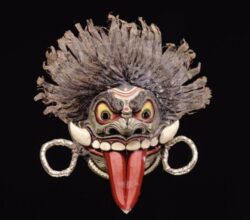
A London exhibition explores female deities across world religions. They turn out to be a varied lot, not all of them gentle nurturing types. Some critics like the show but there are more than a few who don’t. One of the latter calls it “shrill and preachy”, pushing “feminist readings on to unruly ancient art”. However, the above writer grumbles about the opposite, that the show gives insufficient weight to feminist perspectives. Perhaps the curators got it about right. Images are here.

After Nearly a Decade of Debate, There’s a New Definition of ‘Museum’

Do we care how we define a museum? Apparently so, as the accepted definition may get used in legislation. And, of course, it matters greatly to museum professionals. An international museum association spent years updating the definition, only to have its proposal rejected for being “a statement of fashionable values”. A revised, narrower definition has now succeeded, in part by excluding difficult issues like repatriation. Phew!

The drama of Madame Lebrun

Le Brun, a favourite of Marie-Antoinette in pre-Revolutionary France, was a “leading portraitist of her age”. Accused of being a “flatterer” and a narcissist, she was written out of art history until a recent rehabilitation. Any rehabilitation, says the writer, is “preposterous … [she painted] people as if they’re as dull as drapes”. Others counter that Le Brun needed to self-promote to overcome the misogyny of her times. As for flattery – isn’t that the calling card of portraitists everywhere?

23rd August 2022

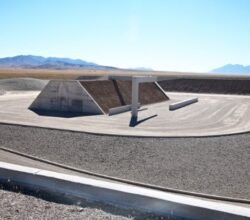
Michael Heizer’s City, a vast art project in the Nevada desert 50 years in the making, will finally open to the public

The land artist Michael Heizer has completed “City”, his “career-defining” 50-year project in the Nevada desert. It’s a mile and a half long, half a mile wide and consists of carefully smoothed dirt mounds, roads and depressions dotted with concrete structures. Reviewers are bowled over by its scale, variously comparing it to a Mayan site or an “unfinished highway interchange”. One critic calls it a “masterpiece”, adding that “like Mount Rushmore or the Hoover Dam, it is bravado, awesome and nuts.”

8 Questions on the Life + Work of Diego Rivera

Rivera developed a modernist eye in Paris. Back in Mexico, though, his public murals were full of figurative imagery that celebrated indigenous culture and the nobility of rural workers. That work made him famous at home. Fame in the US arose from murals that embraced American industrial prowess. These odd juxtapositions might, if it were another artist, lead to accusations of propaganda. Rivera has somehow escaped that fate. He was, one critic writes, “a lighthouse of vitality”.

Art lovers, make your way to a tiny but perfect exhibition

Dürer, although devoutly Catholic, fully absorbed the humanist spirit of the Renaissance. He was a “one man avant-garde” who helped Germany jettison its Gothic outlook. Moreover, he possessed the “ultimate” artistic skill of mark making, something his prints make plain. His woodblocks are “mighty impressive” but it is Dürer’s engravings that reveal his greatness – “conveying football fields of information with marks no bigger than a hyphen”.

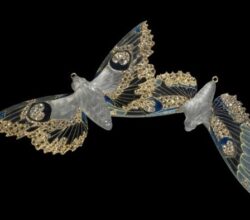
Heart of glass: why the world fell in love with Lalique

Establishing his own jewellery workshop before age 30, Lalique quickly became the “undisputed master of Art Nouveau jewellery”. In the early 1900’s he switched to glass, making intricately designed vases, perfume bottles and more. His glassworks in Alsace, an “epicentre” of French decorative arts, influenced the evolution of art deco. Improbably, Lalique conquered the seemingly contradictory roles of “avant-garde craftsman and industrialist”.  Images are here.

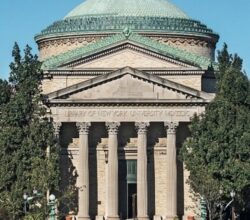
An American Renaissance: Beaux-Arts architecture in New York City

The Gilded Age (1860 to 1920) marked the American ascendancy. New York’s new elite, now wealthier than aristocratic Europe, wanted their houses and buildings to announce that. The resulting style – Beaux Arts – was the French architectural style “on steroids”, a classically inspired “mélange of eclectic forms and ornaments”. By WW1 the mood had changed, leaving New York with an architectural heritage that references an “American renaissance”.

Hockney’s Muse

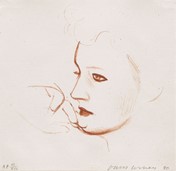
A piece related to a forthcoming auction of Hockney’s work. Celia Birtwell has featured in Hockney’s portraiture for over five decades and they are close friends. Their closeness isn’t a problem for him – “knowing her [really well] makes it always slightly different”. Each sitting is an opportunity to portray character rather than draw her likeness. Their friendship doesn’t mean that she likes every work. She described a recent effort as “horrible” before adding, ruefully, “he sees you as you really are.”