The Easel

13th September 2022

Picturing the Queen: How artists portrayed Queen Elizabeth II through her reign

The media is giving us an Elizabethan week, following the death of the English monarch. She was perhaps the “most visually depicted individual ever”.  Being on the throne as the mass media age blossomed, she was irresistible to image makers. A key decision, it seems, was whether or not to flatter.  Warhol, like many others, showed her “eternal regal glamour”. Lucien Freud painted a small, controversial portrait that showed “she had been through a lot”. She never commented on it.

Vagina scrolls and tongue-kissing with cats: Carolee Schneemann is one of art’s great rebels

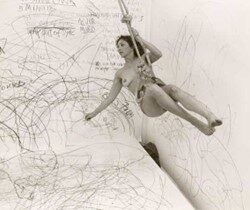
Irate at the unfair treatment of female artists, Schneemann decided to provoke. When her abstract paintings didn’t have much impact, she tried performance art, working in the nude. Some of her performances may now look silly, like writhing around among chickens and fish. One critic hints at exhibitionism by an artist who was “flawlessly beautiful”. Still, Schneemann emphatically made her point with works that are “highlights of the performance art canon”.

The Punk Portraitist of New York’s Underground

Among the soon-to-be-famous artists in late 1970’s New York were some major talents with lesser profiles. Leatherdale was one. Often compared to Mapplethorpe, his portraits of New York’s demimonde attracted attention, including from a young Issey Miyake. While Mapplethorpe was happy to shock, Leatherdale was more restrained, documenting “the cosmopolitan netherworld of style … with an understanding and graceful precision”. More images are here.

Telling the story of art—without men

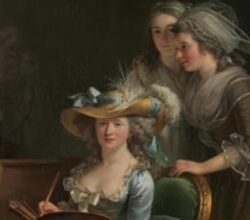
Shows of long overlooked female artists now happen regularly. Has equal treatment for female artists finally arrived? Not really. A new art history constructs a timeline of female artists back to the Renaissance. It features 300(!) artists, many of whom have only come to light as a result of recent scholarship. Surely, art history texts need a re-write. Asks the author “How did museums get away with celebrating the history of patriarchy instead of the history of art?”

Tomorrow’s Orthodoxy

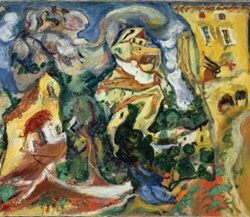
Why did the modernist art revolution happen in Paris? By 1905, there were around 3000 aspiring artists there, working with a “dense network of small dealers and galleristes” outside the mainstream salons. Although located in raffish Montmartre, this was a professional community. London had no equivalent, its art world having stayed close to elite society and its patronage.  Of course, outsiders usually become insiders, and Paris’s radical impulse was eventually overtaken – by New York.

The Not-So-Golden Age of Holland

The Dutch Golden Age, the century following Holland’s independence from Spain in 1588, was an era of great cultural achievement – Rembrandt, Vermeer and more.  Holland grew wealthy from its colonies and the art that we celebrate today displays those “exploitative” relationships. Portraits show the trappings of colonial wealth, for example, and indigenous figures are portrayed as “accessories” of the wealthy. Beautiful they may be, but these paintings are “bitter fruits” of the Golden Age.

6th September 2022

Wolfgang Tillmans’ ways of seeing

Tillmans seems to acquire accolades with ease, a Turner Prize in 2000 being just the first of many. They are indicators of the distinctiveness of his photography, which is about being alert to the present. His work isn’t diaristic, he says. Rather, he strives to “spotlight something that everyone pretends not to see”. That something might be specific (youthful eroticism, AIDS) or just a “sense of the here and now”. Either way, his work is “a flash news report from and for a new generation”.

Tearing Down the Myth of Paul Gauguin

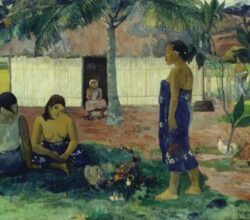
Critics see Gauguin as one of the greats of modern art. Regrettably, his behaviour toward women was appalling. A novel, written as a direct analogy to Gauguin’s life, articulates the question that now shadows his work – does his “brilliance” excuse his behaviour? In saying no, the novel argues that it is “impossible to separate the art from the artist”. If that is right, then are museums that exhibit his work and visitors who admire it committing “acts of complicity”?

Barbara Kruger’s ‘Rabbit Hole’ at MoMA

Kruger is resolutely unorthodox – she exhibits infrequently, does not copyright her works (leading to widespread copying), avoids self-promotion. Her text-focused images don’t bother with subtlety – “more wallop than resonance” as one writer puts it. Yet she is one of very few artists to have significantly influenced our visual world. Confined to just the atrium of New York’s MoMA, her current show is scaled up so that it “overwhelms” the space. Its architecture “screams her messages”.

Why the Barnes Foundation matters

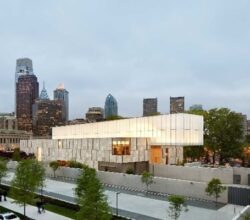
Philadelphia’s Barnes Foundation has a dazzling collection of Cézanne, Matisse and Seurat paintings. Reflecting current social discourse, much art criticism now emphasises artist identity and social context. This appreciation of that collection seems almost quaint by comparison, with its focus on the technical qualities of the paintings and personal aesthetic judgement. The inclusion of this piece is not taking sides in an important debate, but simply a reminder of just how much art criticism has shifted.

Japanese design: Rinpa

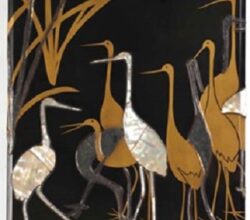
The Tokugawa shogunate brought prosperity to 17th century Japan. Kyoto’s artists responded by more freely using colour, pattern and form – the Rinpa school was born. It did not limit artistic expression, meaning that its leading figures were designers as much as painters. Their “spectacular” household screens, ceramics and lacquerware mixed realism and stylization in a way that “harmonises with our modern aesthetic ideals” and still influences contemporary design.

5 Things To Know About Italian Maiolica

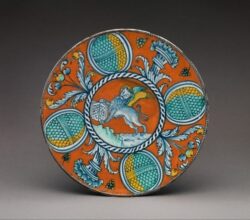
Tin glazed pottery has one great virtue. Tin glaze, when applied to earthenware, creates a white porous surface ideal for painting. When painted and fired, the resulting piece is shiny and colourful, ideal for display. This Islamic invention appeared in 14th century Spain and, a century later, was all the rage in Renaissance Italy where it enjoyed a status similar to easel painting. The above piece is a succinct primer; more detail and images are here.