The Easel

16th August 2022

Käthe Kollwitz’s kitsch

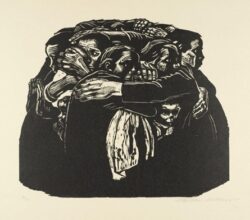
John Berger wrote of Kollwitz that just as “History was indifferent, she was caring”. Her art speaks eloquently of the inequalities of aristocratic Germany and the traumatic birth of its industrial society. Did she care too much, though, to the point where it made her art kitsch? At one stage, Germany’s art students were declaring ‘No more war, no more Kollwitz!

“One can begin to see what is so unsettling about Kollwitz’s pictures. Her pictures—with their suffering subjects —seem to deny that one could, or should, get any distance from the emotional impact of traumatic experiences. The pictures cry and scream and wail with no relent and no apology. Yet her pictures are unashamed of their earnestness.”

Issey Miyake – a conceptual fashion designer for the many

A 1991 commission for ballet costumes led Miyake to developing micro pleated textiles. They gave his clothes a sculptural quality, garments that held their own shape rather than following the shape of the wearer. That was radical for the era, made more so because his elegant, androgynous designs reflected a Japanese aesthetic. His creations blurred the distinction between art and fashion. Not that he considered it fashion – “fashion goes out of style too quickly. I don’t make fashion. I make clothes.”

The craft world Is undergoing a democratization

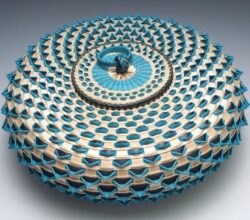
America’s pre-eminent craft museum is hosting a “massive” survey show. What does it say about the status of this collective art form? Some featured works – quilts, baskets, personal ornaments – have recognizable utility. But craft now goes much further, spanning a broader range of materials and creations. Says one critic, this show highlights that craft has “transcended its focus on technical mastery … and pushed to embrace contemporary concepts about identity and storytelling”.

Warrior and Attendants

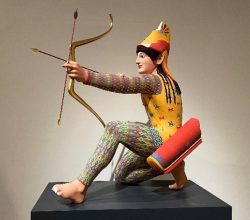
A London museum is the latest institution to restitute its Benin bronzes to Nigeria. Why are these artworks so highly acclaimed? Most were cast in brass or copper alloy, using complex metallurgical techniques. The refinement of the bronzes produced surpassed that of Renaissance works. Warrior and Attendants is regarded as a “masterpiece” and describes in intricate detail the social hierarchy of warrior society. It is held in New York where, it is claimed, it acts as “cultural ambassador”.

What if the ancient Greeks and Romans really had terrible taste?

Ancient sculptures were originally brightly painted. Does this mean that modern painted replicas are preferable to the now bleached originals? This writer badly wants to avoid saying yes. Perhaps modern recreations don’t quite capture the original colours. Perhaps the ancients were “wrong” in their use of colour (!), or intended these works to be garish? Whatever your view on this debate, modern recreations certainly require us to “radically redefine our sense of the ancient world”.

9th August 2022

A work of dispute

Positive responses to Documenta15 in Germany have soured amid accusations that some works are “antisemitic”.  Was the event’s experiment with decentralized “free” curating – previously seen as innovative – a mistake? Are the offending works actually antisemitic or just expressing views about Middle East politics? Would closing the whole exhibition be censorship? Rather inconclusively, the writer notes that artistic freedom is “framed by ethical standards [that derive from] good manners”.

Black photographers founded Kamoinge Workshop in 1963. Now their biggest show hits the Getty

Mass media images in 1960’s America reflected stereotypical – and often unfavourable – white views of Black lives. In response, a group of 14 Black photographers formed with the goal of highlighting the “positiveness and beauty” of their community. The group maintained their individual styles but collectively focused on neglected aspects of Black lives, to “speak of our lives as only we can”. Says one critic, this development is “crucial to understanding postwar American photography”.

Sibylle Bergemann’s striking photographs of postwar Germany

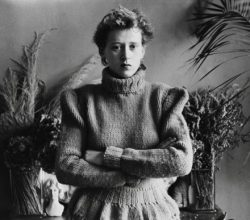
Living in East Berlin, Bergemann experienced first-hand the intrusion of politics into everyday life. What surprises is how her images slipped past East Germany’s censors. Compared with the grandiose propaganda of the state, her images are human scale, often focused on the diverse identities of women. Yet, in subtle ways, they “quietly transcend the parameters of her commissions”. Her objective, she said, was to “bring reality into the picture”. She did.

A tortured existence

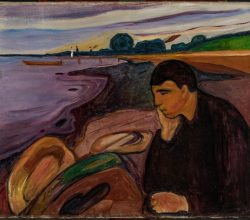
In the 1880’s, early in his career, Munch had a significant dalliance with Impressionism and Pointillism. Those influences came and went quickly – by 1892 the characteristic bold strokes and sombre purples and blues of his “soul paintings” had emerged. Some critics find the earlier works “patchy”, so “at odds” with his later style as to provide limited insight. Does that matter? One critic notes that viewers want “the torment, the anguish, the darkness, the big emo, and there’s plenty of it.“ Images are here.

Everything You Should Know About Islamic Art

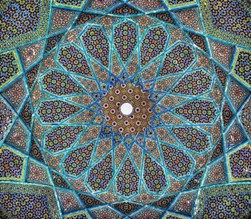
A toe in the water on a big topic, but no less interesting because of that. Islam forbids artists creating images of living beings, so its art features floral motifs, calligraphy and intricate geometric patterns. The patterns often repeat endlessly, conveying the message that Allah is infinite. Ornamental designs reflect an intrinsic understanding of geometry and science, two of the glories of the Islamic world. If you feel inspired, more background is here.

England’s Coronation tapestries: the right royal story behind the lavish, 500-year-old textiles

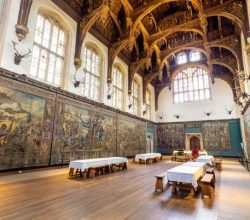
Apparently, Henry VIII had an eye for art. He collected around 2500 tapestries, the best of which used extravagant amounts of gold and silver thread. The Story of Abraham, told in 10 tapestries, was woven in Brussels at huge expense and is Britain’s “most impressive set”. They carried political intent – Henry wanted Abraham’s story, by analogy, to position him as the “nation’s patriarch”. The tapestries were “a mirror for princes … readily understandable to everyone in Henry’s circles.” Images are here.