The Easel

1st March 2022

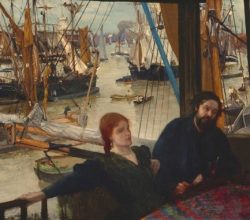
Whistler’s Woman in White: Joanna Hiffernan at the Royal Academy of Arts

The role of women in portraits can be fraught. What about Whistler’s pretty lover in his famous Woman in White portraits. Are they examples of collaboration or exploitation? Strangely, the critics seem more interested in the biography of their relationship and observations that this era had “strange morality”. The artist Celia Paul, who famously sat for Lucien Freud during their relationship, observes of the works: “She was a great model … sitting was, for her, a consummately creative act”.
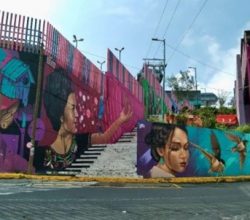
Mexico revives a tradition of painting murals with a purpose

Who says art cannot have social impact? Murals loom large (literally) in the art of Mexico, from their ancient civilisations to Spanish colonial wall frescoes and, more recently, Diego Rivera. Tapping into that tradition, a poor area in Mexica City has sponsored street murals as a way of reducing crime. About 7500 works have been commissioned so far and local officials insist they have helped reduce rates of violence.  Says the mayor “We’re trying to reclaim the streets for women”. More images are here.

Bellerby & Co. Globemakers

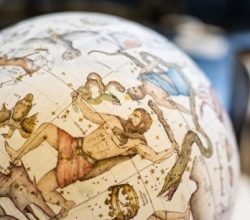
On a list of esoteric traditional crafts, globe making must be right up there. First made around 1500, these bespoke objects are still made by hand, albeit with modern materials. Their complex manufacture and customization to meet client demands requires great artisanship – painting and lettering, cartography, illustration and engraving. If your heart desires something less earthly, the atelier featured also make globes of the moon and the heavens. A video is here.

MoMA celebrates South Asian architecture in the postcolonial era

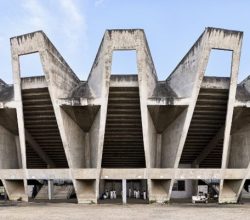
South Asian art is starved of coverage, as is its architecture. An exhibition of this architecture after the British Raj shows how it expressed not just new optimism but also a “new political reality”. Concrete, ideal for adapting a modernist architectural idiom to local conditions, features everywhere – the sustainability designs of India’s Balkrishna Doshi through to the houses of Sri Lanka’s Minette de Silva. Sighs one critic “it’s a joy to see so many projects that aren’t sealed glass boxes”.

Bill Brandt: a world apart

Brandt is widely considered Britain’s great 20th century photographer. He started by photographing English society but moved on. Images of darkened London in the Blitz showed terror and beauty side by side. His portraits convey a moody unease. His nudes show an awareness of sculptural form that owe much to surrealism. And his landscapes, with their “velvety blacks” are “some of the most evocative pictures of Britain ever taken”. More images are here.

Dan Graham on creating art through architecture

“Conceptual artist” doesn’t give much of a clue to Graham’s work. His most acclaimed works are “pavilions” – sculptural/architectural structures of glass that allow viewers to look at others and be looked at themselves. Such works reflect Graham’s enduring interest in the relationship between performer and audience, a common thread of sorts with his other interests – writing, rock music, television and (he wished) fashion. A more comprehensive interview is here.

22nd February 2022

Easel Essay: Three cheers for ‘irrelevant’ art

Art and life interact in all kinds of ways, observes Jed Perl, making the relationship between them “messy”. When Picasso painted his great work Guernica, he was criticized because it was indirect in its criticism of the bombing of a Spanish village. Yet we would now say that that “indirectness” is what gives the mural its staying power – its deeper relevance.

“I don’t think there’s anything wrong with wanting art to have a place in the wider social or political world. What does worry me is a tendency to see art’s purpose largely or even exclusively in terms of its social or political relevance. Art’s relevance, I write at one point in this book, has everything to do with what many regard as its irrelevance”.

The Outlands

A “watershed” show in 1976 of Eggleston’s photographs marked the art world’s acceptance of colour photography. His images, taken around his hometown of Memphis, are studies of the mundane – shops, cars, houses, gas stations – “seemingly without judgement and certainly without commentary”.  While now showing signs of age, this body of work comprises “one of the most intensive and concentrated responses to place in the history of photography.”

‘When he paints a portrait I read a life’

The Bloomsbury opinion-makers of his day didn’t take to Sickert, preferring the French modernists. Once seen as a mere follower of Degas, he is now regarded as much more. Early works included dark images of life’s gritty realities – “a sort of psychological impressionist … an inverted Claude Monet”. Later, he used mass media imagery in painting, “undoing prior meaning, leaving interpretive room for the viewer”. Possessed of such modern instincts, Sickert was “one of the great image-makers”.

Why do artists ignore sport? It’s time for change

It’s a perfectly sensible question – why so little art about sport? The query is prompted by a London show of paintings themed around basketball. These abstract works are loud – “bright, punchy, zingy”, focused on the motif of a basketball court and “filled with pictorial agility”. Is there more to them than the visual expression of an exciting game? One critic thinks so – these works speak to a future that is “higher, deeper, fuller, sweeter, older, newer, bolder, brighter, and more glorious.”

Discover the Cornucopia of Renaissance-Era Portrait Paintings of People Assembled With Fruit

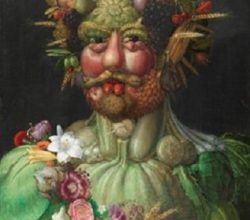
An art history oddity. Arcimboldo was a Milanese painter who, in his mid 30’s, gained employment in the great Hapsburg court of Maximillian II. He promptly created ‘composite’ paintings – fruit, vegetables, flowers and other objects – assembled to comprise a portrait. They were intended as a joke but also implied that the viewer was learned, au fait with new thinking in the natural sciences. Centuries later, the surrealists resurrected Arcimboldo, proclaiming him one of their own.

Anatomy of an artwork: American People Series #20: Die, 1967 by Faith Ringgold

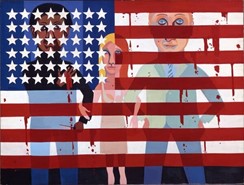
Ringgold’s art is activist art. Being a figurative painter at a time when abstraction was ascendant meant her early career was a struggle. Still, those civil rights era works about America’s poor treatment of blacks and women include some enduring images. Ringgold painted Die in 1967 after seeing Picasso’s Guernica. Despite its sombre subject matter, it has an underlying optimism – reform, not revolution. Indeed, she went on to write 17 children’s books. More images are here.