The Easel

15th March 2022

Postwar Modern review: That rare thing in a contemporary art gallery – a genuinely polemical exhibition

Conventional wisdom says that postwar Britain was grim and its art “provincial”. Is that accurate? “Proto-pop art” had emerged during the 1950’s, well ahead of Warhol. In popular culture, The Beatles and “swinging London” were about to sweep the world. Everyone knows Bacon and Hockney but in those decades, even lesser-known artists showed a deep radicalism. It was a time “just before our own, which has remained for most of us substantially unknown”.
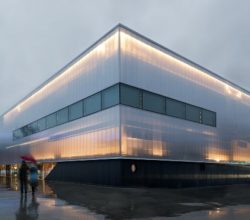
Russia’s Red-Hot Temple of Contemporary Art, and Its Jet-Setting Cofounder, Are Losing Major Exhibitions

The war in Ukraine has impacted all manner of interactions with Russia. While art is hardly at the top of that list, Moscow’s contemporary art institutions that link to the global art market have also been affected. This is something of a context piece about the current uncertainty and how institutions and individuals are re-positioning themselves. Like the conflict itself, there are no obvious conclusions.

Renaissance radical: Carlo Crivelli – Shadows on the Sky

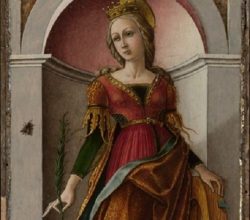
What is it with Crivelli and cucumbers? While Renaissance artists embraced naturalism, Crivelli merged it with Gothic ornamentation and added copious visual trickery like perspective and trompe l’oeil. His over-sized flies, fruit – and cucumbers – are so unconventional as to seem “anti-serious”. However, the curator argues that Crivelli is more than a Renaissance footnote. The artifice in these works has a surrealist touch and poses a very contemporary question – “what do you know, really?

Agents of Malaise

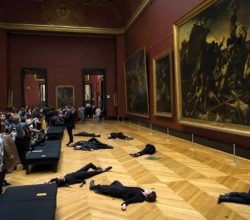
Sustained criticism of museums has led to a loss of “cultural authority”. The causes of discontent include gender imbalances and the holding of artworks of dubious provenance. Museums are also criticized for “artwashing” – conspicuous patronage intended to enhance a donor’s public image. Perhaps aesthetics has lost its primacy and we are now in a time “when art is valued for its social utility” Is the high number of vacant museum directorships in the US a product of this role uncertainty?

A Century of the Artist’s Studio: 1920-2020 review – congealing palettes, fading light and magic

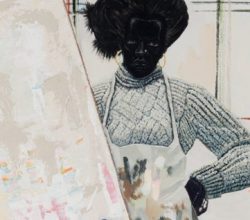
Artists have, for centuries, used their studios as subject matter. Traditionally regarded as private spaces, they hold our interest as places of artistic “alchemy”. Since the advent of superstar artists – think Warhol and his Factory – studios have a second life as places of performance. One critic is less than enthusiastic – “some people are just desperate to see how the sausage gets made”. Not this writer – the show “teems with revelations … a history of art by other means”.

Against De-Materialization: Tom Wolfe in the Age of NFTs

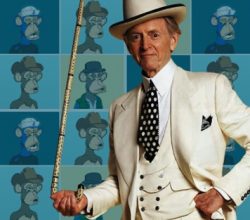
Wolfe, in his famous 1974 satire The Painted Word, argued that the physicality of a modern artwork mattered less than the “abstract theory” behind it. He also argued that collectors sought social kudos from their art purchases. NFT’s validate both of Wolfe’s arguments. “It is the successfully completed business deal, which has nothing to do with aesthetics as traditionally conceived, that validates the NFT as an artwork. The pleasure of ownership is now an aesthetic experience.”

Mondrians and Madeleines, part deux

A frolic across Paris museums, looking at the influence of modern art on the designer Yves Saint Laurent. Picasso was a major influence but there were many others – van Gogh, Bonnard, Matisse, various pop artists. Were his designs just copies of their ideas? For Saint Laurent, these were not copies but “homages”, reflecting that “composition and construction [are] fundamental practices shared by art and fashion”.

8th March 2022

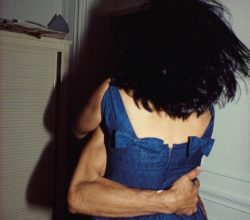
Why “The Ballad of Sexual Dependency” endures in the twenty first century

Goldin’s Ballad was the seminal photobook of the 1980’s. Talking about it she sometimes seems to fall into reverie. “I needed to get away. [I wanted] a record of my life … what things really looked like and felt like and smelled like. It’s commonly said that this book is about “marginalized” people. We were never marginalized. We were the world. We were our own world … There was an attitude towards life that doesn’t exist anymore, everything’s been so cleaned up.”

Are bans against Russian arts targeting the right people?

The Ukraine conflict has led to boycotts, cancellations and resignations across the cultural capitals of Europe. Such actions in art are far less potent than they are in finance or sport. Are they worth it? While clearly a legitimate expression of opposition to war, these actions impact all Russian artists, including those who are explicitly anti-war. Says one musician “we must not judge people based on their passports.” Responds another “being a musician does not free you from taking responsibility”.

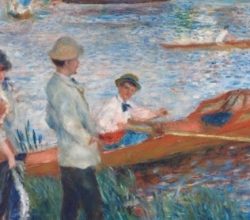
Renoir. Rococo revival

Impressionism’s focus on transient light and mood was a harbinger of modernism. It is thus surprising that Renoir, for one, was so indebted to the Rococo revival of the 19th century. Carefree outdoor activities were a favourite Rococo theme and Renoir studied them at length in the Louvre. Still, what he borrowed he updated – actual park scenes rather than idealized nature; normal people rather than “magnificently dressed” nobility. An admirer he may have been, an imitator he was not.

Why was Jacques-Louis David so determined to keep his drawings to himself?

David was the “de facto official painter of the French Revolution”. His stern paintings shaped public perceptions of those dramatic events and then Bonaparte’s reign. Not only did he freely deploy art as propaganda, but his severe neoclassicism helped finish off frivolous rococo, setting French art on a new path. The clarity David achieved in his paintings owed much to detailed preparatory drawings – and a willingness to make his art unmistakably political.

Edo Paintings: Centuries of Japanese art

One for Japan buffs. Japan’s Edo period was marked by peace, growth, and … isolation. The ruling Tokugawa clan favoured scroll painting by the Kano school which, for over a century, dominated even the Tosa school (favoured by the imperial court). Other styles eventually emerged – the Rinpa school with its large colour fields and the Shijo school, noted for its naturalism. When Japan opened to the West these all coalesced into the Nihonga school, which remains immensely popular.

Revisiting Robert Mapplethorpe’s Years on West Twenty-Third Street

An essay about Mapplethorpe, yes, but also an elegy to the artistic milieu of New York’s West Twenty-Third Street. Writers, artists and musicians rubbed shoulders with ordinary workers and “more marginal types”.  By the time he shifted from No. 21 to No. 35, Mapplethorpe was a celebrity … with AIDS. His birthday party in November 1988, his “final extravagant act”, was attended by actors, royalty and gallerists. “Death be dammed …  Robert made a silent wish and blew out the candles.”