The Easel

22nd February 2022

Easel Essay: Three cheers for ‘irrelevant’ art

Art and life interact in all kinds of ways, observes Jed Perl, making the relationship between them “messy”. When Picasso painted his great work Guernica, he was criticized because it was indirect in its criticism of the bombing of a Spanish village. Yet we would now say that that “indirectness” is what gives the mural its staying power – its deeper relevance.

“I don’t think there’s anything wrong with wanting art to have a place in the wider social or political world. What does worry me is a tendency to see art’s purpose largely or even exclusively in terms of its social or political relevance. Art’s relevance, I write at one point in this book, has everything to do with what many regard as its irrelevance”.

The Outlands

A “watershed” show in 1976 of Eggleston’s photographs marked the art world’s acceptance of colour photography. His images, taken around his hometown of Memphis, are studies of the mundane – shops, cars, houses, gas stations – “seemingly without judgement and certainly without commentary”.  While now showing signs of age, this body of work comprises “one of the most intensive and concentrated responses to place in the history of photography.”

‘When he paints a portrait I read a life’

The Bloomsbury opinion-makers of his day didn’t take to Sickert, preferring the French modernists. Once seen as a mere follower of Degas, he is now regarded as much more. Early works included dark images of life’s gritty realities – “a sort of psychological impressionist … an inverted Claude Monet”. Later, he used mass media imagery in painting, “undoing prior meaning, leaving interpretive room for the viewer”. Possessed of such modern instincts, Sickert was “one of the great image-makers”.

Why do artists ignore sport? It’s time for change

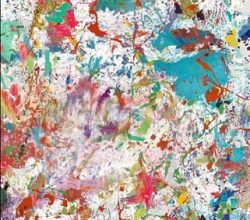
It’s a perfectly sensible question – why so little art about sport? The query is prompted by a London show of paintings themed around basketball. These abstract works are loud – “bright, punchy, zingy”, focused on the motif of a basketball court and “filled with pictorial agility”. Is there more to them than the visual expression of an exciting game? One critic thinks so – these works speak to a future that is “higher, deeper, fuller, sweeter, older, newer, bolder, brighter, and more glorious.”

Discover the Cornucopia of Renaissance-Era Portrait Paintings of People Assembled With Fruit

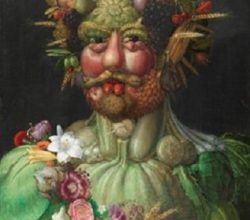
An art history oddity. Arcimboldo was a Milanese painter who, in his mid 30’s, gained employment in the great Hapsburg court of Maximillian II. He promptly created ‘composite’ paintings – fruit, vegetables, flowers and other objects – assembled to comprise a portrait. They were intended as a joke but also implied that the viewer was learned, au fait with new thinking in the natural sciences. Centuries later, the surrealists resurrected Arcimboldo, proclaiming him one of their own.

Anatomy of an artwork: American People Series #20: Die, 1967 by Faith Ringgold

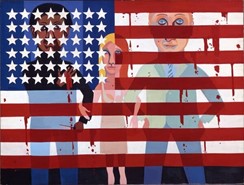
Ringgold’s art is activist art. Being a figurative painter at a time when abstraction was ascendant meant her early career was a struggle. Still, those civil rights era works about America’s poor treatment of blacks and women include some enduring images. Ringgold painted Die in 1967 after seeing Picasso’s Guernica. Despite its sombre subject matter, it has an underlying optimism – reform, not revolution. Indeed, she went on to write 17 children’s books. More images are here.

15th February 2022

Louise Bourgeois: The Woven Child, Hayward Gallery, review: So good it will give you shivers

Drawing on a troubled childhood Bourgeois fashioned a stellar career as a sculptor. Her late works were often in textiles, using skills picked up from her family home. Many are “sexy/violent” – cloth heads for example, that “howl, kiss, smirk, leer”. She saw spiders as “agents of repair” but in her work they also convey menace.  Some works are obvious but “my God, when Bourgeois’s good it gives you shivers.”

Huey, Dewey, and Louis XV

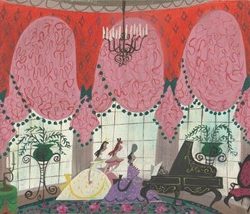
Walt Disney returned from WW1 with a new-found love – European art history. Its aesthetics infuse his films – German Romanticism in Snow White (1937), French Rococo lightheartedness in Beauty and the Beast (1991), gothic castles galore. Disney’s plundering of European culture is shrugged off as yet more of the “theft that animates art history”. Anyway, the end product was uniquely Disney – “populist and fun and … almost impishly irreverent.” A video (13 min) is here.

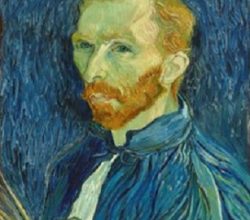
Astonishing and gripping: Van Gogh’s Self Portraits at the Courtauld reviewed

London’s Courtauld has re-opened with a “wonderous” show of van Gogh’s self-portraits, done in his last years of life. The suggestion that they are most notable for showcasing his evolving technique is so odd that one critic snorts, “[the curators] can, frankly, piss off.” Rather, they collectively reveal van Gogh’s struggle to cope with periodic mental collapse. “These pictures amount to an utterly gripping exercise in self-examination. [His] will to paint was more powerful, apparently, than the will to live.”

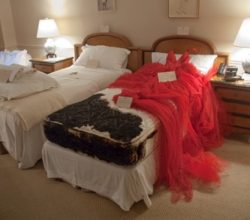
Room service: Review of The Hotel by Sophie Calle

In 1981, Calle briefly worked in Venice cleaning hotel rooms, covertly recording what she found. The resultant text / photographic document is regarded as a seminal artwork. Ethical issues obvious then are now even more so. Is this voyeurism or merely “frisky predation” which yields portraits of people based on their mess? Is her “deliberate aesthetic detachedness” a defence? Whatever the ethical wriggle room of 1981, it is surely a whole lot less now. A commentary by Calle is here.

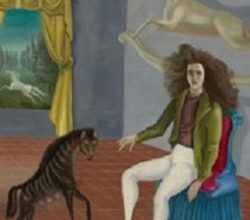
Why Leonora Carrington’s work feels so of the moment

A backgrounder on the surrealist artist Leonora Carrington. Rebelling against her wealthy family she fell in with the surrealists, establishing herself on equal terms with the men. Her paintings of enigmatic situations and otherworldly creatures are underlain by a “slightly offbeat humor”, which is “not what you get in French [or American] Surrealism.” This year’s Venice Biennale is titled The Milk of Dreams, the phrase taken from one of Carrington’s books.

Truthless Trust

An assault on NFTs and cryptoart markets. The NFTs attached to works of cryptoart carry any conditions of sale an artist wants. Sounds good for artists – except that high transaction charges can gobble up sales revenue. Meanwhile, the buyer of an NFT gets a claim on a digital file, not the artwork itself. This arrangement looks like “a Ponzi scheme” and the confidence to on-sell an NFT requires “a consensual hallucination”. Similar hallucinations, by the way, apply to normal money.