The Easel

23rd May 2017

Philadelphia Museum of Art Features Watercolors by Homer and Sargent

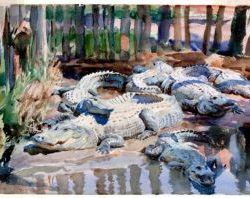
Nineteenth century artists regarded watercolour as a medium appropriate for illustrators, and women. But then along came Winslow Homer and John Singer Sergent. They made watercolour “the American medium” and according to one critic “pried a gate open in the national imagination”. That, it seems, was not the only gate opened – one also opened up for women artists. More images are here.
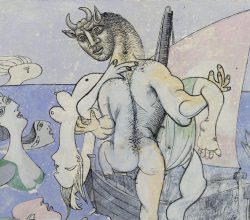

What the Minotaur can tell us about Picasso

Picasso had good reason to revere bulls – his Spanish heritage, his identification with Goya.  So the remains of Knossos, discovered in Crete around 1900, gave Picasso his alter-ego, the half man, half bull Minotaur. “It is a figure that speaks to almost everything he did, both in and out of the studio. His Minotaurs appear in scenes both of rape and of tender eroticism, as monsters and as victims and as heroes.”

A class apart: a new show explores the radical approach of the Bechers and their students

Gursky, Ruff, Struth, Hofer – famous names in photography who all studied under Bernd Becher. Becher and his wife together pioneered an objective style of photography that blurred “the gap between documentation and Minimal Art.” Their students have applied this aesthetic in diverse ways and “completely [overturned] the function, aesthetic, and position of photography as an artistic medium.” More images are here.

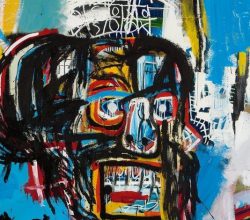
How Jean-Michel Basquiat Became The Ultimate American Artist

Writing in 1988 Robert Hughes described Jean-Michel Basquiat as “a small untrained talent caught in the buzz saw of art world promotion”. Last week a Basquiat sold for $110m – the highest price ever for an American artist. Different people read different things into this – revival of the art market, vindication of artists of colour and more. One writer observed “Basquiat’s got fans like Bob Marley’s got fans.”

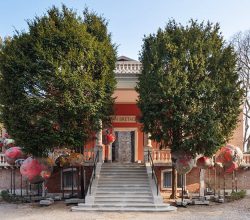
Huge, diverse and yet monotonous, the Venice Biennale is very like the EU

Perhaps the Venice Biennale has become too big to coherently address a single theme. Even so, critics seem in no mood to be forgiving. Says one “This exhibition fails to say anything new with impressive consistency. What a shame that’s the only impressive thing about it.” The above writer concurs: “The whole affair is so huge, so diverse and yet — in many ways — so monotonous.”

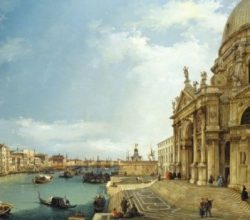
Canaletto and the Art of Venice

Canaletto did “view paintings” of Venice for wealthy tourists doing the Grand Tour. “[H]e remains acutely conscious of the need for a good ‘set’. Crammed into the right-hand side of the painting, the church towers over its surroundings, its facade a riot of columns and warm brown stone. Images do not do this justice: it’s a tour-de-force of architectural painting.” An interview with the curator is here.

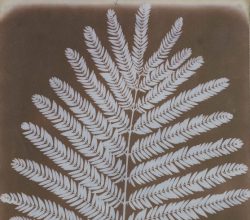
Photography Is …

London is trying to break into the photography exhibition business. Now in its third year, Photo London is taking on more established Europe-based fairs, apparently with some success. The linked piece covers the fair itself, while a list of top exhibits – or perhaps it’s a list of top names – is here.

16th May 2017

The profound thrill of being spooked – Alberto Giacometti, Tate Modern

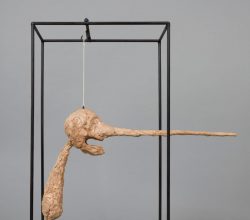
Giacometti’s emaciated bronze figures are so famous they almost obliterate everything else about the artist. A London show tries to remedy this. His early Surrealist works “[crackle] with violence and dark eroticism”. The big revelation of the show is his “scuffed and vulnerable plaster sculptures”. They “de-familiarise” his work and give it “the atavistic magic it once had”. An excellent video (4 min) is here.

David Hepher – Grain of Concrete

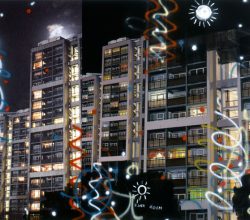
Many think London’s monolithic council flats are a cause of social dysfunction. For David Hepher they are simply the “landscapes of urban life”. His paintings of these buildings have gradually become more abstract -and often include graffiti. Graffiti suggests “the human side of these buildings. I also liked the idea of the staining and things … It’s a bit like painting an old person’s face”. More images are here.

Image: Flowers Gallery London

Revisiting Florine Stettheimer’s Place in Art History

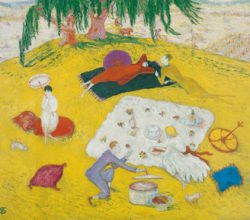
Being wealthy, Stettheimer could please herself. So rather than pursue commercial success she seems to have put her effort into being independent-minded, and painting. Her works portrayed feminism, sexuality and race with humour and a modern eye. As the curator of the show observes, Stettheimer’s “ability to paint in a satirical and caricaturist way is really … unmatched in the 20th century”. More images are here.

Adiós Utopia: Dreams and Deceptions in Cuban Art Since 1950: Museum of Fine Arts, Houston

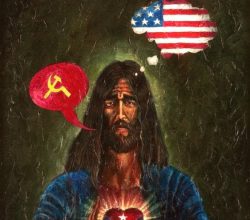
A landmark survey of contemporary Cuban art bristles with interesting questions. “What’s it like to live in a country ossified for six decades under a sort of zombie Stalinism?” Can individuals build a personal utopia “even as the big utopian project seems to be going off the rails?” Most importantly, what is the art like? The last question is easily answered: vibrant and sophisticated.  Some political issues are outlined here.

Has art ended again?

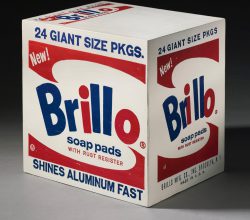
Chewy, but interesting. Hegel wrote in 1835 that art had completed its great task of developing techniques to depict objects in a lifelike fashion. Danto, in the 1960’s said art’s great task was to answer the conceptual question ‘what can art be?’ He felt Warhol’s Brillo boxes answered that – art can range anywhere from highbrow to the day-to-day. ‘Progress’ thus awaits art world agreement about a new great task.

The forgotten father of Abstract Expressionism

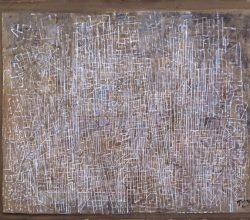
It was easy to get into Clement Greenberg’s bad books.  The critic had a narrow, purist view of abstraction and Mark Tobey’s interest in Asian art and philosophies didn’t fit that mold. In contrast, Jackson Pollock was taken by Tobey’s “all over” compositions and major accolades also came from Europe. But Greenberg was the art world’s biggest voice and Tobey gradually slipped out of the limelight. An interesting video (3 min) is here

Van Gogh and the Seasons

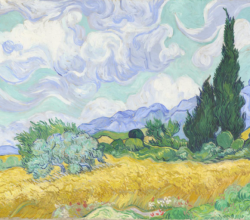
Before turning to art full time van Gogh had been a preacher. His change of occupation did not mean any loss of faith in God. Rather he used the innovations of the Impressionists – especially colour – to express his belief in a “higher force inherent in the eternal cycle of life”. This brought great intensity to his work. And with that he gave a clear signpost to the development of twentieth century art.