The Easel

9th May 2017

On show: Prix Pictet ‘Space’ at the V&A

Irish photographer Richard Mosse has won the Pictet Prize for photography. Using a military-grade thermal imaging camera he has produced ghostly images of refugees flooding into Europe.  He admits to “a very ambivalent relationship to [photography] … there’s something predatory about the camera lens.” An interview (1 min) with the artist is here and more images here.
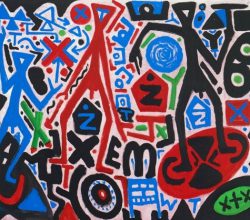
A.R. Penck, German Neo-Expressionist of Cold-War Era, Dies at 77

Ralf Winkler had a problem – the popularity of his art in West Germany brought unwanted attention from the Stasi. Using pseudonyms like A R Penck didn’t help much and he left for West Berlin in 1980. With a bigger audience for his distinctive stick figure imagery, he became a leader of German Neo-Expressionism. Penck apparently never regretted the move. Besides, it facilitated his other passion – jazz drumming.

Botticelli in Boston: MFA celebrates Florentine master

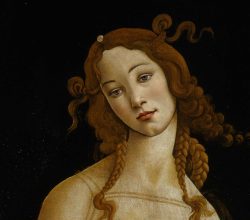
When the austere monk Savonarola ruled Florence he twice conducted ‘bonfires of the vanities’, destroying books and artworks. Botticelli likely burned some of his own works and largely stopped painting secular “goddesses”. Those that survive define a concept of beauty that ”speaks to us today more than 500 years later”. Indeed, they enjoyed that great modern accolade – being featured in The Simpsons. More images are here.

Image: MFA Boston

Spotlight: I.M. Pei

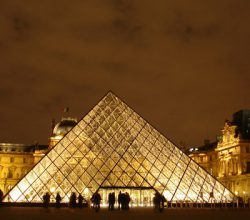
The Bauhaus casts a long shadow. A young Pei was feeling skeptical about architecture but somehow ended up studying under Walter Gropius, architect founder of the Bauhaus. Thus inspired, Pei went on to champion modernist architecture throughout an illustrious career. His glass pyramid entrance to the French Renaissance-styled Louvre created uproar when first proposed but is now an architectural icon.

Modern Art is Not Rubbish

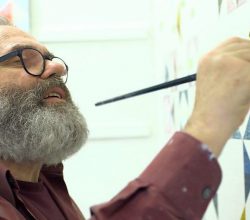
Collings pushes a few hot buttons. Understanding the artist’s intentions? – “intention is complicated because … artists don’t always know what their intentions are – also, artists lie.” Has art become a free-for-all? – “[Yes] but … chaos is monotonous”. Damian Hirst? – A “finance fiend” but “capable of great effective artistic ideas”. The importance of art criticism? – “Without a critical mind … there’s no real point to art.”

“Alexei Jawlensky” at The Neue Galerie

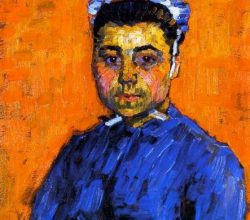
A review full of faint praise. Jawlensky hung out with impressive friends and his use of colour was “striking”. “[Y]ou call feel his overpowering desire to … join Marc, Kandinsky and Klee in synthesising observation and spirit.” But it seems he never really got there. Consequently this retrospective has the feel of giving the artist “due diligence without having him overstay his welcome.”

2nd May 2017

The Confidence Man of American Art

US critics are gearing up for the Rauschenberg retrospective, about to open in New York. Rauschenberg’s lofty reputation doesn’t stop this writer attacking both him and his work. Rauschenberg lacked discipline, was a “showman”, merely a “creative personality-at-large in the arts. Didn’t it ever occur to him that the search for perfection, however quixotic, is among the greatest adventures?” Phew!

Cerith Wyn Evans: Light Fantastic

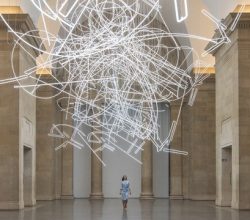
Suspending kilometers of tangled white neon lighting in an art gallery will certainly pull a crowd – but how should such an installation be explained? The artist’s ambition was to create “white neon drawings in space” that induce a “transformative mood. If anything it’s a … place for reverie on the transference of energy”. In case that’s not clear the artist adds: “[my work is] a rendezvous of question marks” An excellent video is here.

Josef Frank – Patterns, Furniture and Painting

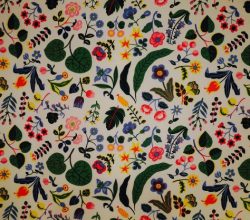
Where did IKEA’s design aesthetic come from? A London exhibition suggests much credit belongs to Josef Frank, from whose work the concept of Swedish Modern evolved. Although also an accomplished watercolorist, his textile furniture and designs clearly get star billing in this show. An excellent discussion of Swedish Modern design is here and images of Frank’s textile designs here.

Vito Acconci, Transgressive Progenitor of Performance Art, Dies at 77

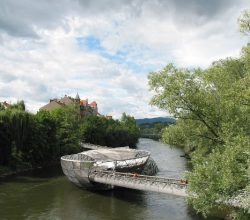
Acconci’s renown came particularly from an eight year period of work up to 1976. His performance art pieces were odd – and thought provoking. Moving on to architecture (which he preferred) he said “What I never wanted in art … was viewers … I wanted an interaction.” One critic’s summation – “one of the most unusual, superb, and trailblazing careers in postwar American art.” A background video (11 min) is here.

A Painter’s Progress

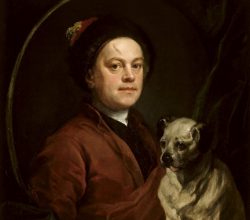
Hogarth is remembered for his satirical drawings. However, acclaimed new research shows that he was also “one of the finest painters the country [England] ever produced.” Will this enhance his modern reputation? Maybe, maybe not.  His drawings elevated visual satire to a level still appreciated today. Further, by creating suites of related scenes, he introduced a new genre of enduring popularity – cartoons.

Image: Tate

Ken Carpenter Writes On New Developments In Montreal Painting: Francoise Sullivan

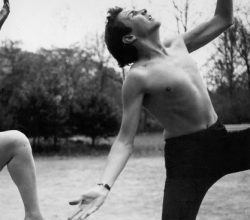
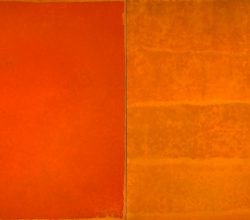
In the 1940’s Montreal was the centre of visual art in Canada. A notable artist at the time was Francoise Sullivan who, then and now, champions abstraction as central to art.  At 93, Sullivan fully deserves the accolade “doyenne of Canadian art”. “Her resolve to continually move forward is truly remarkable. Unlike so many other [old] artists … Francoise Sullivan seems ageless”.

Image: Corkin Gallery

‘A distillation of form and feeling’ — Brancusi’s La muse endormie


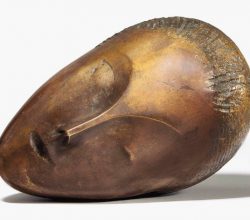
On arriving in Paris a young Brancusi tried working in Rodin’s studio but quickly left. “Nothing grows under big trees”, he said.  Robert Hughes speculates that Brancusi’s meticulously polished surfaces nonetheless show what he had learned from the master – “the importance of the sculptural skin as an expressive envelope”. The embedded video is a nice complement to the linked essay.