The Easel

25th April 2017

The XX Factor

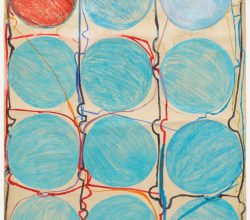
Male artists dominate MoMA’s permanent collection. In contrast its latest show features exclusively women artists. So, is gender relevant to artistic greatness? Perhaps yes:  “[A]rt by women possesses a feminine essence that makes it incomparable with art by men”.  Another critic goes further: “work by women … was the major inventive force propelling and shaping late-20th-century art.” Wow!
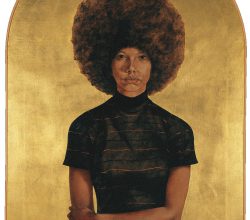
Remembering Barkley L. Hendricks, Master of Black Postmodern Portraiture

Travelling in Europe as an undergrad Hendricks fell in love with the Great Masters. This flavours his emotionally resonant portraits of well-dressed black figures which have made him a “pillar of postmodern portraiture”. Hendricks denied his art had a political motivation. “I’m just trying to do the best painting of the individuals who have piqued my curiosity and made me want to paint them.” An excellent video (4 min) is here.

Jerry Saltz: My Life As a Failed Artist

The challenges of being an artist are legion. There is shortage of money, self-doubt, all-consuming envy. Perhaps most difficult of all is the honest judgement of one’s inner circle. “[My wife] came into my office and started looking [at my work]. For a long time. One by one. Studying, not saying a word. After a while she turned to me and said, “They’re okay.” Stricken, I said, “Okay?! What do you mean okay?”

How Irving Penn revolutionised fashion photography

Irving Penn arrived at photography after trying unsuccessfully to be a painter. Once hired by Vogue his signature style quickly emerged – striving for “simplification and elimination” and obsessive attention to detail. Add to this, of course, an ability to see an image others couldn’t. He said “Whatever the photograph … battlefield … Hollywood celebrity … images to sell soap – all of them are equally important.” More images are here.

Constable and Brighton at the Brighton Museum & Art Gallery

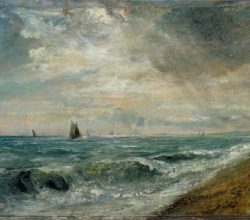
Turner and Constable have been rivals going on 200 years. Recently, Turner has had the better of the debate. But a new exhibition of Constable’s coastal landscapes shows a “daring and rather more rebellious side to the sometimes maligned icon. [It hints] that Turner wasn’t the only one with an eye for innovation and the Romantic”. More images are here.

The Ceramicist Who Punched His Pots

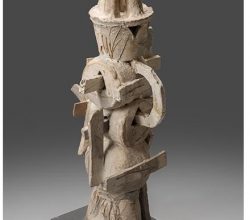
One critic observes that “calling Peter Voulkos a ceramicist is a bit like calling Jimi Hendrix a guitarist”. Having become an “absolute master of wheel-thrown vessels”, a summer teaching job led him to abruptly switch to ceramic abstract sculptures. Over the next 15 years he channeled influences as diverse as Picasso and abstract expressionism to “redefine his medium and transform the craft into fine art”.

Charting the Art Adviser’s Rise in the Art World

The richest 1% of Sotheby’s clients buy as much art as the remaining 99%. Such a concentration of buying power is luring large art advisers into greater specialization. Besides advising, some are now investing as principals – just like investment banks. Other agents may specialize in managing artists – a bit like sports stars. But if star artists like this emerging model, “what remains for the traditional dealer? “

18th April 2017

Colouring Out: Queer British Art At The Tate

Before homosexuality was decriminalized in Britain, secrecy was a requisite part of a gay man’s life. Art about the gay experience was thus discreet, coded. This show, a welcome first for establishment Britain, mostly attracts praise but also some debate. Reflecting the topic’s history and complexities, one critic notes that “the show tears itself apart between a narrative and an aesthetic experience.” More images are here.

Kara Walker’s Next Act

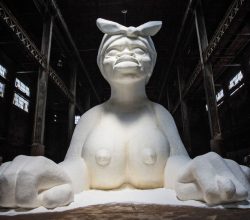
Kara Walker’s black paper silhouettes brought renown. What made her genuinely famous was her large public sculpture in New York covered in sugar. “She … knows that putting a naked representation of a black woman in a public space invites all sorts of projections, bullshit, and reverence. She likes that. [Her artist father has asked her] when are you going to get over this race thing?”

What’s driving the growing interest in African art?

You might see this as a marketing piece but it is still an interesting overview. Upcoming exhibitions in Paris will highlight contemporary African art. In Cape Town a private museum is being built. Big collectors are nametagged. Major auction houses sense an opportunity – “This market has been largely ignored and under-represented, but now that’s being corrected.” Several better-known artists are profiled.

How Damien Hirst staged his comeback with sunken treasures in Venice

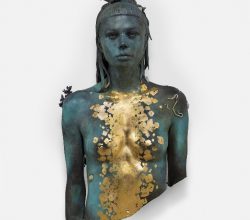
For some time Damien Hirst’s reputation has been slipping as have prices for his work. No surprise then that his huge new show is described as a “comeback”. Is the art any good? Some critics call the work a “wreck”, others are more positive. Misgivings abound. Says one:  “It takes genius to push kitsch to the point where it becomes sublime”. More images are here and a short video (3 min) here.

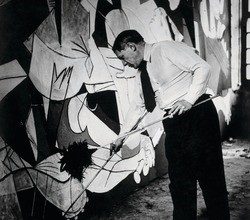
Death, destruction and deity: painting Guernica

A long, but interesting, essay on the ongoing debate about Picasso’s masterpiece. “What I am sure invaded Picasso’s mental space was the much richer tradition, so celebrated in Spain, of sargas [large church tapestries]. They are traditionally hung up to celebrate feasts and special holy days …The claustrophobia and horror of Guernica is contained and made accessible because it is essentially a theatre set.”

Homesick: On Larry Sultan at LACMA

A retrospective of Californian photographer Larry Sultan opened this week.  The linked piece from an earlier show profiles work that featured his parents. This work asks “what’s become of his family’s dreams of a house, a garden, and the good life out in sunny California. Home may be the place by which everywhere else is measured, but it’s more of a tracking point or idea than a possible destination.” More images are here.

Image: SFMOMA

An Excavation Of One Of The World’s Greatest Art Collections

In February New York’s Met put images of most of its collection online – plus a descriptive data set. The “sweet scalability” of this data provides more than a summary of the collection. “One vase means little on its own … But together with its contemporaries, it means the contours of a civilization. And when juxtaposed against all vases, it helps create a first-hand account of the history of the world.”