The Easel

19th July 2016

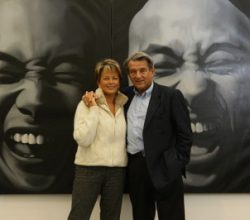
The Mysterious Metamorphosis of Chuck Close

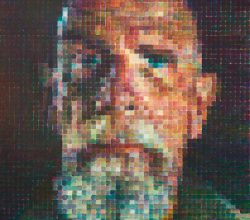
A view of an autumnal artist. “By [2015] it was clear to everyone around Close that something unusual was going on with him.” Disenchantment with the art world and a divorce are contributors. Another speculation – conflict between Close’s desire to “[settle] into a quiet peace with the twilight of his life” and a competing view that “artists don’t retire … the late stage can be very interesting.”
Gorgeous New Book Preaches the Gospel of Brutalist Architecture

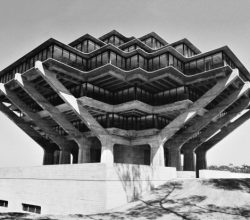
Concrete buildings in the brutalist style were cheap to build. Popular in post-war Europe for housing estates, they gradually became a byword for poverty and anti-social behavior. A new book marks a new appreciation of this “big boned” style – even as many are being torn down. As one critic argues “Concrete is a truly innovative material, both socially responsive and aesthetically beautiful,” More images are here.

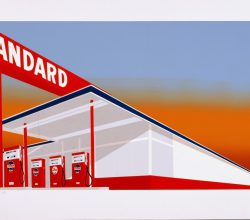
As Los Angeles Changes, Ed Ruscha Stays the Same

Ruscha’s first job, at an ad agency, was a sign of things to come. Indifferent to the charms of abstract expressionism, he wanted to be “completely premeditated”. Hence, his career has been spent making word images and buildings that express a West Coast vernacular. This style doesn’t seem to have a name, just a general description: “he takes something incredibly familiar and gives it this level of ambiguity.”

Baron Guy Ullens puts Beijing’s UCCA on Sale

The Ullens Centre for Contemporary Art is widely seen as “the most important contemporary art institution in China”. A major collector well before local museums showed any interest, it also runs a “linchpin” exhibition space in Beijing. With its founder and benefactor now departing, the hybrid philanthropic / entrepreneurial venture has an uncertain future. One collector describes it as the “Brexit event of the art world.”

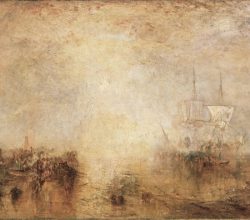
“Turner’s Whaling Pictures” at The Metropolitan Museum of Art, New York, NY

Turner repeatedly chose maritime settings where the power of Nature was on full display. Whaling pictures were a brief sideline, not as lucrative as he hoped. What catches the eye now is not a whaling narrative but the innovation in Turner’s style – the subtlety of light and image and, even more, his astonishingly rich surfaces. “Turner’s work can’t help but make the surfaces of most art look like thin gruel.” Images are here.

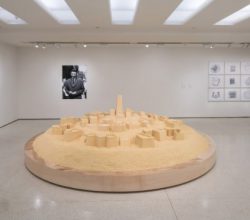
“But a Storm Is Blowing from Paradise”: Guggenheim UBS Map Middle East and North Africa

The Guggenheim is trying to develop a more international collection. Its show of contemporary Middle Eastern art is part of that effort. The curation of the show has been praised with Guggenheim’s director claiming it “bristles with challenging ideas and uncompromising artistic strategies”. But there is another narrative – the show is “peculiarly benign”, due to the museum’s controversial Abu Dhabi building project.

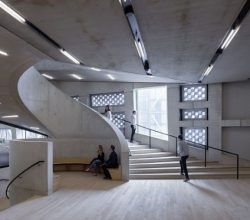
Wonders and blunders: what makes a great museum?

Ambitious cities all want to have a great museum. A smorgasbord of collected opinions provides some clues about the ideal building. Artists want “neutral, beautifully lit space … that is uplifting”. Curators dislike spaces with “strange angles”. Everyone wants scale without sacrificing intimacy.  ““Starchitecture” probably hinders one’s experience of art” admits an architect – but everyone seems to envy Bilbao.

13th July 2016

Georgia O’Keeffe at Tate Modern review: The artist who tried to create a new kind of painting for Modern America

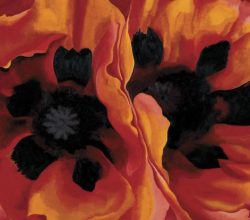
This London retrospective is already drawing big crowds. Its popularity notwithstanding, there are mixed views among the critics.  One declares the show to be a great success but another observes that O’Keefe had “no relish for paint”. The above writer takes the middle ground: She developed “a new way of seeing things in the world” but “O’Keefe’s works are [not] truly great paintings”.

Sally Gabori retrospective

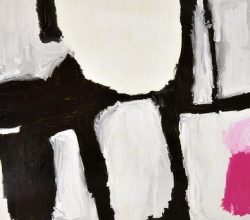
Some of the heroes of Australian indigenous art are late bloomers indeed. Relocated from her home as a young adult, Sally Gabori started painting when she was 81. She painted the home she left. Those images, derived from memory, are almost abstractions. But they still speak to her attachment to country – “it’s the colours of the tropics so to speak, but it’s also the life of the tropics.” Some images are here

David Hockney, 82 Portraits and One Still Life, review: an odd lack of anything remarkable going on

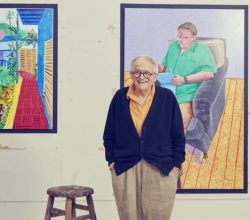
Following the death of a studio assistant, Hockney started a series of portraits. They showcase his genius with colour as well as his compositional talent. But is this exhibition up to the standards of this acclaimed artist? Some critics sidestep this question but the above writer makes an attempt: “on a big abstract level it’s exciting but as pictures of people it’s pretty flat.” An interview with the artist (2.5 min) is here.

If we return Nazi-looted art, the same goes for empire-looted

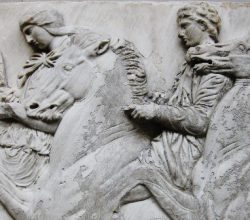
Startlingly, the Elgin marbles may not be the worst example of looted art. “European museums are full of artworks taken from countries under colonial control. [P]riceless Chinese porcelains … sacred Australian Aboriginal objects … bronze sculptures made to honour the kings of what is now Nigeria. These histories of force and desecration make Elgin’s bribes look quaint, even gentlemanly.”

Nan Goldin’s “Ballad of Sexual Dependency” Lights Up MoMA

The photographer Nan Goldin led a “high risk” lifestyle during the late 1970’s and 1980’s. Her images from that time have been assembled into a slideshow that is now an acclaimed work. “Goldin’s [Ballad] is a record of loss that, like Puccini’s “La Bohème,” contains its own partial redemption. A mix of beauty, horror, and despair, her images also reveal a lust for life rare not just in art, but in living.” An interview with Goldin is here.

Philadelphia Offers a Full-Fledged Summer of African Art

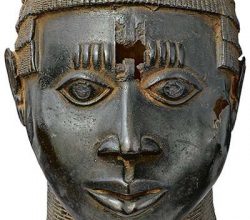
Philadelphia is celebrating the diversity of African art with exhibitions of traditional objects, contemporary textiles/fashion, architecture and photography. Diversity is on show as is the health of artistic activity at the street level. Photography is one example of this. Another is West Africa’s creative street couture. The textiles, it turns out, are made in Holland, but are claimed by stylish African women as their own.

Image: Penn Museum

Wydr is Tinder for buying art

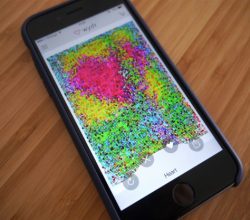
The effort to bring art sales online is unrelenting. Even as one startup closes its doors and Amazon Art makes seemingly slow progress, another newcomer arrives. New ventures such as Wydr are basing their offering on simplicity – “[swipe] right when you like what you see and left when you don’t”.  And they seem to be steering well clear of the bigger galleries – “The average shopping cart value is $430”.