The Easel

5th July 2016

A Life of “E”s

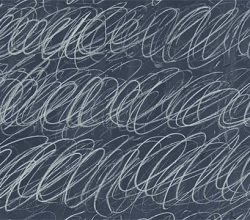
Morgan Meis, the Easel’s Contributing Editor, just co-authored a new book, Dead People. It is a collection of obituary essays described by one reviewer as “tart, funny, sad, occasionally angry and always surprising … an intellectual, artistic, and political history of the 20th century.” One essay is on the feted American artist Cy Twombly which is reproduced here with Morgan’s permission.

“[Twombly] must have liked the way, also, that his letter-and-word-scrawled canvases were a jolt to expectations. Paintings are supposed to be of images, while writing is supposed to use words. Words go one place, images another. You can’t really read a painting, Twombly realized, so you have to see the language found in a painting on a different register.”
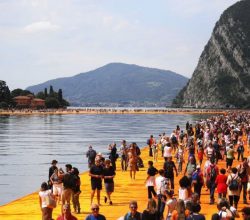
Artist Christo’s hugely popular floating walkway in Italy closes after 1.2m visits

Christo’s floating walkway, installed on Lake Iseo, has come and gone. Huge crowds arrived “from everywhere to walk to nowhere”. A few grouched about costs and about the walkway going to an island owned by the Beretta armaments family. Mostly, it seems, it generated calm pleasure, suggesting to one critic the need for a re-think of “what [has] been called public art”. More images are here.

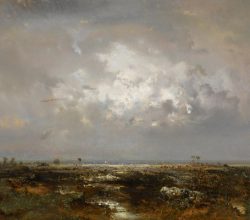
Getty exhibition makes a case for the enduring power of Theodore Rousseau

Theodore Rousseau was nearly great. His “luminous” landscapes sold for huge sums. But a mere seven years after his death the first Impressionist exhibition announced an entirely new way of portraying life – especially city life. His eclipse thus began. Conventionally described as merely a precursor” to Impressionism, he was in fact better than that – portraying “something marvelous [that was] slowly disappearing from consciousness.”

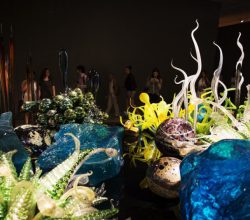
Dale Chihuly at the ROM: Pretty, vacant

What is the dividing line between “pretty” and “art”? Dale Chihuly’s glass sculptures are held in many museum collections but are beset by the same debate that also attaches to Jeff Koons. Although popular, Chihuly’s studio produces a large output and his involvement is only indirect. Is it art? “An embrace of bloated excess for its own sake” concludes this writer.  An interesting video is here (24 min).

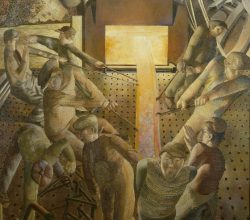
The Passion of Stanley Spencer

British art between the wars is sometimes thought parochial. Not so Stanley Spencer. Borrowing from Botticelli and Giotto, his art expressed a deep religious vision. Human relationships offered a form of resurrection. He admired industrial workers, seeing “spirituality in [their] ritualistic routines”. At the same time his candid nudes seem modern, opening a door for Lucian Freud. Ample justification for sustained popularity.

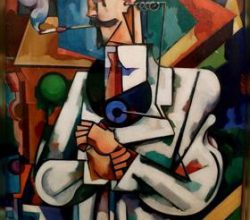
Amadeo de Souza-Cardoso

Souza-Cardosa didn’t lack confidence. Arriving in Paris in 1905, he described the art scene as “mediocre apart from a few things”. Friendships with Modigliani and Brancusi gradually drew him into the avante garde and, from around 1910, he produced many significant works. The 1918 Spanish flu pandemic claimed him, his talent not really fulfilled. A retrospective in Paris has this writer proclaiming him as “one of the greats.”

The Missing Link: Subhash Kapoor’s Suppliers in India Are (Finally) Getting Rolled Up

The wheels of justice grind slowly in India. Subhash Kapoor, a New York based dealer of Asian antiquities, was arrested in 2011 on charges of trafficking items stolen from temples. His blue chip client list included Australia’s National Gallery and the Getty Museum in Los Angeles, both of which have had to repatriate expensive items with suspect provenance. With recent arrests the case continues to broaden.

28th June 2016

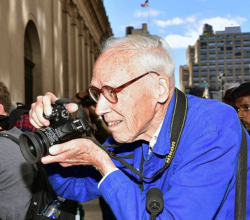
Bill Cunningham Saw Us All

Street photographer is an elastic term but by many definitions the late Bill Cunningham led the genre. His column On The Street appeared in the New York Times for 38 years. An epic number of obituaries have some common themes – hard working, modest, great integrity and a democratic sense of fashion. Appreciations from the Times, industry notables and other photographers, are all revealing.

London’s Art Dealers Brace for Bargain Hunters Amid Brexit Chill

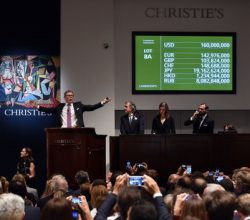
An auction just before the Brexit referendum saw disappointing results, jangling nerves about bigger auctions to come. Does Brexit threaten London’s position in the art world? Will sellers pull works from auction given the uncertainty? Will a lower pound help or hinder sales? And what impact on artists? “This divorce will cost a lot of money, and there will be less money available for culture.”

‘The perfect line’: How Rembrandt made some of his greatest works

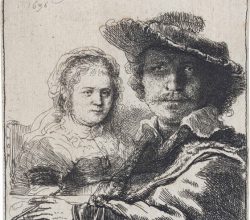
As long as you can draw, etching is an art form within reach. Although still widely used today its popularity was at its height in the 17th century. Rembrandt was then, and still is, one of its great exponents. Ahead of a large sale of his works, Christie’s has released an elegantly narrated video (4 min) and short essay on Rembrandt’s use of the technique. “It’s such a perfect line, the etched line…”

Vision & Justice: Awol Erizku

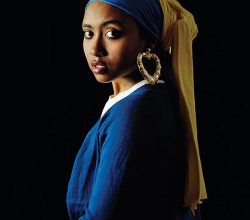
It’s hard to argue with the writer’s observation that the Western art canon has “almost blinding whiteness”. Kehinde Wiley has put people of colour into scenes drawn from Old Master’s paintings. Erizku does likewise in photography. His objective is to comment about both race and culture. “Honestly, I don’t see it as just being about black culture; it’s about my culture, and I’m documenting my culture”. More images are here.

The Formation of Georgia O’Keeffe

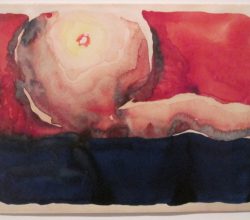
When she first went to Texas, O’Keefe found a deep affinity with the Southwestern landscape. The style she developed seemed new, not an echo of Europe. New York’s art circles were riveted – and her career was launched. It wasn’t just that she had a modernist style but more that, returning from those sparse landscapes “she was fully equipped to embark on her journey as a resolutely American original.”

Tales of Three Cities

Change is a key theme of twenty first century conversation. Innovations from Silicon Valley are disrupting whole industries but a century ago it was the transformation and modernization of cities.  “[London, Paris and New York] were not only places of social division and political tension, but also of beauty and magic”. Comparative images of London over time are here.

How painter Winifred Knights became Britain’s ‘unknown genius’

Winifred Knights seems almost a case study in being forgotten. She excelled at art school. A prestigious study grant to Rome followed where she honed her Renaissance-tinged figurative style. She produced a number of critically acclaimed works but was not prolific. When she died in 1948 abstraction was in vogue and no obituaries marked her passing. A first ever retrospective has just opened, gaining strong reviews.