The Easel

8th March 2016

How Robert Mapplethorpe went from America’s pariah to America’s sweetheart

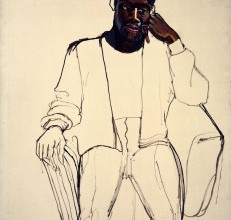
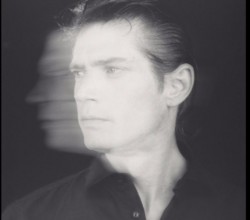
Robert Mapplethorpe’s reputation is on the rise. After his death in 1989, his work was denigrated as part of the culture war between liberals and conservatives. But generational change has blunted the conservative cause and allowed a new appreciation his work. “The animus directed toward Mapplethorpe’s art … was partly simple scapegoating [reflecting] a deep vein of homophobia running through American life.”
The Armory Show review – a more thoughtful, less cash-and-carry art week

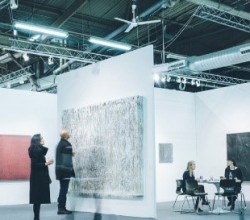
Art aficionados are heading to New York this week. Besides the imminent opening of the Met Breuer building, multiple art fairs are underway, clustered around the Armory Show. A few big ticket sales have failed to lift an underlying anxiety. “[T]he professionalization of Independent [show] comes with a downside: formerly free, it’ll now cost you $25 to get in. Given the soft market, that might be the most anyone spends.”

Botticelli and Treasures from the Hamilton Collection @ the Courtauld Gallery

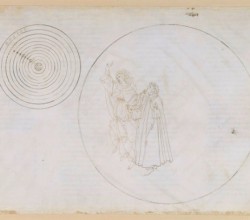
Botticelli’s illustrations of Dante’s poem The Divine Comedy were sold in the 1880’s to pay off gambling debts. Their return to London for the first time since the sale gives first hand evidence of the scale of Botticelli’s achievement. However, as he worked Gutenberg’s printing press foreshadowed an end to the “precious book” genre. An interview with the Courtauld Director is here.

The Bouvier Affair

Not exactly a new story but certainly a colourful one, nicely recounted. Yves Bouvier was a shipper of art works, became an art intermediary and then a dealer when he cornered a lucrative relationship with an art loving Russian oligarch. “Specialist logistics companies … are the quiet butlers of the art world. Bouvier … offered them his services more generally. “I have the information,” he said. “I can sell you paintings.””

Hilma Af Klint, Serpentine Gallery

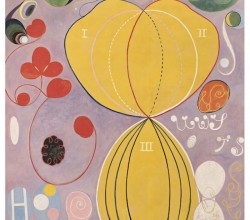
In a burst of mid-career productivity Af Klint painted nearly 200 works that anticipated modern abstraction years before the likes of Kandinsky and Delaunay. Often dismissed as a “spiritualist”, a few recent group exhibitions have stimulated interest in her native Sweden and abroad. Many of her works still sit in a basement outside Stockholm – but perhaps not for much longer. Interesting background information is here.

When Titian Met Tuymans: The Metropolitan Museum of Art Elegantly Occupies the Whitney’s Breuer Building

New York’s Metropolitan has a remit to collect the art of the last 50 centuries. “Unfinished”, the inaugural show in its new building, signals an effort to be more contemporary. Is it an institution transformed? Jerry Saltz is skeptical – “not a fresh or invigorating perspective on postwar art”. Most critics, though, are more positive. “This is a golden age for Manhattan’s art museums and … the Met is upping its game.”

Are Painters Out of Ideas?

Appropriation – borrowing with acknowledgement – is different to copying, and everyone knows it. So why is the market elevating young painters whose work seems highly derivative?   “[T]he art world had seen an explosion of simplistic wall works over its recent boom years … [Has] the once-desirable quality of being original… finally lost its appeal in the art world, and if so, what quality or qualities now fill its void?”

1st March 2016

Fischli and Weiss’s Serious Fun

The Swiss duo Peter Fischli and David Weiss pursued in their art what they called “the pleasure of misuse.” Everyday objects, freed from their intended use, could suddenly acquire an eccentric beauty or a new meaning. A major retrospective of their influential work is full of humorous conundrums, such as:  “Is it true that traces of aliens have been found in yogurt?”  Some great videos are here.

Romance and Subtleties of Black in French Art at Getty

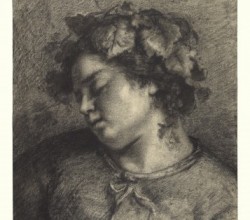
Technology can change the trajectory of art. Nineteenth century innovations in paper and drawing materials, seen as radical at the time, dramatically changed – and elevated – charcoal drawing. On studying one such drawing, a Getty curator was astonished: “I realized the complexity of the drawing was mindboggling.”” An interesting video by the Getty (5 min) is here.

A conversation with Philip Dodd

This discussion about private museums bristles with controversy. Most new museums (especially in Asia) will be private. Is that such a bad thing? “The old [British and American] public museums … are not integrating the histories of China, Japan or the Middle East into the story of modern art. I’m not sure if I prefer the tyranny of curators in public institutions to that of the tyranny of private collectors.”

Anish Kapoor Angers Artists by Seizing Exclusive Rights to ‘Blackest Black’ Pigment

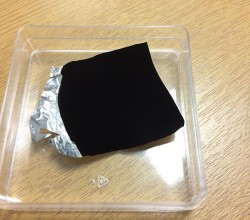
Artists are “outraged” because Anish Kapoor has gained exclusive rights to the blackest black ever. Vantablack is a hi tech nanotube “paint” that absorbs 99.96% of all light and can create weird, disorienting effects. Kapoor explains in interview why it suits his artistic practice. One critic comes to his defence but most seem to share the view that “In the creative world… nobody should have a monopoly.”

What to know about the new Picasso exhibit at the Barnes

There is a long running debate about Picasso’s shift back to more representational styles around 1918. After a decade exploring cubism had he lost faith? A new exhibition suggests that Picasso toned down his cubist style because it was perceived by the media as Germanic. “He was positioning himself in France at that particular time. Who better to look at than past French masters?”

Margaret Grimes on Ruth Miller

Abstraction’s popularity crowds out discussion of other painting styles. This essay on still life artist Ruth Miller both highlights a notable artist and reminds us of a visual vocabulary we rarely hear about. “In Cabbage, Melon, Window Still Life … an intensely saturated fabric, which drapes over a similarly saturated clear vase, hurries forward, while the twin dark planets of melon and cabbage in front firmly hold it back.” More images are here.

Mark Wallinger: Turner Prize-winning artist’s new exhibition shows he still has a sense of humour and mischief

Mark Wallinger, who won the Turner Prize in 2007, is an important British artist. But Turner Prize winners do seem to get extra attention from the local press. His new show is notable but probably not well served by a commentary that is sometimes turgid. “[T]he … works in the South Gallery hint that he has not quite reached the end of the well-trodden path that leads from satire to metaphysics”.