The Easel

24th November 2015

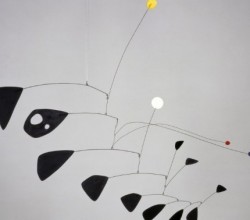
Alexander Calder: the man that made abstract art fly

The Tate’s Calder show is, according to one critic, the “happiest exhibition in Britain”. But, while his innovative mobiles are undeniably beautiful they prompt this writer to a sharp edged judgement. “None of [the mobiles] is really memorable… That is one of the paradoxes of art: still images can contain an immense amount of drama and action too.”  A short (2.5min) video is here.
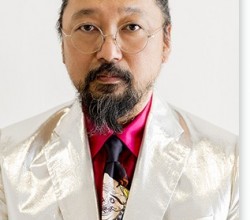
Takashi Murakami: A reluctant homecoming

Notwithstanding a PhD qualification, Murakami is fascinated with manga – Japanese comics. His “superflat” paintings incorporate this aesthetic via cute / creepy cartoon characters, an uneasy blend of art and commercialism. That hasn’t stopped his work attracting huge prices at auction. His intricately rendered paintings are completed by large numbers of assistants, a process he likens to that used by Rubens.

The Man Who Shaped Tomorrow

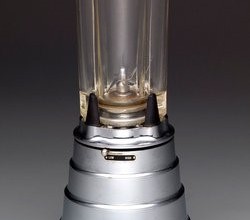
Peter Muller-Monk started capturing attention almost as soon as he had established his Greenwich Village silver studio in 1927. He left high end silver as the Depression hit only to re-emerge as a leading designer of products for the surging postwar consumer culture. After being largely forgotten, a Pittsburgh exhibition hails him as a key figure in industrial design. Multiple products are shown in this video (3 min).

Auguste Rodin’s long shadow

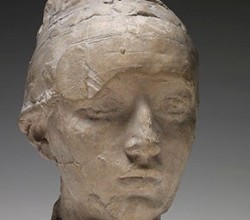
Musee Rodin has re-opened this month after a multi-yearr renovation, the first since it began in 1917. Huge tourist numbers confirm Rodin’s continuing popularity as an artist. As one critic commented “not even Henry Moore was able to release such torrents of expressive power from the sole image of the human body”. An excellent video (3 min) is here.

Is This the Greatest National Museum in the World?

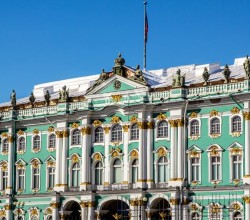
Since Peter the Great, the Tsars have all wanted their country to be a part of modern Europe. One device to affect this shift in outlook was to buy current European art for the Hermitage – “a literal, almost limitless palace of human imagination”. Centuries of acquisitions have produced an “encyclopedic” collection, leading to the reviewer’s unprovable but plausible claim.

How One Artist Learned to Sculpt the Wind

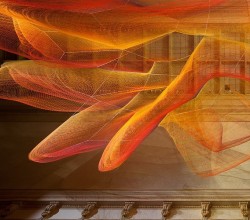
Stuck in India without her painting supplies, the aspiring painter Janet Echelman used local fishing nets to create a hanging sculpture. This started her career as a “volumetric sculptor”. Hi-tech polyethelene rope now allows her sculptures to be anchored to building facades without further support. At night computer controlled lights illuminate the sculpture. Images of a recent Boston installation are here.

‘Looking East’ at Asian Art Museum features works of Van Gogh, Monet

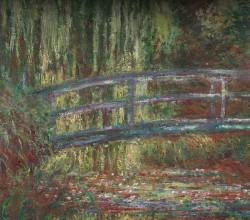
Admiral Perry’s arrival in Tokyo Bay seems like, well, centuries ago. However, a current San Francisco exhibition demonstrates its ongoing relevance to Western art. Exposure to Japanese aesthetic concepts impacted both the public and a startling number of important artists. In a letter to his brother, van Gogh said “All my work is based to some extent on Japanese prints”. Interesting image comparisons are here.

3rd November 2015

Hi-yo silver – British artists sparkle

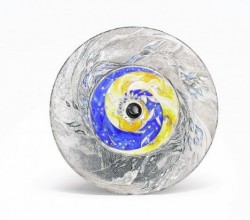
Besides undertaking an ancient regulatory function London’s Worshipful Company of Goldsmiths has for over 700 years promoted fine silver and gold work. The Company currently has an exhibition in Edinburgh covering work from the last 15 years. Images of this amazing work give weight to the claim that Britain is a “glittering star” and world leader in contemporary silver.

‘To drag the past into the present and re-animate it’

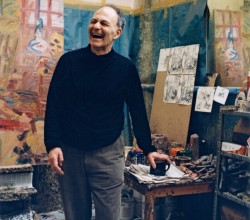
This great painter has just two subjects – a handful of sitters, who he paints repeatedly, and his own London suburb. The writer, whom Auerbach has painted weekly since 1978, thinks he has done over 60 portraits of her but there is no repetition. “There is an analogy between Auerbach [when painting]… and a great [actor]… unexpectedly inhabiting the character, the performance perhaps unrepeatable”

Looking Beyond the Obvious in Lisa Yuskavage’s Mighty Paintings

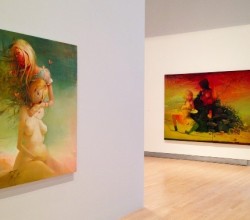
Few are indifferent to Yuskavage’s paintings of female figures, often set in gaudy landscapes strewn with classical art references.  A force in portraiture she may be, but one critic claims she is “disingenuously peddling a soft-porn aesthetic.” Yuskavage gets the benefit of the doubt – “perceived lewdness … hardly begins to take into account the richness of this astoundingly strong body of work”.  More images are here.

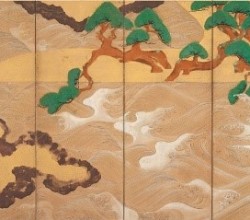
Tawaraya Sotatsu’s art inspired many — once it was saved from oblivion

Tawaraya Sotatsu emerged during the Edo period when Japan isolated itself from the West. Despite being a commoner, he became the era’s pre-eminent artist with his bold, almost abstract designs. Introduced to Western audiences only in the early twentieth century, his work influenced Art Deco as well as individual artists such as Klimt and Matisse. This is his first major retrospective outside Japan. More images are here.

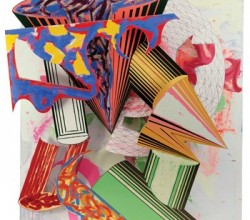
The Wrestler: Frank Stella Redies a Landmark Third New York Retrospective

Frank Stella started out wanting his art to be premeditated and it shows. The early works that made him famous are pure symmetry. But he has since moved on “perhaps more dramatically than … almost any contemporary artist, from spare, modestly sized abstract paintings to wild, cartwheeling painted-metal reliefs. “[He] has been absolutely fearless … when he feels that ideas are exhausted, he reinvents himself.””

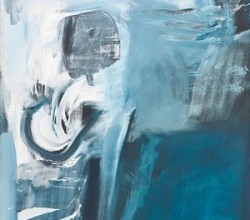
Soaring Flight: Peter Lanyon’s Gliding Paintings review – rhapsodies in blue

“The revelation of the year” according to this reviewer. Most reviews focus on how Lawton depicted the Cornish landscape. But some pick up a second theme. Unlike his contemporaries, he resisted the 1950’s distinction between abstraction and figuration. The end result – a re-thinking of landscape painting, fueled by his “staggering inventiveness”. Further images are here

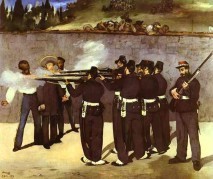
Review: Keeping an Eye Open

Should we view a painting as a stand-alone image or through the lens of the artist’s life? The novelist Julian Barnes, whose recent book on art is being reviewed, argues that it’s all about the painted image. A painter’s life and the works they produce don’t always fit a single neat narrative.  The reviewer is unconvinced. Inevitably “the stories we tell about paintings matter more than the facts of the paintings themselves”